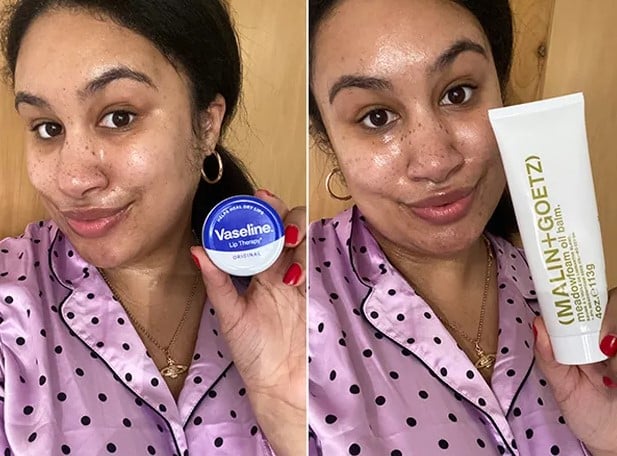
 (Photo via Get the Gloss)
To slug or not to slug? That’s the question for millions of TikTok users, who turn to the social media giant for tips and information on what amounts to a DIY skincare phenomenon.
Slugging involves slathering some sort of sealing agent — like Vaseline or another petroleum-based ointment — onto the skin (think back to when you were a young kid and your mom would grease your face down with a ton of vaseline).
What’s the problem with that? New research warns that the majority of TikTok posts focused on the wrinkle-reducing practice are medically unreliable, hyping the benefits while downplaying the risks.
The goal of slugging, explains study lead author Kyla Pagani, is “to help moisturize and strengthen the skin barrier,” for those battling dryness, irritation or inflammation.
The idea is not medically unsound, stresses Pagani, who conducted her research while a medical student in the Department of Dermatology at the Beth Israel Deaconess Medical Center in Boston.
RELATED: 7 Facts Blacks Should Know About Their Skin
“I’ve heard some dermatologists speak very highly about it, most often for addressing eczema on the hands,” she adds. “It definitely does have benefits.”
“Petroleum jelly is a simple and very occlusive ointment,” dermatologist Amy Kassouf, MD, explains. That means that it forms a protective layer on the surface of your skin — and that protective layer, in turn, helps seal in hydration and keep your skin from drying out.
Here’s exactly how petroleum jelly can benefit our skin according to Dr. Kassouf:
But it also has potential downsides, says Pagani, such as
To do that, the study team analyzed the content found in the top 49 English-language TikTok videos on slugging. When the investigation was launched, those posts had collectively amassed more than 26.5 million views and nearly 3.3 million “likes.”
But in the end, only 37% of the videos were classified by investigators as educational. That meant that they offered a reasonably full discussion of both the potential pros of slugging — such as smoother and more hydrated skin — and the potential cons, including the blocking of skin pores and acne.
The posting sources mattered a lot. For example, the team found that nearly 88% of videos uploaded by health care providers were found to be educational and balanced. But that figure plummeted to just only about 43% for posts shared by “influencers” focused on beauty.
Overall, the study authors found that about 6 in 10 posts highlighted only the upside of slugging, while only 2 in 10 mentioned possible risks.
“What we found was not necessarily misinformation, but often a lack of information,” Pagani shares. “A lot of the time, there was just no inclusion of risks.”
Beyond a heightened risk for facial acne among acne-prone patients, Pagani says there is also the risk that any topical skin medication applied before slugging would essentially become trapped underneath petroleum ointments, and therefore potentially absorbed more deeply — and for longer periods of time — than originally intended.
“Now, slugging is one of the relatively harmless things that can be found on TikTok,” Pagani acknowledges. “But even in the case of mostly benign beauty trends, the hope is that viewers are going to get accurate information from reliable sources, information backed by science based on data and research. Because other trends or beauty products may certainly be more potentially harmful than something like slugging.”
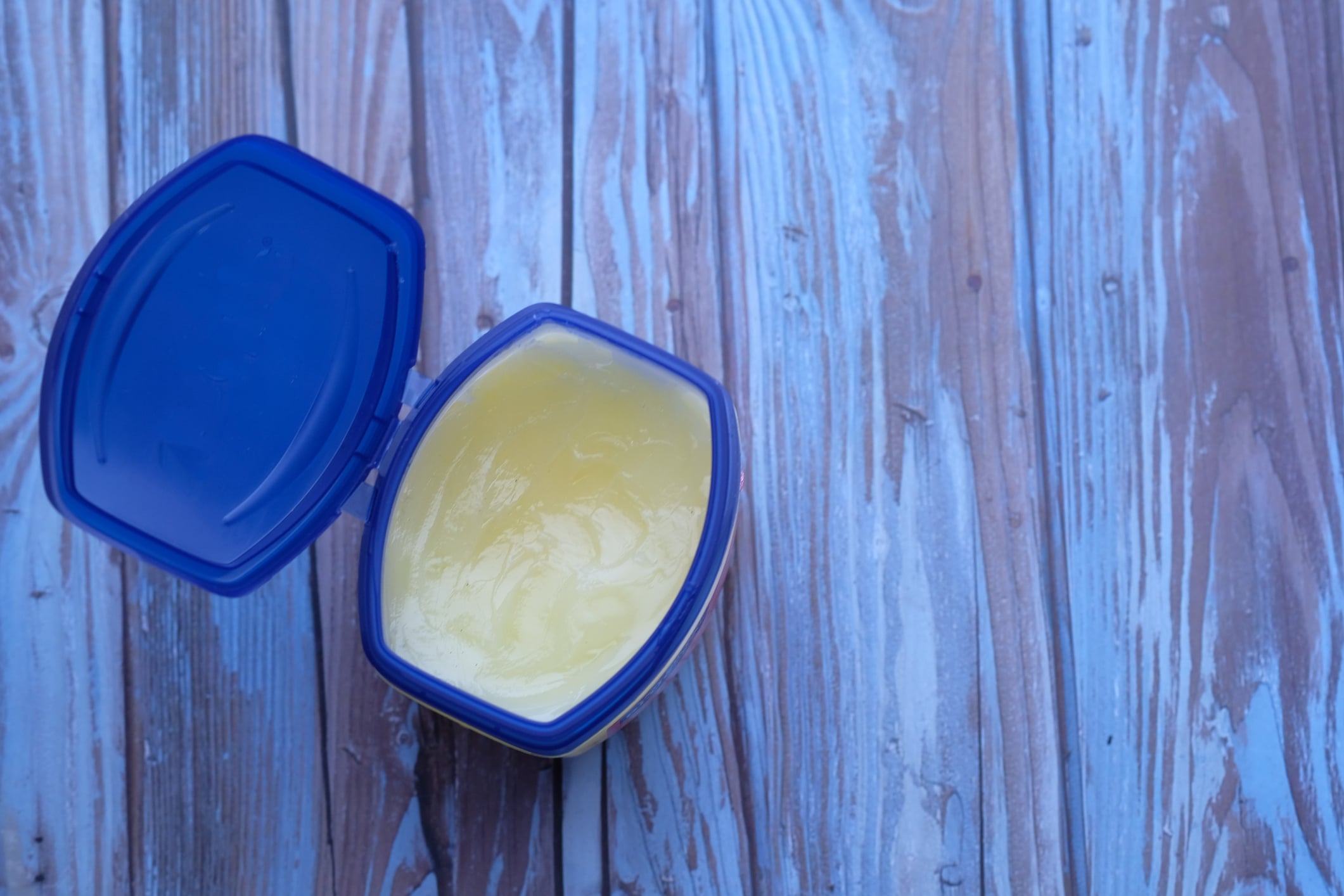
Slugging is fairly simple and can easily be incorporated into your nighttime routine. To do so, you should have petroleum jelly (Vaseline®) or petroleum jelly with only minimal additional ingredients, like Aquaphor® and CeraVe® on hand.
From there, you can complete the routine in 5 quick steps:
“Slugging should only be done on clean skin, so start your evening routine with cleansing, exfoliating and moisturizing,” Dr. Kassouf advises. It is best to steer clear of skin care products with ingredients like alpha-hydroxy acids, beta hydroxy acids and retinoids. These ingredients can irritate your skin once they get trapped beneath the petroleum jelly barrier.
Again, if you think back to getting greased up with vaseline as a child, you probably remember how thick and goopy it is in texture. Because of this, a little goes a long way. In fact, you may not even need to apply it on you entire face. Start by applying it only to the thinnest and driest parts of the face, like your eyelids and your lips.
RELATED: Keep Your Skin Glowing With Good Health
Give yourself about half an hour before hopping into the sack. This gives your products time to settle and sink in. Have a towel handy to put over your pillowcase to protect it from getting greasy. Ladies, this is also where your bonnet/ head scarf will come in handy as it will prevent your hair from sticking to your skin as you sleep.
Now comes the easy part: letting your skincare products do all the work while you get a good night’s rest. Not to mention, sleeping is beneficial for our skin.
This step probably comes as a no-brainer anyway, but washing your face will help get rid of anything that’s stuck to the goopy petroleum jelly overnight. “Cleansing is important because the skin is a living organ that has dead skin cells, oils and bacteria that need to be able to slough off,” Dr. Kassouf says.
Choosing the right cleaser is also important. “Soap is an excellent emulsifier, but it can also be drying,” Dr. Kassouf notes. “Some of the gentler but foaming cleansers are probably best if you have the type of sensitive skin that is benefitting from slugging.”
Slugging has benefits and risks so it may be wise to speak with a dermatologist beforehand to ensure it is safe for your skin. Additionally, you shouldn’t try slugging if you have the following skin types:


By subscribing, you consent to receive emails from BlackDoctor.com. You may unsubscribe at any time. Privacy Policy & Terms of Service.