Let’s be real, most of us remember getting a shot for chickenpox, measles or something like that when we were younger. It was usually told to us that the shot would prevent us from getting the disease and it was better for our overall health. But as we’ve grown older, and learned more about vaccines and the history surrounding them, many are a little suspicious of getting any type of vaccines now.
African Americans, who are being infected and killed by COVID-19 at a much higher rate than whites, are 40% less likely to get the flu shot vaccine, for example, a study out last year showed. Some suggest African Americans will be reluctant to get the coronavirus vaccine when one is released. A historical distrust of the health care system, which has far fewer physicians of color and a record of discrimination and mistreatment, gets much of the blame, experts say.
So in order for us to find out if vaccines are needed and who should or shouldn’t take them, we first must understand how they work.
According to the Children’s Hospital of Philadelphia Vaccine Education Center, vaccines are made of dead or weakened antigens. They can’t cause an infection, but the immune system still sees them as an enemy and produces antibodies in response. After the threat has passed, many of the antibodies will break down, but immune cells called memory cells remain in the body.
When the body encounters that antigen again, the memory cells produce antibodies fast and strike down the invader before it’s too late.
Vaccines also work on a community level. Some people can’t be vaccinated, either because they are too young, too old, have underlying risk factors or because their immune systems are too weak, according to the CDC. But if everyone around them is vaccinated, unvaccinated people are protected by something called herd immunity. In other words, they’re unlikely to even come in contact with the disease, so they probably won’t get sick.
The World Health Organization states that NO vaccine is 100% effective. For reasons related to the individual, not all vaccinated persons develop immunity. Most routine childhood vaccines are effective for 85% to 95% of recipients.
Here’s a little history to give you perspective: The first influenza vaccine was approved for military use in the United States in 1945 and civilian use in 1946. This whole-virus inactivated influenza A and B vaccine had been tested in military recruits and college students before approval. Thomas Francis Jr., MD, and Jonas Salk, MD, who would become closely associated with the poliovirus vaccine, were key investigators on much of the influenza vaccine research. Influenza vaccine development was a high priority for the U.S. military after the deaths of approximately 1 in every 67 soldiers from influenza during the 1918-1919 pandemic.
There were many other vaccines before and after this, but the question still stands: who should NOT get vaccinated?
Here’s a breakdown of each common vaccines:
The influenza vaccine (also known as the flu shot) is developed twice a year to help protect against the flu. The following individuals should consult a medical professional before getting the influenza vaccination:
Anyone with severe, life-threatening allergies
Anyone who has ever had Guilliain-Barré Syndrome
Anyone who is feeling sick
The Td (or adult tetanus) vaccine is typically administered to adults who did not receive the tetanus vaccine as a child. Over a 7 to 12 month period, a person would receive a…
three-vaccine combination. The first would be the Tdap vaccine which protects against tetanus, diphtheria and pertussis. The next two doses protect against tetanus and diphtheria, respectively.
Those who should not receive the Td vaccine include:
– Anyone who has had a life-threatening allergic reaction after previous tetanus or diphtheria vaccine dose (please consult a medical professional about any allergies before scheduling a Td vaccine)
– Anyone who has had severe pain or swelling after a tetanus or diphtheria vaccine
– Anyone who suffers from seizures or other nervous system problems
Hepatitis A and B are both diseases that cause inflammation of the liver. Typically, you will have the option to get two separate vaccines or a combination vaccine that protects against Hepatitis A and Hepatitis B. The following people are at a higher risk of developing vaccine side effects:
– Anyone who has had a severe allergic reaction to any vaccine components
– Anyone who has had a severe allergic reaction to a previous dose of the hepatitis A or B vaccine
– Anyone who is moderately or severely ill
– Women who are pregnant
– Anyone who is severely allergic to yeast
Other common vaccines include:
HPV gets passed from one person to another during skin-to-skin contact with an infected part of the body. It can be spread through sexual contact. You cannot get HPV from toilet seats, swimming pools, or sharing food. But almost everyone who is not vaccinated will get HPV at some time in their lives.
People who should not have the HPV vaccine are:
– People with a yeast allergy
– Pregnant women: however research has shown no significant effect on you or your baby if you have the vaccine and later find out you are pregnant
– People with a bleeding disorder: they should talk to their doctor before having any vaccine
– People with previous anaphylaxis (serious allergy) to a previous dose of the vaccine or any of the vaccine ingredients.
Other common vaccines include:
-MMR vaccine (measles, mumps, and rubella)
-Polio vaccine
-Rabies vaccine
-Shingles vaccine
For a complete list of vaccines and who should not be vaccinated, see the CDC’s guide to vaccines and immunizations.
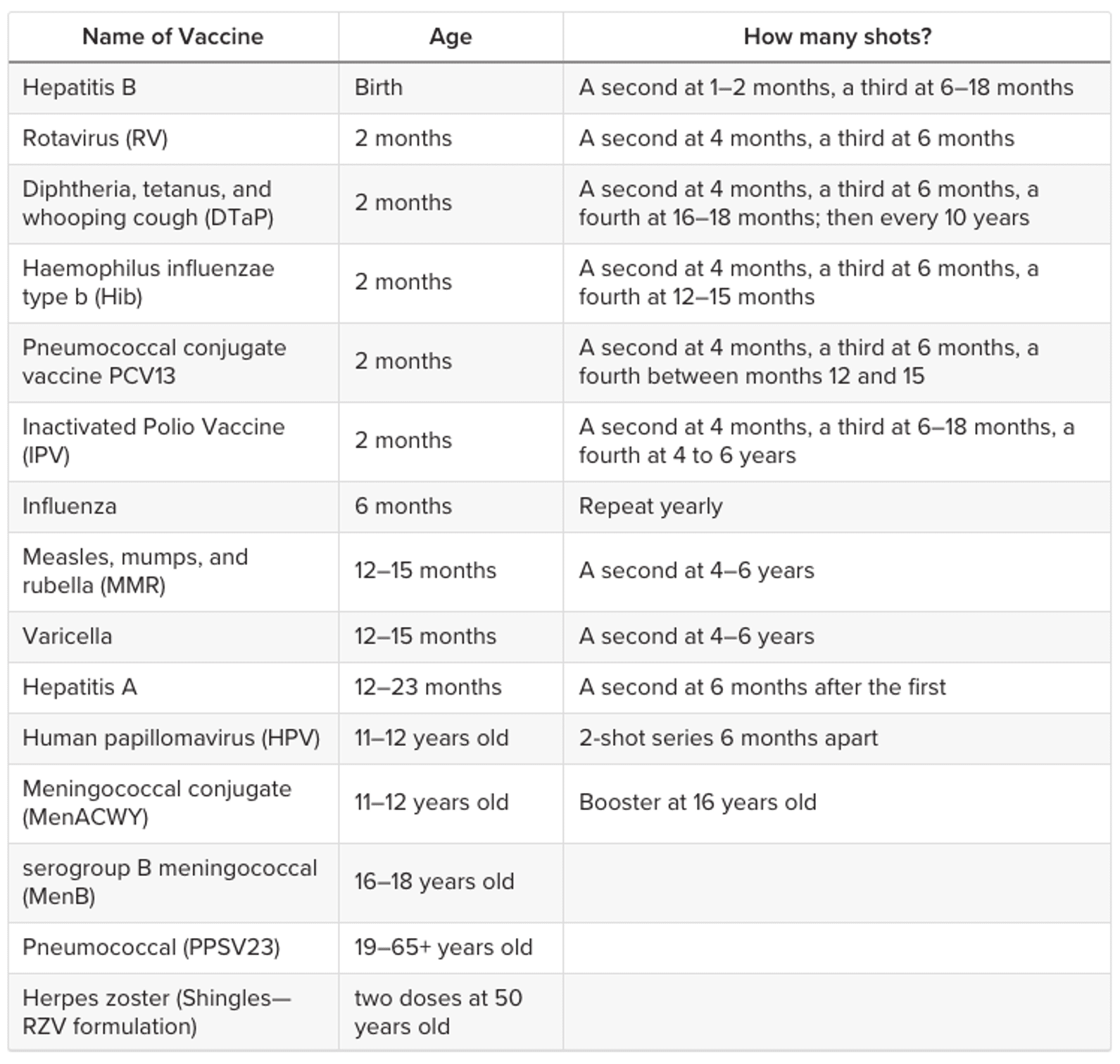
Here is a breakdown of the most common vaccines and when people should take them (according to Healthline.com).


By subscribing, you consent to receive emails from BlackDoctor.com. You may unsubscribe at any time. Privacy Policy & Terms of Service.