According to the American Diabetes Association (ADA), more than five million Black Americans who are over the age of 20 have diabetes. Unfortunately, not all of these cases have been diagnosed. Without this diagnosis, you may likely start to experience diabetic complications before you know what the problem is. One of these potential complications is hearing loss and, as with many health issues, you can’t afford to ignore it.
Some doctors don’t believe that there’s a link between diabetes and hearing loss while others do. However, there is evidence that people with diabetes are at least twice as likely to develop hearing loss as people who don’t have the condition. This risk is relatively the same regardless of the type of diabetes. One possible cause of this hearing loss is nerve damage.
Nerve damage is one of the known effects of diabetes – especially if it isn’t being managed properly. While the damage can affect different parts of the body like your eyes, hands, feet, and kidneys, it can also affect your ears. In this case, high blood sugar can damage the small blood vessels and the inner ear. On the flip side, low blood sugar levels can hurt the way nerve signals move from your inner ear to the brain. Both of these issues can result in hearing loss so that’s why you need to keep your blood sugar levels within the normal range.
The statistics surrounding diabetes and Black people can be alarming. For example, studies show that Black Americans are more than 60 percent more likely to be diagnosed with diabetes and are three times more likely to be hospitalized with complications. The numbers so far don’t even include the people who haven’t been diagnosed yet because their symptoms aren’t bad enough for them to visit the doctor.
Those who have been diagnosed are twice as likely to have complications such as vision and hearing loss. It doesn’t help that a high percentage of Black people with diabetes admit that their condition is being poorly controlled.
While more research needs to be done, a recent study showed that Black Americans could be more susceptible to nerve damage from diabetes. This higher risk of damage could mean that you’re more likely to experience hearing loss.
RELATED: 10 Everyday Things That Are Causing You to Lose Your Hearing
In many cases, hearing loss is so small that you might not notice it until it starts to affect your daily life. However, there are early signs that can indicate some diabetes-related hearing loss.
This often happens slowly, so it can go unnoticed at first.
This may be linked to nerve damage caused by high blood sugar.
The inner ear controls both hearing and balance—damage here can affect both.
This can be due to nerve damage affecting how sound signals are processed.
If you find yourself repeatedly asking others to repeat themselves, even with no other background noise present, diabetes-related hearing loss could be an issue.
Why This Happens:
You should get checked if you have diabetes and notice:
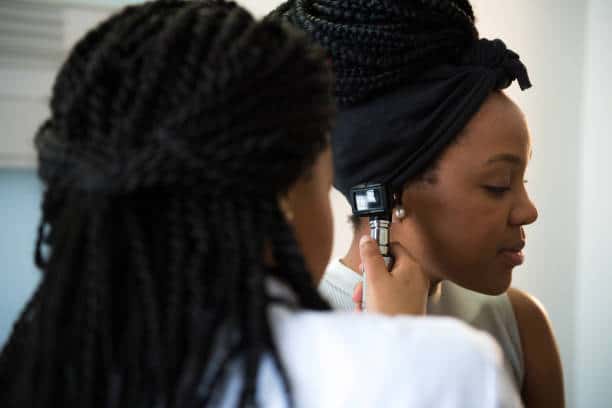
Ask your doctor about a hearing test (audiology exam)—especially if you’ve had diabetes for years.
The first step to protecting your hearing is sticking to your medical regimen. If you keep your blood sugar levels in the target range, you’re less likely to suffer from the nerve damage that can lead to hearing loss. You should also talk to your doctor about testing your hearing at least annually. Hearing loss can happen gradually so it’s good to know where you are and measure any changes that are happening.
Given that the link between diabetes and hearing loss is not fully understood, the condition may make you more susceptible to losing your hearing. As such, you should take precautions to protect your hearing in general. Those precautions include avoiding loud noises and wearing protective gear if you’re going to be exposed to loud sounds for extended periods.
Millions of Black people have diagnosed and undiagnosed diabetes. Even if you haven’t been diagnosed, it’s a good idea to watch for changes in your hearing as it may be a sign of diabetes. If you’re concerned about hearing loss, talk to your doctor about getting tested as soon as possible.


By subscribing, you consent to receive emails from BlackDoctor.com. You may unsubscribe at any time. Privacy Policy & Terms of Service.