Leading experts in bariatric surgery and obesity management convened at a news conference on Monday, October 6, to discuss the usage of weight loss medications, known as GLP-1s, and weight loss surgery. Nearly 40 percent of American adults are classified as overweight, while another 40 percent are classified as obese, with half of those experiencing severe obesity. The recent surge in popularity of GLP-1 medications has led to many questions regarding treatment choices. While these weight loss drugs are increasingly seen as the primary solution for obesity, experts frequently suggest a combined strategy, utilizing both approaches as complementary treatments. During the news conference at the American College of Surgeons (ACS) Clinical Congress 2025 in Chicago, Illinois, experts discussed the benefits and barriers of medication and surgical treatment of obesity, the importance of viewing obesity as a disease, and common questions patients have when considering what treatment is right for them. Moderator
Panelists
RELATED: 6 Things You Should Know Before Considering Bariatric Surgery
The panel of experts emphasized that the best approach is an individualized plan that uses all tools—diet, exercise, medication, and surgery—together. They stressed that bariatric surgery and weight loss medications are often used as complementary treatments, not one or the other.
The panel spent significant time addressing the crisis of access, noting that an effective treatment is useless if patients can’t get it.
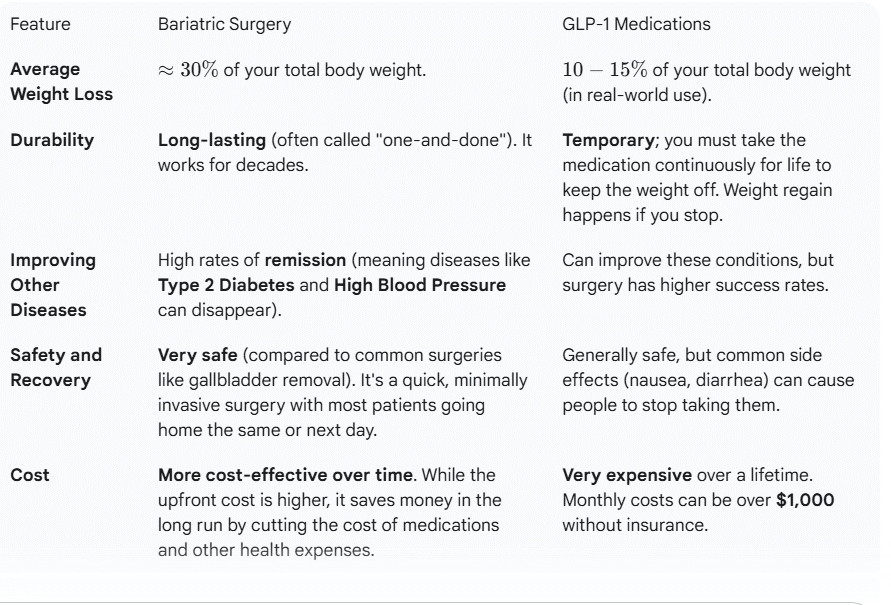
Despite the new attention on weight loss medications, the experts confirmed that metabolic and bariatric surgery (such as gastric bypass or sleeve gastrectomy) remains the safest, most effective, and most durable treatment for severe obesity. If you meet the criteria for surgery, it is a highly safe and effective treatment that gives you the best chance at a long, healthy life. RELATED: 6 Reasons to Talk to Your Doctor About GLP-1
If you are considering your treatment options, don’t face this disease alone. The experts emphasized that the best results come from a multidisciplinary team of specialists. When you consult a bariatric surgeon, you aren’t just discussing surgery; you are accessing a team that includes:
This team will work with you to determine the right path, whether that involves starting with medication, moving straight to surgery, or a combination of both.



By subscribing, you consent to receive emails from BlackDoctor.com. You may unsubscribe at any time. Privacy Policy & Terms of Service.
Enter your name and email to receive the download link.
Welcome to BlackDoctor AI Search. Explore 35,000+ articles and videos — your health questions, answered faster.