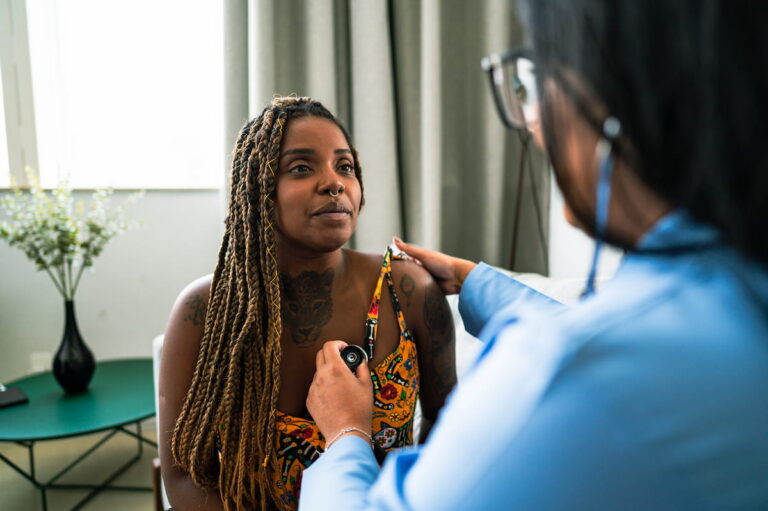
The journey to motherhood is often filled with anticipation and excitement, however, for many Black women, it can be a time of medical complexities. According to the Leapfrog Group 2025 Maternity Care Report, one in five hospitals show significant disparities in C-section rates across races. Additionally, data from a study earlier this year in New Jersey, found that Black women were 25 percent more likely to have C-sections than white women.
RELATED: Emergency & Scheduled C-Sections: What You Need To Know
“We all know that pregnancy can result in delivery in one of two ways either through vaginal birth or via C-section. Sometimes, C-sections are necessary for maternal or fetal safety. Most organizations that we look to suggest that about 23 percent of deliveries should be appropriately performed via C-section. However, in the United States, we have seen that the C-section rate has been higher than needed for a long time,” Dr. Mark Simon, board-certified OB-GYN and Chief Medical Officer of Ob Hospitalist Group (OBHG) tells BlackDoctor.org.
Although sometimes medically necessary, C-sections are surgical procedures that carry inherent risks, including infection, bleeding, wound complications, and blood clots.
“Unfortunately, what this report highlights is that in the United States, many women, especially non-Hispanic Black women, are still having unnecessary C-sections at a higher rate,” Dr. Simon adds.
In order to mitigate this problem Dr. Simon believes women need to be empowered to actively participate in their care.
“I think it’s important for all patients, regardless of background, to be informed and proactive. They should ask questions and understand the reasoning behind medical decisions. Patients shouldn’t just accept it when someone says, ‘We’re going to do X, Y, or Z’—they should ask why and make sure they understand,” Dr, Simon advises.
If you don’t feel satisfied with the answers you receive, you should not be afraid to seek a second opinion.
“Even in labor, there is often another nurse or doctor available to provide additional input. Ultimately, most healthcare providers want the best outcomes for their patients. A key part of that is ensuring patients are informed and comfortable with their care,” Dr. Simon says.
It’s also valuable to have someone with you for support, whether that’s a family member or a doula, especially during labor.
“A support person can help ask questions and advocate on the patient’s behalf. Most clinicians—physicians, midwives, and nurses—welcome these conversations,” Dr. Simon adds.
RELATED: 5 Essential Tips for Breastfeeding After a C-Section

Although the C-section rates are concerning, data conducted across almost 200 U.S. hospitals by OBHG, the nation’s leading provider of obstetrics and emergency care, indicates that OB hospitalists can help address racial disparities impacting maternal care.
“OB hospitalists are physicians, midwives, or other specialists who primarily or exclusively work in hospitals rather than private practices. They don’t typically see patients for routine checkups or scheduled visits; instead, they spend their clinical time in the hospital, most often in labor and delivery” Dr. Simon explains.
His organization looked at its own data and found that the disparities in outcomes between racial groups—whether non-Hispanic Black, white, or Asian—were not statistically significant in hospitals with OB hospitalists.
“In these hospitals, C-section rates, including those among Black patients, were below the recommended 23.6 percent threshold,” Dr. Simon shares.
One of the ways healthcare providers accurately assess the appropriateness of C-sections is through the Nulliparous, Term, Singleton, Vertex (NTSV) metric.
“The NTSV rate focuses on preventing unnecessary C-sections in low-risk pregnancies.
NTSV stands for “Nulliparous, Term, Singleton, Vertex,” which refers to first-time mothers who are delivering a full-term baby (not preterm), carrying a single baby (not twins or triplets), and whose baby is positioned head-down. These are the patients who should have the highest chance of delivering vaginally,” Dr. Simon explains.
RELATED: What Black OB-GYNs Want You To Know Before Starting Your Pregnancy Journey

For Expecting Mothers, Dr. Simon recommends the following:
“As we discussed earlier, it’s crucial to have a provider you feel comfortable communicating with—whether it’s a physician or midwife. A patient should feel confident that they can ask questions and advocate for themselves if needed,” Dr. Simon says.
“When choosing a hospital, I’d recommend looking at outcome data. Hospitals with OB hospitalists tend to have better outcomes and lower C-section rates, even for high-risk groups. Having OB hospitalists available also means there’s always a doctor present to provide a second opinion if needed,” Dr. Simon adds.
Looking ahead, the goal is to ensure that all women, regardless of race, receive fair and high-quality care, and feel empowered to have safe and satisfying birth experiences.
“The vast majority of clinicians—nurses, doctors and midwives—are dedicated to doing what’s right for their patients. However, healthcare is a high-stress field, and external factors can influence decision-making,” Dr. Simon concludes. “Hospitals need to foster a culture of safety and collaboration, where providers feel comfortable seeking second opinions or asking for help when needed. This team-based approach ensures better outcomes for patients.”


By subscribing, you consent to receive emails from BlackDoctor.com. You may unsubscribe at any time. Privacy Policy & Terms of Service.