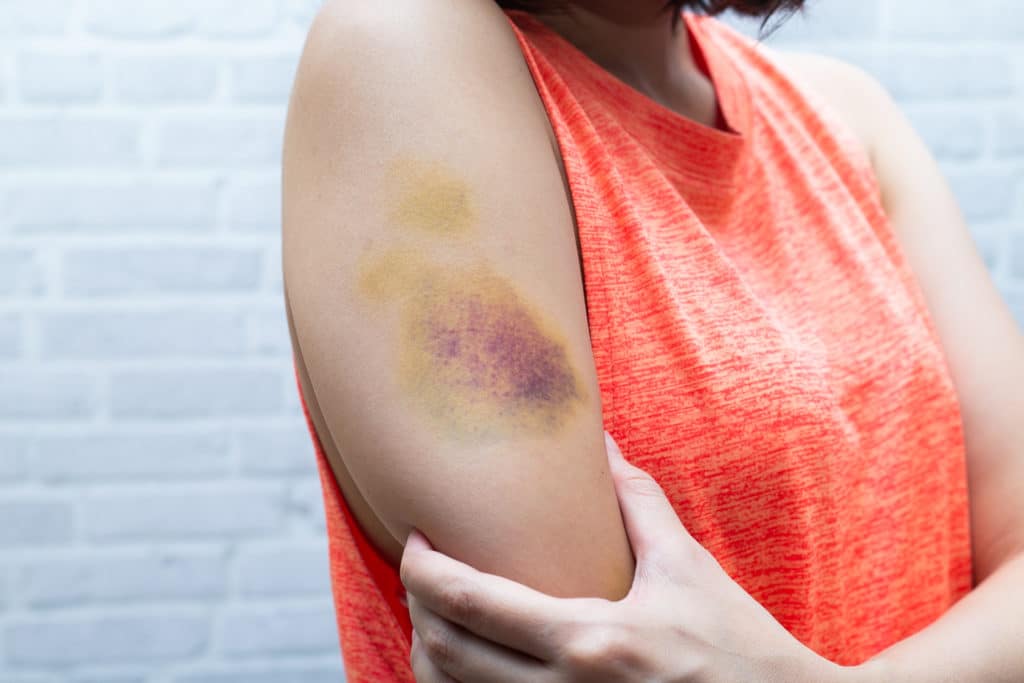
Ever discovered a mysterious bruise on your body and don’t know how it got there? Even if you don’t remember falling down somewhere or hitting your body against something yet still seeing a bruise can be frustrating.
Easy bruising can be a side effect of some over-the-counter dietary supplements such as ginkgo, ginseng, and garlic. They can thin your blood and make it harder for blood to clot after you knock into something.
On the flip side, certain vitamins enable the body to heal and help your blood clot.
Low vitamin C levels can cause a condition called scurvy. The body uses vitamin C in creating collagen, an essential part of the structure of blood vessels. In scurvy, the blood vessels weaken, resulting in:
Vitamin K helps the body form clots to stop bleeding. Newborns often have very low levels of vitamin K, which are insufficient to stop bleeding.
You could have the bleeding disorder immune thrombocytopenia (also known as idiopathic thrombocytopenic purpura or ITP), and might not know it.
Bruising is a common sign of ITP, as are symptoms like petechiae (small dots of blood that look like a skin rash), sudden bloody noses, gums that bleed out of nowhere, and more, according to the National Heart, Lung, and Blood Institute (NHLBI).
If you have ITP, it means your immune system targets platelets, which are cells in your body that cause blood to stick together (or clot), the NHLBI explains. If someone doesn’t have ITP and gets a cut, their body directs platelets to the wound to form a clot that helps stop the bleeding. Clearly, if your body is attacking such a useful component of your blood, things can get a little tricky.
For some context, the average platelet count for adults is between 150,000 to 450,000 per cubic millimeter of blood. If someone’s platelet count falls below 100,000 per cubic millimeter of blood and doctors cannot pinpoint an external cause like medications, they can be diagnosed with ITP. That doesn’t necessarily mean they’d experience symptoms, though. That appears to be more of an issue for people with platelet levels that fall below 50,000.
Senile purpura is common among older adults, affecting around 10% of those aged over 50 years. It causes dark purple bruise-like lesions on the skin and is most likely to develop on the arms and hands.
They are more common in people with
light skin, but anyone can develop them. On Brown and Black skin, they may appear purple or as darker skin. The skin around may be thinner and less elastic.
The lesions often appear after an injury to the skin but last longer than bruises and can be much larger. Sometimes, the skin remains brown after the lesion heals.
Ways of reducing the risk of bruising include:
Senile purpura does not have links with any serious health condition, but it may increase the risk of skin tears.
Certain medications — like aspirin, ibuprofen, and blood thinners — may get in the way of your body’s ability to form a clot. Some antibiotics may also leave you prone to bruising. Other medications like steroids can make your skin thinner and more fragile. This can also lead to more bruises. Talk to your doctor if you notice more black-and-blue marks.
God forbid this, but in rare cases, an increase in bleeding and bruising may be a sign of leukemia. This is a type of cancer that affects white blood cells.
There are different types of leukemia, and symptoms vary.
Often, there are no symptoms in the early stages, but a person may notice:
Petechiae may not be visible on dark skin, but a person may see them on areas with lower levels of melanin, such as the forearms.


By subscribing, you consent to receive emails from BlackDoctor.com. You may unsubscribe at any time. Privacy Policy & Terms of Service.