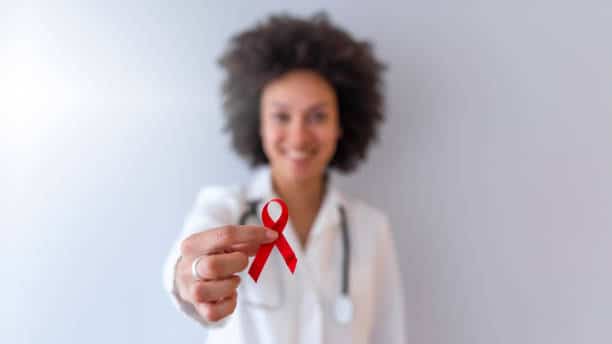
A woman with HIV who received an umbilical cord blood transplant has become the third person in the world to be cured of the virus that causes AIDS.
The two others, both men, were cured after receiving bone marrow transplants from donors who carried a mutation that blocks HIV, The New York Times reports.
The woman — who is of mixed race — was diagnosed with HIV in 2013 and took antiretroviral drugs to keep her virus levels low. She was diagnosed with leukemia in 2017 and received a cord blood transplant that year to treat the cancer, along with blood from a close relative to give her temporary immune protection while the cord blood transplant took hold, according to researchers. They presented information on the case Tuesday at the Conference on Retroviruses and Opportunistic Infections in Denver.
The cord blood contained a mutation that blocks HIV’s entry into cells and came from a partially matched donor. That’s in contrast to similar procedures using bone marrow transplants, where there’s the need to find a donor of similar race and ethnicity, the research team notes.
The cord blood procedure could therefore be a major advance in efforts to develop a cure for HIV, according to the researchers.
“The fact that she’s mixed race, and that she’s a woman, that is really important scientifically and really important in terms of the community impact,” Dr. Steven Deeks, an AIDS expert at the University of California, San Francisco, tells the Times.
RELATED: How Low Can We Go? A Clinical Trial Gives Hope For New HIV Drug Options
It’s believed that HIV infection progresses differently in women than in men, but women account for just 11% of participants in trials testing cures, despite making up more than half of HIV cases worldwide, according to the Times.
The success of the umbilical cord blood transplant also suggests that it may be possible to cure HIV in more people of varying racial backgrounds than before, the Times reported.
Along with being more available than adult stem cells typically used in bone marrow transplants, cord blood does not need to be matched as closely to the recipient. Most cord blood donors are white, but this case shows that even a partial match can cure HIV, the scientists note.
In the two previous cases of an HIV “cure,” both men were pummeled by punishing side effects from the bone marrow transplants, including graft versus host disease, a condition in which the donor’s cells attack the recipient’s body. The first patient nearly died after his transplant. The second patient’s treatment was less intense, but he lost nearly 70 pounds, developed hearing loss and survived multiple infections in the year after his transplant, according to his doctors.
In comparison, the woman in the latest case left the hospital just 17 days after her transplant and did not develop graft versus host disease, says Dr. JingMei Hsu, the patient’s physician at Weill Cornell Medicine. The combination of cord blood and her relative’s cells might have spared her much of the brutal side effects of a typical bone marrow transplant, Hsu notes.
Despite that, Deeks says cord blood transplants to cure HIV aren’t likely to become commonplace.
“These are stories of providing inspiration to the field and perhaps the road map,” he tells the Times.
Worldwide, nearly 38 million people have HIV, and about 73% are receiving treatment with antiretroviral drugs. But a cure is viewed as the only way to end the decades-long HIV pandemic.
According to the CDC, in addition to getting the proper treatments and keeping up with your medications; you can maintain a healthy lifestyle with HIV through the following:
Healthy eating is good for your overall health and can provide several benefits:
If you are unsure of where to start, talk to your health care provider about your diet. You can also request a referral to a dietician or nutritionist that can help you come up with a specific meal plan.
Exercise can help you maintain good physical and mental health. Exercise on a regular basis, provides the following benefits:
If you have HIV, you are perfectly capable of doing the same exercises as people without HIV.
People with HIV can do the same types of exercise as people who do not have HIV. Find a fitness routine that you enjoy. Make exercise fun and commit to exercising.


By subscribing, you consent to receive emails from BlackDoctor.com. You may unsubscribe at any time. Privacy Policy & Terms of Service.