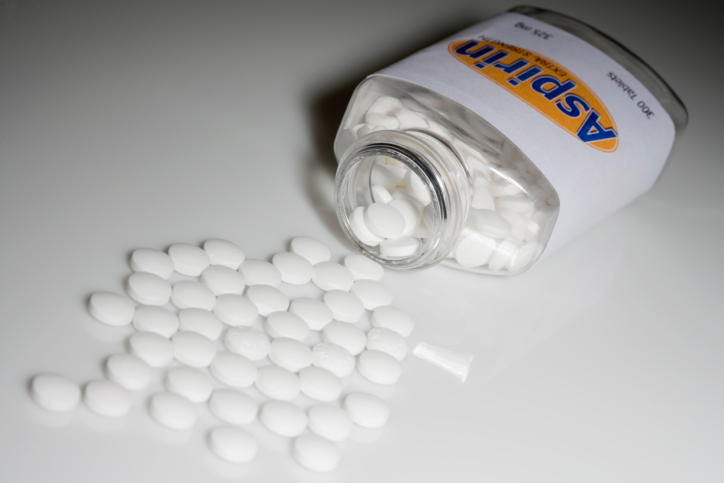
Millions of Americans who take an aspirin every day to lower their risk for heart attack and stroke may also be lowering their cancer risk.
New research adds to the growing evidence that daily aspirin may help prevent certain cancers from occurring. On top of that, daily aspirin may also be an effective treatment for people who already have cancer.
In a series of studies published in The Lancet, researchers in the United Kingdom expanded on previous research linking daily low-dose or full-strength aspirin use to a reduced risk of death from cancer over a decade of follow-up.
In their latest work, the researchers examined the short-term impact of aspirin therapy on cancer, finding a reduction in cancers after about three years of daily aspirin use, says University of Oxford professor of medical neurology Peter M. Rothwell, MD, PhD, who led the studies.
People taking aspirin for as few as five years had a lower risk of dying from cancer and of having their disease spread once it had been diagnosed.
Daily Aspirin Reduced Cancer Deaths
In one of the new studies, Rothwell and colleagues analyzed data from 51 trials originally designed to examine the impact of daily aspirin on heart attack and stroke risk.
According to the analysis, taking a low-dose aspirin every day reduced the risk of death from cancer by 37% after at least five years of use.
Taking a daily aspirin for at least three years reduced cancer incidence by close to 25% in both men and women.
In a second study, the researchers examined the impact of daily aspirin therapy on cancer metastasis, or spread, by analyzing newly published data from five other large trials.
Among the findings:
• Over an average follow-up of six-and-a-half years, daily aspirin use was associated with a 36% reduced risk of cancer with distant spread.
• Colorectal cancer patients with localized disease had a 74% reduced risk for having their disease spread when they took a daily aspirin.
• Daily aspirin use was associated with a 35% reduction in cancer deaths among patients with solid tumors, but not blood cancers such as leukemia.
• A third analysis of trials also showed that regular aspirin use seemed to reduce the long-term risk of developing colorectal cancer, as well as cancers of the esophagus and breast.
Talk to Your Doctor About Risks, Benefits
Three years ago, health policy experts weighed in on the use of daily aspirin therapy for the prevention of heart and blood vessel disease.
The U.S. Preventative Services Task Force now recommends aspirin therapy for men between the ages of 45 and 79 when the potential benefit for lowering heart attacks outweighs the risks. The task force recommends aspirin therapy for women between the ages of 55 to 79 when the potential benefit for lowering strokes outweighs the risks.
These risks include major bleeds such as stomach bleeds, which are uncommon but can be fatal.
One key finding in the new analysis is that the risk for major bleeds decreased over time in patients on daily aspirin.
“We believe randomized trials of aspirin for the treatment of cancer are urgently needed,” Rothwell says. “In the meantime, I think it would be reasonable for cancer patients who do not have an increased risk for [stomach] bleeds to take aspirin.”
Talk to Your Doctor First…
In an editorial published with the study, Andrew T. Chan, MD, MPH, and Nancy R. Cook, ScD, of Brigham and Women’s Hospital and Harvard Medical School, conclude that future guidelines regarding the use of daily aspirin must consider the therapy’s impact on cancer as well as on heart attack and stroke risk.
Chan says that in the absence of definitive data, patients need to discuss the potential benefits and risks of daily aspirin with their health care provider before starting the therapy.
“This discussion has to include the patient’s individual risks and the limitations of the data,” he says. “But we can’t ignore the data, which, though not definitive, are quite strong.”
Eric Jacobs, PhD, who is strategic director of pharmacoepidemiology for the American Cancer Society, agrees that no one should start aspirin therapy for any reason without talking to his or her doctor.
“Any decision about treatment should be made on an individual basis in consultation with your health care professional,” he says. “Even low-dose aspirin can substantially increase the risk of serious gastrointestinal bleeding.”


By subscribing, you consent to receive emails from BlackDoctor.com. You may unsubscribe at any time. Privacy Policy & Terms of Service.