Menu

5 Days in Quarantine May Not Be Enough, Here’s Why

Table of Contents
quarantine

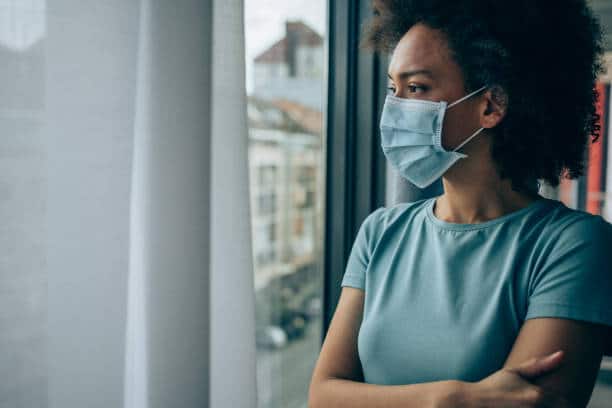
After testing positive for COVID and spending five days in quarantine (which probably seems like an eternity), you can’t wait to get back to your normal life (while wearing a mask, of course). However, new data suggests that those five days you spent quarantining, according to the U.S. Centers for Disease Control guidelines may not be enough.

Scientists have been questioning the scientific rationale behind the five-day quarantine policy since the CDC introduced it last December and they have the data to support their skepticism.

What did they find?

Featured on BlackDoctor

In two new preprints, scientists found that people infected with COVID-19 remained infectious after five days. In fact, one from the Massachusetts General Hospital in Boston showed that one-quarter of COVID patients may still be infectious eight days after first testing positive.

President Joe Biden’s “above and beyond” approach after testing positive for COVID, also serves as an indication that we should be quaranting longer. Biden first tested positive last Thursday, but said he would wait until he tests negative before returning to the public. Ultimately, he spent five days in isolation, but only returned to the public after testing negative for COVID Wednesday.

This evidence is poking holes in the guidance that so many Americans rely on to determine when it’s safe to return to work, school, or other everyday activities.

Knowing when to safely return to normal life is key as COVID is currently spreading like wildfire, with the rise of the Omicron BA.5 sub-variant.

How long should you isolate after testing positive for COVID?

If five days isn’t enough, how long should you quarantine?

The study suggests that extending the isolation period from five to ten days may be the safer route.

“There is not data to support five days or anything shorter than ten days [of isolation],” Amy Barczak, a physician at the Massachusetts General Hospital Infectious Disease Division, who contributed research to the studytells Nature.

A set number of isolation days aside, your safest bet is to remain in quarantine until you receive a negative at-home rapid antigen tests (RATs).

“There’s still all of these things that we’re not exactly sure about, but if I had to sum it up in one very concise message, it would be if you’re antigen positive, you shouldn’t go out and interact closely with people who you don’t want to be infected,” says Emily Bruce, a microbiologist and molecular geneticist at the University of Vermont in Burlington.

How to tell if it is safe to leave isolation?

If you’ve spent five days in quarantine and aren’t sure if it is safe to return to the public, here is what you should do according to the CDC and IDPH:

  • If you do not develop symptoms, get tested at least 5 days after you last had close contact with someone with COVID-19.
    • If you test negative, you can leave your home, but continue to wear a well-fitting mask when around others at home and in public until 10 days after your last close contact with someone with COVID-19.
    • If you test positive, you should isolate for at least 5 days from the date of your positive test (if you do not have symptoms). If you do develop COVID-19 symptoms, isolate for at least 5 days from the date your symptoms began (the date the symptoms started is day 0). Follow recommendations in the isolation section below.
    • If you are unable to get a test 5 days after last close contact with someone with COVID-19, you can leave your home after day 5 if you have been without COVID-19 symptoms throughout the 5-day period. Wear a well-fitting mask for 10 days after your date of last close contact when around others at home and in public.
    • Avoid people who are have weakened immune systems or are more likely to get very sick from COVID-19, and nursing homes and other high-risk settings, until after at least 10 days.
    • Do not travel during your 5-day quarantine period. Get tested at least 5 days after your last close contact and make sure your test result is negative and you remain without symptoms before traveling. If you don’t get tested, delay travel until 10 days after your last close contact with a person with COVID-19. If you must travel before the 10 days are completed, wear a well-fitting mask when you are around others for the entire duration of travel during the 10 days. If you are unable to wear a mask, you should not travel during the 10 days.

At the end the day, whether or not you should remain in quarantine will come done to context. For example, if you’re still testing positive but you feel fine and are symptom-free, you may decide to safely go outside while wearing a mask. However, if you’re going to spend time with people who are high-risk, think twice, says Dr. Emily Landon, an infectious disease specialist at UChicago Medicine.

“If you are thinking about going to the nursing home to visit your grandmother, this is not the time to do it,” she says.

Need to do something essential? Don’t feel trapped in your house. Go do it but keep your mask on, Dr. Landon concludes.


SHARE
Related Stories
Answer the question below

Gout Survey

People with gout often have sudden, painful flares of joint swelling and redness. How many gout flares have you experienced in the last 12 months?
Have you ever received intravenous medicine for your gout?

Get our Weekly Newsletter

Stay informed on the latest breakthroughs in family health and wellness. Sign up today!

By subscribing, you consent to receive emails from BlackDoctor.com. You may unsubscribe at any time. Privacy Policy & Terms of Service.

More from BlackDoctor

Where Culture Meets Care

BlackDoctor is the world’s largest and most comprehensive online health resource specifically for the Black community. BlackDoctor understands that the uniqueness of Black culture - our heritage and our traditions - plays a role in our health. BlackDoctor gives you access to innovative new approaches to the health information you need in everyday language so you can break through the disparities, gain control and live your life to its fullest.
✦ AI Search Disclaimer
This AI-powered search tool helps you find relevant health articles from the BlackDoctor.org archive. Please keep the following in mind:
✦ For Informational Purposes Only
The information provided through this AI search is for general educational and informational purposes only. It is not intended as a substitute for professional medical advice, diagnosis, or treatment.
✦ Always Consult a Healthcare Provider
Never disregard professional medical advice or delay seeking it because of something you have read through this search tool. If you have a medical emergency, call your doctor or 911 immediately.
✦ AI Limitations
This search tool uses artificial intelligence to help match your queries with articles in our archive. While we strive for accuracy, AI-generated results may occasionally be incomplete, outdated, or not fully relevant to your specific situation.
✦ No Doctor-Patient Relationship
Using this search tool does not create a doctor-patient relationship between you and BlackDoctor.org or any healthcare provider.
Explore over 35,000 articles and videos across black health, wellness, lifestyle and culture
Full AI Search Experience >
×

Download PDF

Enter your name and email to receive the download link.

BlackDoctor AI Search