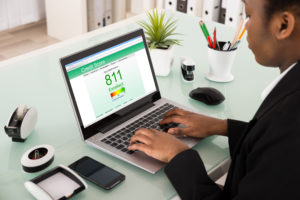
Has the coronavirus pandemic impacted your daily routine, leaving you stuck in the house and anxious? Are you wondering how to be productive and make progress during a time of uncertainty?
It’s simple, take control of your credit score!
Credit scores are the grades that are synonymous with the ever-popular term “adulting.” The three-digit number reveals how financially responsible you are and how you manage your life. Your credit score is used by lenders to assess your credit personality and risk profile.
FICO is one of the most popular credit scoring models with scores ranging from 300 to 850. The highest scores enjoy faster and easier loan approvals for mortgages, cars and other items of interest. If your credit score rises above the 800 mark, you’ll be among an elite group of credit card users who will have more access to premium credit cards, concerts, events and travel perks. While reaching this level of credit status may be difficult, it isn’t impossible.
If you’re ready to make the most of your time at home, here are a few things you can do to boost your credit score.
Check Your Credit Report
Request a free copy of your credit report by going to AnnualCreditReport.com. You can get free access to credit reports from Experian, Equifax and TransUnion credit bureaus every 12 months.
You don’t have to review all three of your credit reports at the same time but you do want to make sure you review all of them every year to ensure the information reported is accurate and up to date. This report also serves as a good document to identify negative marks on your report and get them removed by contacting the appropriate agencies.
Exercise Financial Discipline
This is not the time to go online and use your credit card like it is an ATM machine. Focus on buying essential items and products or services that will add value to your life. Remember, every time you make a purchase using your credit card, your credit utilization rate will be impacted.
Credit utilization refers to the amount of credit you have used out of the total credit you have available. Let’s say you used your credit cards to buy $200 worth of items. Your total credit limit on all your credit cards is $1000. Your credit utilization is 20 percent (200/1000). Your goal should be to decrease your credit utilization number ever month by paying more on your credit card balance than you spend every month.
Pay Your Credit Cards on Time
Do you pay your bills before the due date? If not, set alerts to make sure your tardiness doesn’t damage your credit reputation.
What if you can’t afford to make payments during this time? Call your credit card companies in advance to find out if they are offering any sort of relief to ensure that your credit score is not negatively impacted.
Your payment history comprises 35 percent of your credit score and a few wrong moves can leave your credit number tumbling backward. If you make it a habit to only put items on your credit card that you can afford to pay off, you won’t have to worry about delinquent payments.
Be Cautious When Closing Accounts
You may have had a bad relationship with credit cards in the past and want to rip up some cards and remove them from your life once and for all. But move with caution. This may not be the best time to close credit cards.
Closing credit card accounts can negatively impact your credit score, especially if the card was in good standing and has been open for several years. The length of your credit history accounts for 15 percent of your total credit score and closing credit card accounts can lower the average age of accounts on your credit report. It can also increase your credit utilization rate if this was an account that has a large credit limit and you have debt outstanding on other accounts. Weigh your options to determine if it’s better to cancel a card or keep it.
Monitor Your Credit Inquiries
The number and type of credit inquiries you have can impact your credit score. Before you have a third-party pull your credit information, you need to know if the credit inquiry is considered a hard or soft inquiry.
Hard inquiries generally occur when you apply for a loan, mortgage or credit card. Frequent hard inquiries on your credit report within a short period of time can lower your credit score. On the other hand, soft inquiries do not affect your credit score. Soft inquiries include background checks, pre-qualified credit card offers and checking your credit scores using sites like Credit Karma and Credit Sesame.
This is a great time to be more intentional about improving your financial life. A healthy credit score will allow you to come out of the pandemic smarter and stronger than ever!
Charlene Rhinehart is an Award-Winning Speaker, Certified Public Accountant, and Pageant Queen. She helps others live their best life as an Investment Coach at Wealthy Women Daily, Founder of the Career Goddess Academy, and Podcast Host at Real Estate Latte. Charlene recently published her first book, “Dividends Are a Queen’s Best Friend” on Amazon.


By subscribing, you consent to receive emails from BlackDoctor.com. You may unsubscribe at any time. Privacy Policy & Terms of Service.