——-Update as of 4/18/18——-
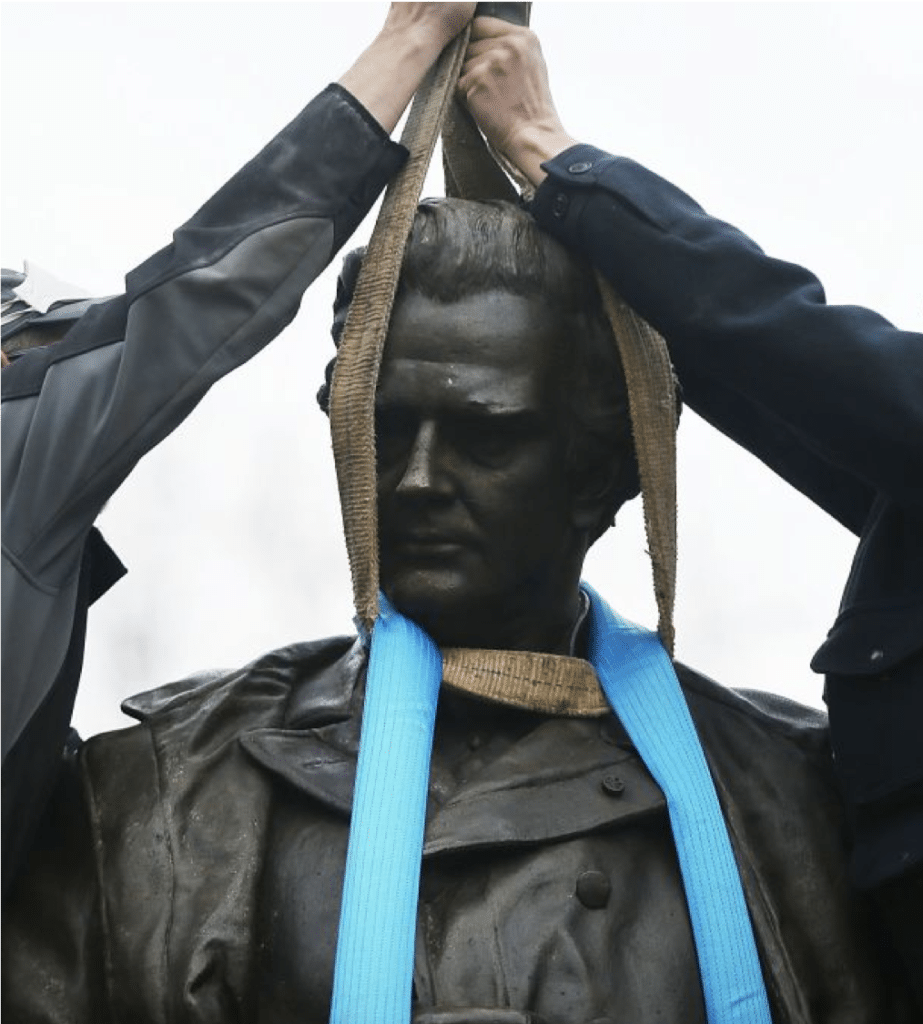
A statue of Dr. James Marion Sims is being removed on Tuesday from Central Park. The decision was approved by New York City’s Public Design Commission after Mayor Bill de Blasio created the task force following protests across the country over Confederate statues.
The city will relocate the statue, erected in 1894, to Green-Wood Cemetery in Brooklyn, New York, where Sims is buried, according to the mayor’s office.
The design commission on Monday voted unanimously, 7-0, to move the statue.
————–Original Article Below————–
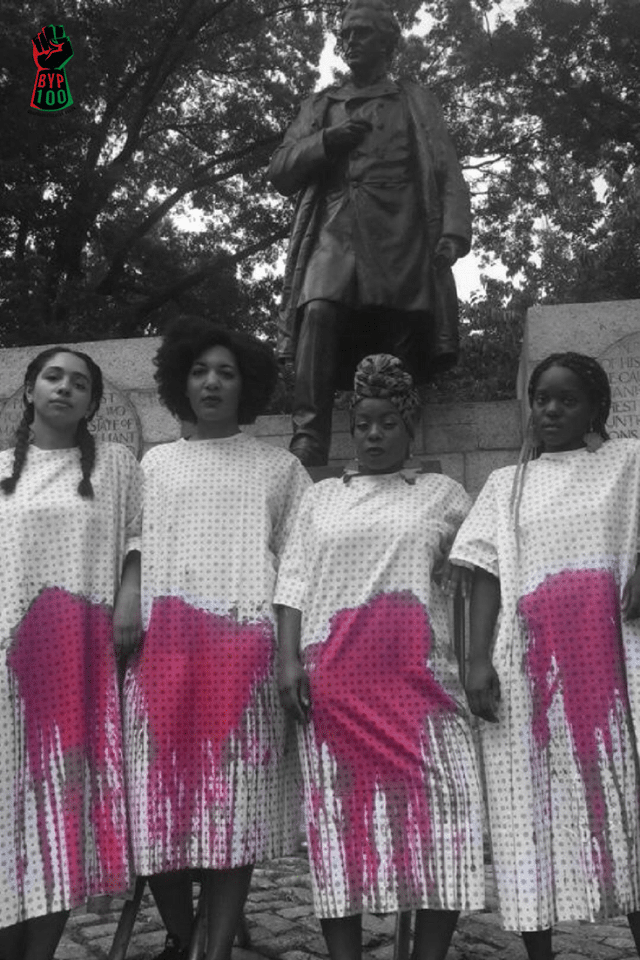
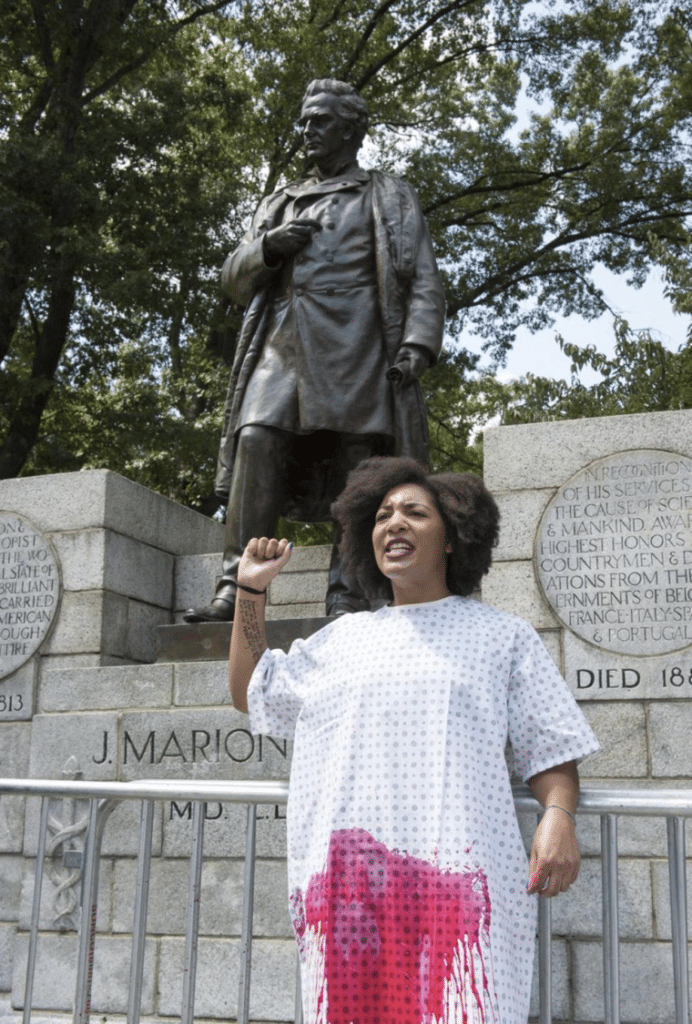
The Black Youth Project 100, an activist group founded in 2013, staged a protest against the statue of J. Marion Sims outside the New York Academy of Medicine on August 19. They photographed their protest in a Facebook post in which they explain the reason they are calling for the statue’s removal. The post quickly went viral and was picked up by many news outlets.
“J. Marion Sims was a gynecologist in the 1800s who purchased Black women slaves and used them as guinea pigs for his untested surgical experiments,” the post reads. “He repeatedly performed genital surgery on Black women WITHOUT ANESTHESIA because according to him, ‘Black women don’t feel pain.’ Despite his inhumane tests on Black women, Sims was named “the father of modern gynecology”, and his statue currently stands right outside of the New York Academy of Medicine. #FightSupremacy”
In a video for NowThis, the protest’s organizer Seshat Mack said Americans must confront their white supremacist past in order to make progress ― and that includes acknowledging the treatment of black women as guinea pigs for gynecological experiments.
Sims most work was to develop a surgical technique for the repair of vesicovaginal fistula, a severe complication of obstructed childbirth.
Sims’ use of enslaved African-American women as experimental subjects has been regarded by many modern historians and ethicists as highly unethical. He has been described as “a prime example of progress in the medical profession made at the expense of a vulnerable population.” However, his contributions are also defended by many, including physician L.L. Wall, who has emphasized Sims’ conformity to accepted medical practices of the time, the therapeutic nature of his surgery, and the catastrophic nature for women of the condition he was trying to fix.
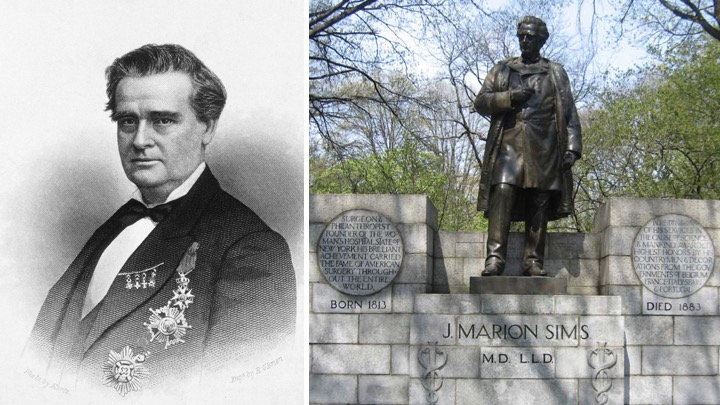
In Montgomery between 1845 and 1849, Sims experimented by surgery on 12 enslaved women with fistulas, brought to him by their masters; Sims took responsibility for their care on the condition that the masters provide clothing and pay taxes. He named three enslaved women in his records: Anarcha, Betsy, and Lucy. Each suffered from fistula, and all were subjected to his surgical experimentation. From 1845 to 1849 he experimented on each them several times, operating on Anarcha 13 times before her fistula repair was declared a success. She had both vesicovaginal and rectovaginal fistulas, which he struggled to repair.
According to the Journal of Medical Ethics, although anesthesia had recently become available, Sims did not use any anesthetic during his procedures on Anarcha, Betsy, and Lucy. According to Sims, it was not yet fully accepted into surgical practice and he was unaware of the possibility of the use of diethyl ether. However, ether as an anesthetic was available as early as the beginning of 1842. A common belief at the time was that black people did not feel as much pain as white people, and thus did not require anesthesia when undergoing surgery. Nevertheless, in a memoir he stated that “Lucy’s agony was extreme…she was much prostrated and I thought she was going to die”. After he operated on her in the presence of twelve doctors without anesthetics, she nearly died from septicemia following his experimental use of a sponge to wipe urine from the bladder during the procedure. He did administer opium to the women after their surgery, which was accepted therapeutic practice of the day.
After the extensive experiments and complications, Sims finally perfected his technique. He repaired the fistula successfully in Anarcha. His technique using silver-wire sutures led to successful repair of a fistula, and this was first reported in Sims’ published surgical reports in 1852. He was then able to repair the fistulas of several other enslaved women under his medical authority. It was only after his success in early experiments on the enslaved women that Sims attempted the procedure on white women with fistulas; he used anesthesia for their surgeries.
Both patients of Sims’ fistula and trismus nascentium operations were not given available anesthetics, and the trismus nascentium infants whom Sims operated on perished as a result of his surgeries. In regards to Sims’ discoveries, Durrenda Ojenunga wrote in 1993:
“His fame and fortune were a result of unethical experimentation with powerless Black women. Dr Sims, ‘the father of gynaecology’ was the first doctor to perfect a successful technique for the cure of vesico-vaginal fistula, yet despite his accolades, in his quest for fame and recognition, he manipulated the social institution of slavery to perform human experimentations, which by any standard is unacceptable.”
For more on the BYP100, click here.


By subscribing, you consent to receive emails from BlackDoctor.com. You may unsubscribe at any time. Privacy Policy & Terms of Service.