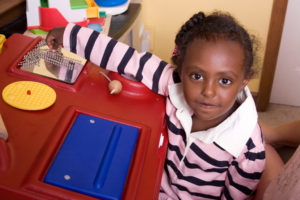
Whether we recognize it or not, autism is present in the black community. However, studies show that black children are diagnosed with autism less than Caucasian children. Black children are also older when a diagnosis is made. Limited access to health resources, socioeconomic factors, and the stigma of mental health conditions in the black community contribute to this statistic.
Health care providers are more likely to misdiagnose autistic black children with developmental delays, behavioral problems, or ADHD. Learning the characteristics of autism can help your child get the proper evaluation and diagnosis. Early detection and intervention are key!
1. Your Child Isn’t Responding To His Or Her Name
By the time your baby is nine months old, they should be able to respond when their name is called (looking, crawling to the person, stopping what they’re doing). A child with autism may not seem to hear you at all when you
call their name. They may be thought to have a hearing impairment. Having your child’s hearing tested can help in ruling the diagnosis.
2. Non-Verbal Communication Difficulties
At three months old, your baby should be able to smile back at your smiling face and have eye contact. Eye contact and responding to facial expressions can be difficult for children with autism. Older children and adults with autism may struggle to read the body language and facial expressions of others. The facial expressions of a person with autism may not match what they are saying or what they are feeling so it may be difficult to interpret their emotions.
3. Speech And Language Delays
Baby talk and babbling are important in the development of communication. Babies with autism may not babble or make verbal noises. A toddler with autism may not point at an object that interests them or wave to say goodbye. An older child with autism may talk in an unusual tone, repeat words and phrases, take things too literally, or have trouble expressing emotions.
4. Social Struggles
Children with autism may struggle to make friends or have no desire for friendships altogether. Struggles with
changes in routine and obsession over one toy or interest can make it difficult for autistic children to form friendships.
5. Sensory Issues
Children with autism may not like loud noises or certain textures which can make it difficult to attend certain events or try different foods. An autistic child may have a lack of or a heightened sense of smell, taste, touch, sight or hearing. Due to sensory issues, autistic children may walk on their toes.
6. Differences In Physical Movements
Repetitive movements may be a characteristic of children with autism. The movements can include rocking back and forth, headbanging, hand flapping, spinning in a circle, snapping fingers, lining up toys, or staring at lights.
Remember, you are your child’s first and best advocate. Getting to know the signs of autism can help you get your child the assistance that he or she will need to navigate the world. Finding resources may seem like a daunting task, but organizations such as Autism Speaks may be helpful in guiding you.

Dr. Candace McMillon-Dantley is the health-empowering creator of The Doc Knows and she’s on a mission to motivate you to a life of health. She has a Doctorate in Chiropractic Medicine and a Bachelor of Science in Biomedical Sciences. When she’s not health writing, she is health motivating and educating during her interactive presentations on healthy nutrition, self-care and conditions of the body. Her experiences as a business owner, chiropractor, wife and mom of two resonate and relate with her audiences. Connect with Dr. Candace on Instagram @drcandace.


By subscribing, you consent to receive emails from BlackDoctor.com. You may unsubscribe at any time. Privacy Policy & Terms of Service.