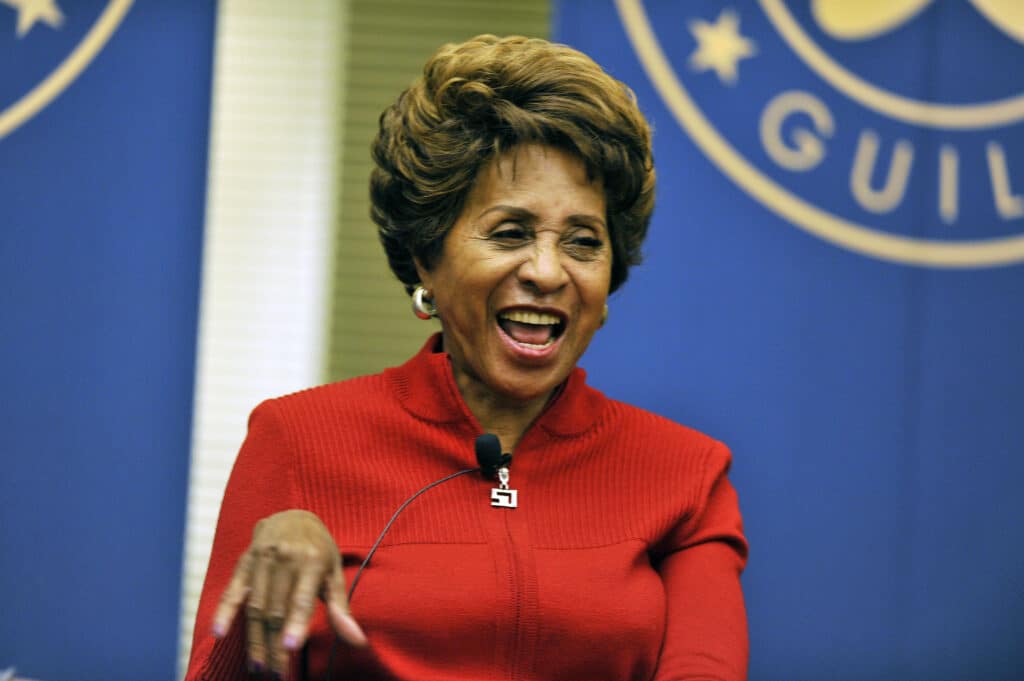
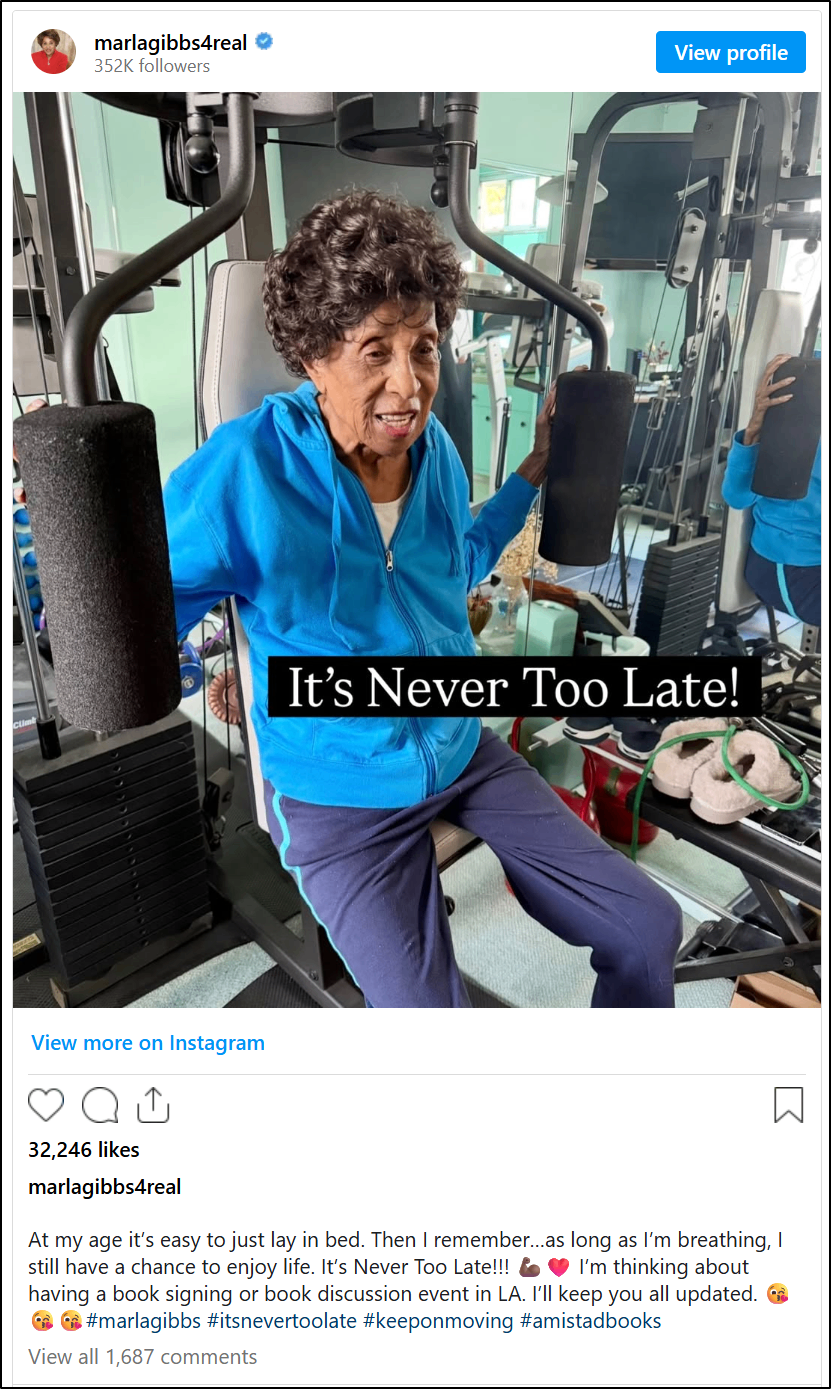
At 95 years old, legendary actress Marla Gibbs is proving that age doesn’t have to slow you down. The beloved star of The Jeffersons and 227 recently went viral after posting a photo of herself working out in the gym — yes, working out at 95 years old! When most of us complain about getting out of bed Monday mornings, she’s working out.
The video is inspiring fans across generations and reminding the world that movement, purpose, and resilience never go out of style.
In the now-viral social media post, Gibbs shared a simple but powerful message:
“At my age it’s easy to just lay in bed. Then I remember… as long as I’m breathing, I still have a chance to enjoy life. It’s Never Too Late!!!”
The quote references the title of her recently released memoir, It’s Never Too Late, where Gibbs opens up about some of the most painful chapters of her life — including enduring years of emotional and physical abuse before ultimately finding success in Hollywood later in life.
For many fans, the image of Gibbs exercising at 94 wasn’t just motivational — it was symbolic. Here was a woman who survived hardship, health scares, rejection, and abuse, still choosing to show up for herself physically and emotionally.
The internet quickly flooded with praise. Celebrities including Terry Crews and Arsenio Hall celebrated Gibbs in the comments, while thousands of fans called her an example of “aging with grace” and “Black excellence.”
But Gibbs’ story runs much deeper than one gym photo.
In her memoir, Gibbs details the emotional pain she endured throughout her life. According to reports about the book, she describes growing up in a dysfunctional household and later spending 18 years in a marriage marked by emotional and physical abuse.
Despite those hardships, Gibbs eventually found her breakthrough role at age 44 as Florence Johnston on the iconic sitcom The Jeffersons. At the time, she was still working as a reservations agent for United Airlines while filming the show.
That late-in-life success became one of the defining themes of her journey.
“Sharing my story hasn’t been easy, but it is a blessing,” Gibbs said recently. “God has a plan and it’s never too late to fulfill that purpose.”
Her story also includes overcoming serious health challenges. In 2006, Gibbs suffered a brain aneurysm followed by a stroke that nearly killed her. Yet even after that terrifying ordeal, she continued acting, appearing on shows including Grey’s Anatomy, Chicago Med, and Young Sheldon.
Today, Gibbs represents something increasingly rare in Hollywood: a woman in her 90s still choosing activity over limitation.
Experts consistently say that regular movement becomes even more important as we get older. Exercise helps preserve mobility, muscle strength, balance, circulation, brain health, and independence.
While aging naturally causes some loss of muscle and flexibility, staying sedentary can accelerate those declines dramatically.
The good news? You don’t have to become a bodybuilder in your 70s, 80s, or 90s to benefit from movement.
Even gentle, consistent activity can improve quality of life.
The biggest mistake many older adults make is becoming too inactive. Daily walks, stretching, gardening, dancing, or chair exercises can all help maintain mobility and circulation.
Consistency matters more than intensity.
Muscle loss increases with age, which can affect balance and independence. Light resistance exercises using resistance bands, light dumbbells, or bodyweight movements can help maintain strength safely.
Even two or three sessions per week can make a major difference.
Falls are one of the biggest health risks for older adults. Exercises like tai chi, yoga, or simple balance drills can improve coordination and stability.
Flexibility helps reduce stiffness and improve range of motion. Gentle stretching can also help relieve joint discomfort and improve posture.
Physical activity also supports cognitive function. Studies continue to show that exercise may help reduce the risk of memory decline and dementia.
Group classes, walking clubs, or exercising with friends can improve mental health while making fitness more enjoyable.
Older adults should always work within their abilities and consult healthcare providers before beginning new fitness routines — especially after surgeries, strokes, or chronic health conditions.
For decades, society has often portrayed aging as a time of decline. But Gibbs continues to challenge that narrative.
At 95, she isn’t just surviving — she’s still evolving.
Her viral workout photo reminded fans that purpose doesn’t expire with age. Neither does resilience.
And perhaps that’s the most powerful lesson from Marla Gibbs’ journey: it truly is never too late.


By subscribing, you consent to receive emails from BlackDoctor.com. You may unsubscribe at any time. Privacy Policy & Terms of Service.