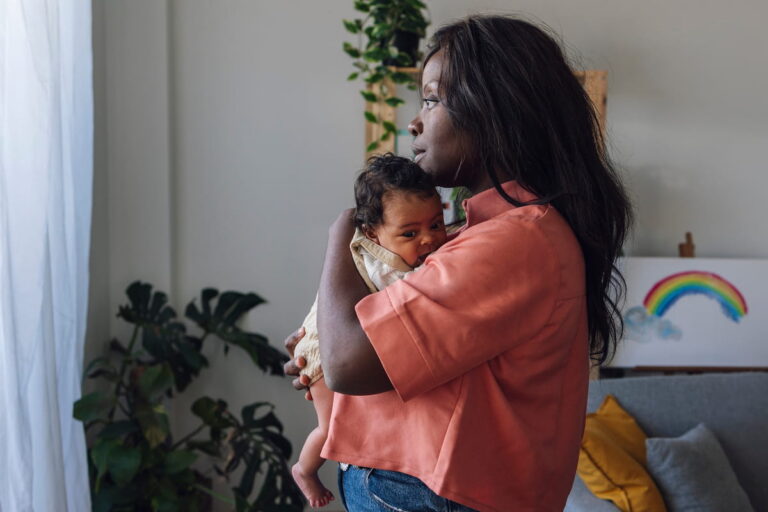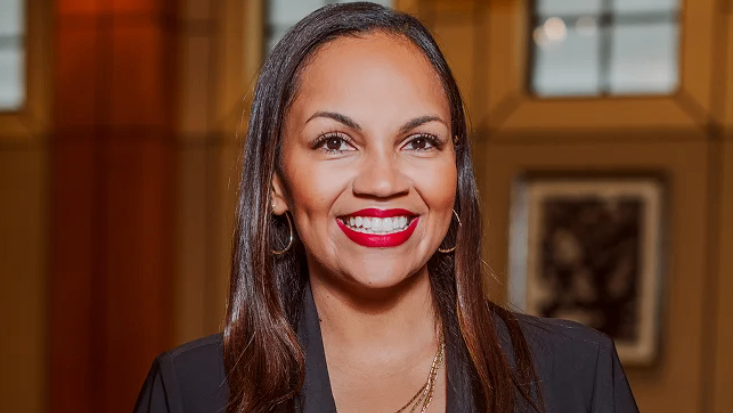
Teana became a mother after delivering twins at only 23 weeks. Sadly, her son passed away soon after birth because of an infection. Her daughter, Leila, spent 161 days in the NICU, facing her own challenges. Leila was diagnosed with patent ductus arteriosus (PDA), a heart condition where a hole that usually closes at birth stays open. Because of this, Leila needed a ventilator to help her breathe.
Instead of putting Leila through risky open-heart surgery, doctors suggested a newer and less invasive option called the Abbott Amplatzer Piccolo™ Occluder. This device is inserted through a small catheter placed in a blood vessel, usually in the leg, and guided up to the heart. Once in place, it closes the hole without the need for stitches or a large incision, making the procedure much easier on tiny, fragile babies like Leila.
“As a first-time mom and a mom who lost her child, it was very nerve-racking,” Teana tells BlackDoctor. “But I think that the option to get the quick procedure over open-heart surgery was a no-brainer.”
The procedure was quick and went well. Right after, Leila was able to move from a ventilator to a CPAP machine. It was the first time she could mostly breathe on her own.
Even though the procedure was new, Teana trusted the specialists caring for her daughter.
“I trusted the doctors. I knew I had to advocate for my daughter … Looking back, I’m so happy that this was an option because I don’t know where I would be today if this quick procedure wasn’t an option,” Teana adds. “The nurses and doctors around Leila were really hands-on with her and taking care of her—they were on it, they were able to explain things.”
RELATED: “I Knew Something Wasn’t Right”: How One Mom Saved Her Daughter’s Life
Teana often talks about how resilient her daughter is. Since the heart procedure, Leila has reached many important milestones, even though her medical journey continues. Right now, she manages:
Even with these challenges, Teana says most people wouldn’t guess Leila had such a tough beginning because she is so active and happy now.
“She still has a lot of medical problems, but she’s living her life. She’s resilient. She’s doing it, and I’m so proud of her. And I’m happy that technology and medicine have come as far as they have because I’m just so thankful that she didn’t have to go through something super invasive on top of all the other things that she has to go through to get where she is today,” Teana notes.
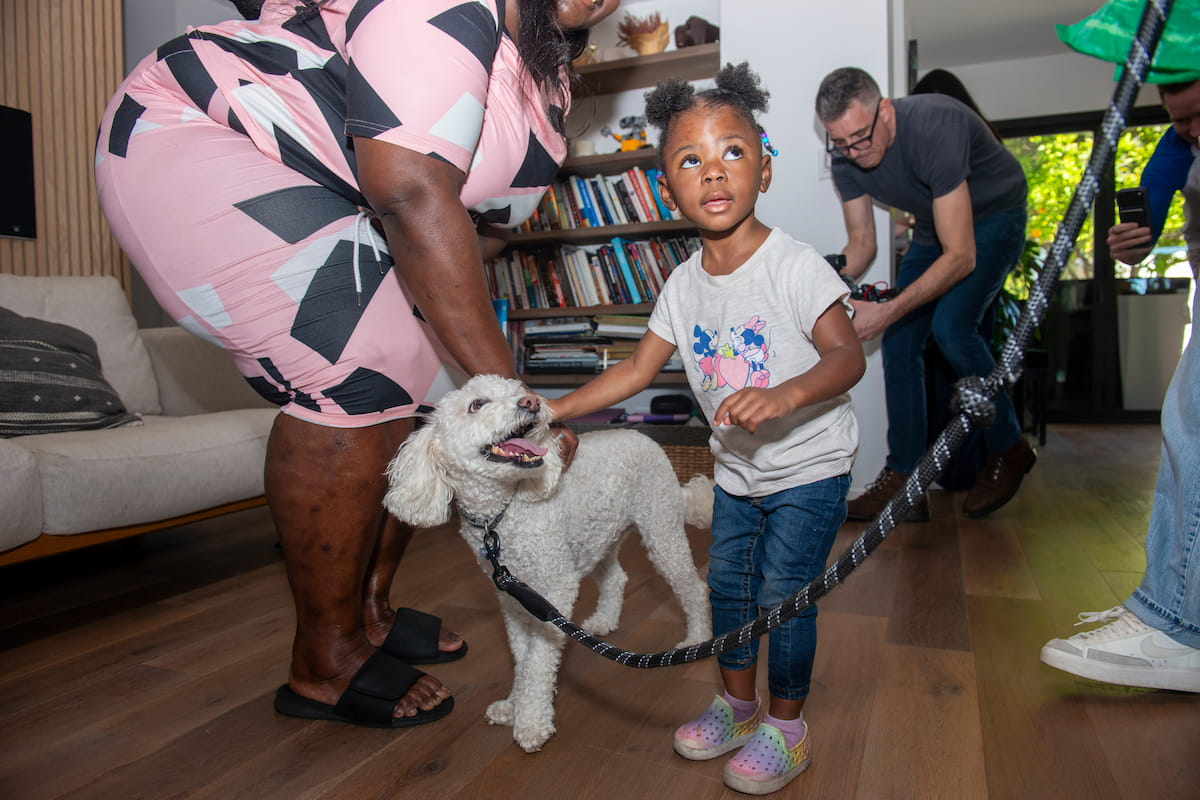
Leila also met Oscar, a dog with the same heart defect who was saved by the Piccolo device, too.
“I knew that there were other parents who had children who got this procedure, but I didn’t think that this could be done with any walks of life, whether it’s an animal or a child,” she says.
She thought it was “amazing” to watch her daughter play catch with Oscar. It reminded her that medical advances can save lives in many different ways.
“She was super excited to just grab the ball and Oscar was super excited to go get the ball. It was just amazing to watch that both my daughter and Oscar had a great time, and they’ve been through the same kind of rough start,” Teana notes.
Teana hopes that by sharing Leila’s story, her daughter will understand how strong she is as she grows up.
“I still kind of sprinkle it here and there. I’m like, ‘Oh, where is your shunt?’ And then I’m like, ‘Where is your Abbott Piccolo device?’ So she points to it, and I tell her about her brother,” Teana explains. “But once she gets to that age, I’m really excited for her to be able to be like, ‘Oh yeah, I’m that girl. I’m strong.’”
Teana shares two main pieces of advice for parents in similar situations: trust the process and speak up for your child. She suggests working closely with the medical team and remembers how her doctor drew heart diagrams to help her understand the procedure.
“I think after [I lost] my son, it kind of opened my eyes a little more, and thinking back, I wonder if that wouldn’t have happened, like how things would have changed … It ramped me up, like ‘I’m gonna say something if I see something … I’m gonna make sure I advocate for her and get the answer I need, and if I don’t understand it, I’m gonna ask another question and ask them to explain a little better, or help me understand,’” Teana shares.
She tells parents to ask as many questions as they need and to never feel embarrassed about wanting clear answers.
“Kids are young and they can’t speak for themselves. So you, as a parent, should be there to understand and don’t be afraid to ask questions,” Teana adds.
Beyond the hospital, Teana found her own support through “preemie mom” and “twin loss” Facebook groups. “I think that was super helpful just to see what other parents have gone through,” she adds.
With Leila’s heart defect now fixed, Teana is excited to enjoy the simple, everyday moments with her daughter.
“Just the other day, I took her to the park and she was like making friends, and that was kind of one thing that I was kind of worried about because she’s usually on her own, she likes to play with herself,” Teana explains. “So the fact that … she was able to make a friend … even something small like that, I get excited about and I kind of shed a tear. I’m super emotional.”
She is also looking forward to seeing her two-year-old start school soon.
“That’s super nerve-racking, because I’m like, my little daughter that could fit in the palm of my hand is going to school with other kids,” she adds. “But I’m just excited to see everything—whether it’s the small things or big things. Like her taking her first step was big, and everything seems bigger to me because of what she’s been through.”
Leila’s journey from a fragile 23-week newborn to a vibrant toddler is a testament to the power of both maternal advocacy and medical breakthroughs.

By subscribing, you consent to receive emails from BlackDoctor.com. You may unsubscribe at any time. Privacy Policy & Terms of Service.