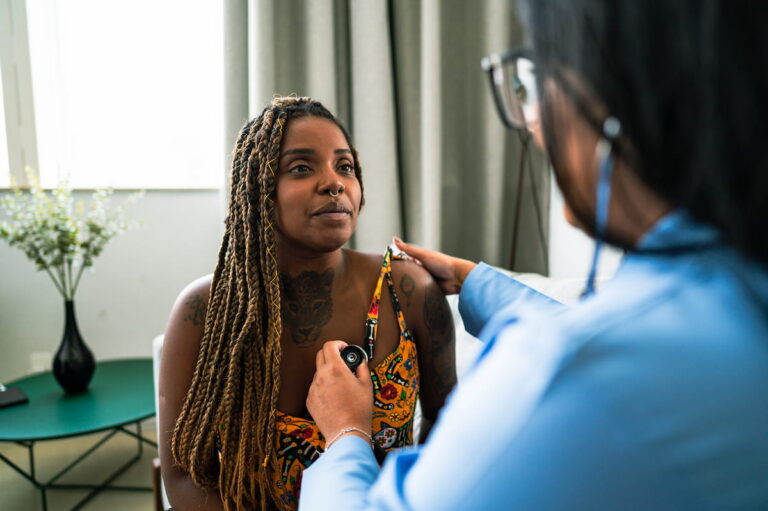
Almost half of Americans with high blood pressure do not have it under control. For many, their condition is either uncontrolled or does not respond well to strong medical treatment, according to Johns Hopkins.
AstraZeneca hosted an exclusive virtual media event for World Hypertension Day to discuss the growing problem of uncontrolled high blood pressure worldwide. The event focused on new scientific findings about blood pressure and highlighted how hypertension affects the Black community more than others.
RELATED: Why High Blood Pressure Is So Dangerous and What You Can Do About It
Moderator Dr. Modele Ogunniyi, a cardiologist from Atlanta, began the session by stressing the problem’s widespread nature. High blood pressure is the top risk factor for serious long-term health issues, but it often has no symptoms until it causes harm.
“Globally, about 1.4 billion people live with hypertension,” Dr. Ogunniyi noted. “Bringing it down home to the United States, that’s approximately 120 million people. It is the leading risk factor for serious, long-term complications like cardiovascular disease, kidney disease, cerebrovascular disease, mild cognitive impairment, and even dementia.”
The panel discussed the 2025 High Blood Pressure Guidelines, which Dr. Ogunniyi co-authored. These guidelines emphasize that normal blood pressure is strictly below 120/80 mmHg. Anything higher begins a sliding scale of risk, culminating in severe hypertension (readings above 180/120 mmHg).
Much of the discussion looked at why high blood pressure is more common and more serious in Black communities. Deborah, a patient advocate and retiree from Savannah, Georgia, shared her story to show how cultural beliefs and limited awareness in her community affect how people understand and deal with hypertension. Her experience highlighted issues like underdiagnosis, lack of education, and ongoing health inequalities.
“I didn’t know that much about high blood pressure … I always associated it with older people, and that was just their way of saying, ‘don’t bother me, you’re stressing me.’ That was the extent of what I knew,” Deborah said.
She said that although her mother had high blood pressure, it was rarely talked about as a serious health problem. This led her to feel a sense of denial when she was diagnosed in her 30s.
Dr. Bryan Williams, Chair of Medicine at University College London, supported these points with clinical evidence. He said there is a clear genetic tendency for high blood pressure in families, especially among Black Americans. This group often faces two challenges: they are more likely to be sensitive to salt and to have problems related to the hormone aldosterone.
“In Black Americans, there’s a more common history of hypertension. We know this particular problem [aldosterone/salt sensitivity] is more common in that population … we’re really beginning to pull the pieces of the jigsaw together,” Dr. Williams explained.
RELATED: Aldosterone: The Overlooked, Curable Cause of High Blood Pressure
One of the most important topics discussed was aldosterone, a hormone made by the adrenal glands. Dr. Williams called it the “master regulator” of the body’s salt retention.
Normally, aldosterone is only supposed to be active when blood pressure is too low (due to dehydration or blood loss). However, in many patients with uncontrolled hypertension, the body continues to produce it even when blood pressure is dangerously high.
“It is the master regulator of how much salt your body retains when you consume salt,” Dr. Williams explained. “If aldosterone levels are elevated … you will be more sensitive to salt. So even if you dramatically reduce your salt intake, you’ll be sensitive to every little increment in consumption of salt, and that will drive up blood pressure.”
Dr. Williams shared that researchers have found genetic changes in the adrenal glands as people get older. These changes make the glands keep producing aldosterone without stopping. This hormone not only raises blood pressure but also harms the heart and kidneys by causing inflammation and tissue damage.

Deborah’s story served as a poignant reminder of why new scientific targets are necessary. Despite a 30-year journey of exercising, cutting salt, and taking multiple medications, her blood pressure has remained uncontrolled, leading to a terrifying hypertensive crisis six years ago.
“My blood pressure was over 200, and I was hospitalized because they couldn’t get it down … then I began to learn more about the impact of high blood pressure on the heart and the kidneys, and even I developed chronic kidney disease,” Deborah shared.
Despite these challenges, she remains optimistic about the future of treatment—not just for herself, but for her daughter, who was also recently diagnosed.
“What matters most is that I want to get it in control so that I can keep doing the things that I’m doing—spending more time with my grandchildren … they are my heart right now, and I just want to be around long enough to see them when they become adults,” she added.
The panel concluded with a call for more aggressive screening and better education for both patients and clinicians. Dr. Williams pointed out that for every 10 mmHg reduction in systolic blood pressure, the risk of stroke drops by 27% and the risk of heart failure by 28%.
These findings show how important it is to act early and involve patients in addressing the ongoing public health problem of uncontrolled high blood pressure.
Dr. Ogunniyi emphasized that “knowing your numbers” is only the first step. Patients must work in partnership with their doctors to investigate the causes of their high blood pressure, rather than just treating the symptoms.
Deborah’s final words of encouragement for those struggling: “That they be their own advocate for their health, and that they take it seriously and do the right things … most importantly, you have to manage your blood pressure. For myself, I never know how elevated it is until I do the reading.”


By subscribing, you consent to receive emails from BlackDoctor.com. You may unsubscribe at any time. Privacy Policy & Terms of Service.