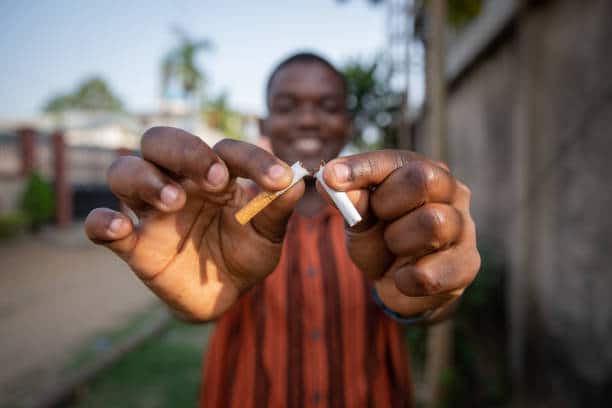
When you quit smoking, your body begins to undergo a series of changes as it starts to repair the damage caused by smoking. Some of the changes that occur include:
Blood circulation improves: Within 20 minutes of quitting smoking, your heart rate, and blood pressure drop. Within a year, your risk of heart disease is half that of a smoker.
Lung function improves: Within three months of quitting smoking, lung function improves, making it easier to breathe.
Sense of smell and taste improve: Within two to three weeks of quitting smoking, your sense of smell and taste improves.
Coughing and shortness of breath decrease: Within three months of quitting smoking, coughing and shortness of breath decrease.
Reduced risk of cancer: The risk of lung cancer decreases by half within ten years of quitting smoking, and the risk of other types of cancer, such as larynx and bladder cancer, also decreases.
Improved skin and hair: Within two to four weeks of quitting smoking, your skin and hair begin to look healthier.
Increased energy levels: Within a few weeks of quitting smoking, you may find that you have more energy and endurance.
Reduced risk of lung diseases: After 15 years of not smoking, your risk of lung diseases such as COPD and emphysema is similar to that of a non-smoker.
It’s important to keep in mind that quitting smoking can be difficult and may take several attempts, but the benefits to your health are well worth it. Many people find that a combination of medication, counseling, and support groups can help them quit smoking successfully.
What Are the Dangers of Continuing to Smoke?
Smoking poses many serious health risks, including lung cancer, emphysema, and heart disease.
Additionally, smoking can cause damage to nearly every organ in the body and can lead to various types of cancer and other chronic illnesses.
It can also harm the health of those around smokers through secondhand smoke.
Additionally, smoking can also have serious social and economic consequences, including decreased productivity, increased healthcare costs, and lost income due to illness or death.
Nicotine replacement therapy (NRT): This includes products such as patches, gum, and lozenges that can help curb cravings and withdrawal symptoms.
Medications: Some prescription medications, such as bupropion and varenicline, can help reduce cravings and withdrawal symptoms.
Counseling: Talking to a therapist or counselor can help individuals understand and cope with their addiction to nicotine, as well as identify and overcome triggers for smoking.
Support groups: Joining a support group can provide individuals with a sense of community and a network of people who understand the challenges of quitting smoking.
Quitline: Many countries have a quitline, which is a helpline that provides information, advice, and support to help people quit smoking.
Online resources: There are many websites and apps that provide information, support, and tools to help people quit smoking, such as smokefree.gov, quit.com, and quit Genius.
It is important to find the right combination of resources that work for you and also to keep trying if you slip up and smoke again.
First Steps to Quitting Smoking
Here are some first steps to take when quitting smoking:
Set a quit date: Choose a specific day in the near future when you will stop smoking and make a plan for how to handle cravings and triggers.
Talk to your doctor: Your doctor can provide you with information on the different methods available to help you quit smoking and can also help you to develop a quit plan.
Gather support: Tell your friends and family that you’re quitting and ask for their support. You can also seek out a support group or counselor who specializes in helping people quit smoking.
Get rid of smoking paraphernalia: Throw away lighters, ashtrays, and cigarettes. Clean your clothes, car, and house from the smoke smell.
Get active: Regular physical activity can help reduce cravings and improve your mood.
Plan for cravings and triggers: Identify situations and emotions that make you want to smoke, and plan how you will handle them when they arise.
Be patient with yourself: Remember that quitting smoking is a process, and it may take multiple attempts to quit successfully.
Reward yourself: Give yourself a non-food reward for each smoke-free milestone you reach, whether it be a massage or a new book, or a weekend getaway.
It’s important to remember that quitting smoking is not easy, but it is possible. With the right tools, support, and mindset, you can successfully quit smoking and improve your health and well-being.
BlackDoctor is the world’s largest and most comprehensive online health resource specifically for the Black community. BlackDoctor understands that the uniqueness of Black culture - our heritage and our traditions - plays a role in our health. BlackDoctor gives you access to innovative new approaches to the health information you need in everyday language so you can break through the disparities, gain control and live your life to its fullest.
✦ AI Search Disclaimer This AI-powered search tool helps you find relevant health articles from the BlackDoctor.org archive. Please keep the following in mind:
✦ For Informational Purposes Only The information provided through this AI search is for general educational and informational purposes only. It is not intended as a substitute for professional medical advice, diagnosis, or treatment.
✦ Always Consult a Healthcare Provider Never disregard professional medical advice or delay seeking it because of something you have read through this search tool. If you have a medical emergency, call your doctor or 911 immediately.
✦ AI Limitations This search tool uses artificial intelligence to help match your queries with articles in our archive. While we strive for accuracy, AI-generated results may occasionally be incomplete, outdated, or not fully relevant to your specific situation.
✦ No Doctor-Patient Relationship Using this search tool does not create a doctor-patient relationship between you and BlackDoctor.org or any healthcare provider.
Explore over 35,000 articles and videos across black health, wellness, lifestyle and culture