
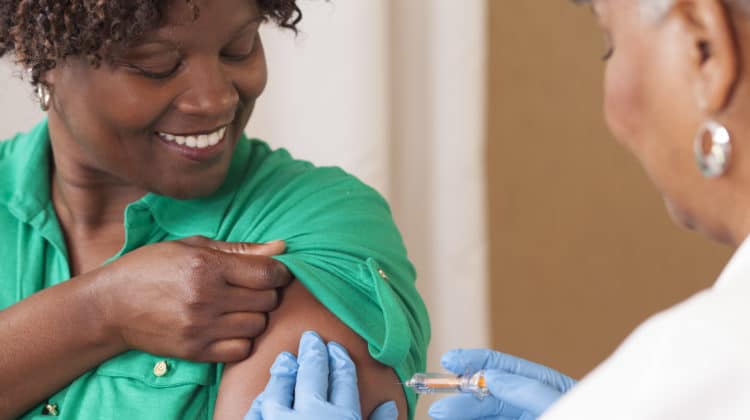
Black residents of Missouri have received roughly 4% of the total COVID-19 vaccines administered, despite making up 11% of the population, according to a new dashboard https://covidvaccine.mo.gov/data the state launched Tuesday.
For the first time, the dashboard shed light on detailed demographic data and a county-by-county breakdown of where COVID-19 vaccines have been given to residents. Sadly, similar to Missouri’s demographic data on coronavirus cases — it’s incomplete. The dashboard’s launch follows criticism in recent days after data from the Centers for Disease Control and Prevention showed Missouri was last in the country in the percentage of residents who have received an initial dose.
According to Missouri’s dashboard Tuesday, an estimated 4.5% of the state’s residents received at least their first dose. From Jan. 16 to 22, 105,870 doses had been administered — an average of 15,111 a day.
The state’s population that has received at least one dose had increased by a percentage of 6.2% by Saturday.
Boone County was one of only five counties in the entire state where more than 5% of residents had received the first dose. Boone County’s percentage Saturday was 8.4%. The county of Cape Girardeau had the largest share of residents who had received an initial dose at 12.5%. The state’s largest metro areas had administered the most doses. Several counties had administered fewer than 100 doses as of last Tuesday.
The largest number of vaccines have been administered to residents who are between 55 and 64 years old, with 68,596 doses as of Jan. 24. However, the age group that has the largest percentage of people vaccinated so far were those 85 and up, with an estimated 11.8% of people in that age group receiving a dose among 15,975 doses. Rates exclude records for which age was unknown, meaning the actual number may be higher.
Demographic data is not displayed by county, and the dashboard does not break down how many doses of demographic data is unknown. With racial data unknown for about 18% of doses administered, the ability to understand the scope of vaccinations in Missouri’s communities of color is limited.
According to figures from the state’s immunization database, ShowMeVax, that were released by the Missouri Hospital Association in its Tuesday newsletter, racial data was missing or unknown for 65,807 doses administered as of Jan. 24.Of the data the state has collected, the largest number of vaccines has gone to white residents, with 209,880 doses — nearly 59% of all doses administered.
Accurately identifying and reporting data on recipients’ race and ethnicity “is vital to the success of the mass vaccination campaign in Missouri,” MHA’s newsletter read.
Missouri prioritizes racial and ethnic minorities in Phase 2 of its eligibility tiers — the last phase before the vaccine becomes available to the wider public.
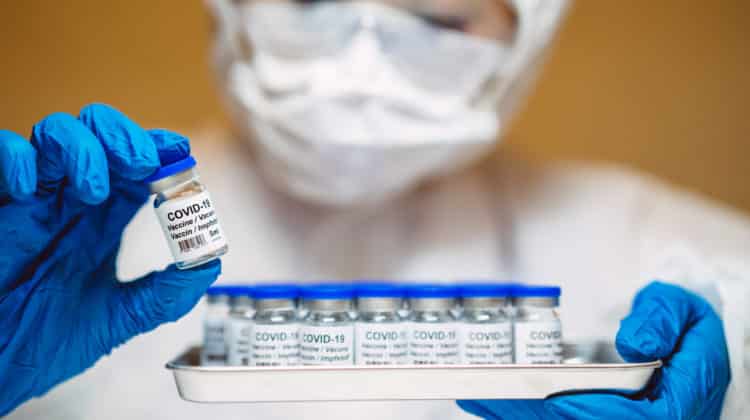
Missouri’s low numbers of vaccinations among minority residents, “raises serious questions on vaccine acceptance and trust-building in Black and Brown communities that have been the historical recipients of devastating medical mistreatment, including the infamous Tuskegee Syphilis Experiment, and also highlights the critical need to ensure adequate distribution to vulnerable citizens,” MHA’s newsletter read.
Black Missouri residents were the most skeptical that a vaccine would be distributed fairly, according to an MHA poll earlier this month, and the low figures underscore the challenge Missouri faces in communicating the safety and effectiveness of a COVID-19 vaccine to hesitant residents.
According to the CDC, Missouri had distributed 665,300 doses from the federal government and administered 340,273 doses as of Tuesday — about 51% of its doses. However, Missouri’s own dashboard gives the total number of doses administered at 356,310. The CDC’s data notes that federal figures may differ because there may be a delay between when a vaccination record appears in a state system and when it’s received by the CDC.
In a news release announcing the dashboard’s launch, Gov. Mike Parson said he participated in a call Tuesday with the National Governors Association, White House officials, and other federal partners, and that other governors “expressed concern that vaccination data from the CDC is being misrepresented and does not fully reflect the situations we are seeing at the state level.” Missouri’s low percentage of residents who had received the initial shot caused some lawmakers to call for greater transparency and faster distribution.
“We can all agree this is not acceptable, and I urge you to provide swift action to address these shortcomings,” Sen. Tony Luetkemeyer, R-Parkville, wrote in a letter Tuesday to Randall Williams, the director of Missouri’s Department of Health and Senior Services.
Rep. LaDonna Appelbaum, D-St. Louis said she intends to investigate the state’s early deployment of vaccines. “I understand the difficult logistics in such a massive undertaking, but other states obviously have not had the same problems as Missouri in dealing with these issues,” Appelbaum said in a statement Tuesday. “My constituents and all Missourians deserve to know why their state has dropped the ball on protecting them from COVID, time and time again.”
Williams was scheduled to testify on the state’s vaccine rollout before the House Committee on Health and Mental Health Policy Wednesday.


By subscribing, you consent to receive emails from BlackDoctor.com. You may unsubscribe at any time. Privacy Policy & Terms of Service.














