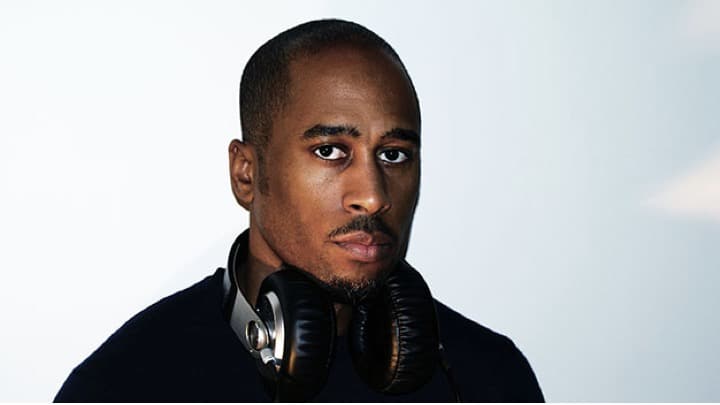
DJ, record producer, and rapper, Ali Shaheed Muhammad is probably best known as a member of A Tribe Called Quest. With members Q-Tip and Phife Dawg (and sometimes Jarobi White), the group released six studio albums to date. Now, the talented producer is using his music and voice to speak out about racism and inequalities.
Muhammad began his musical career in his hometown of Brooklyn, New York. It was there that his uncle, Michael Jones, a bass player and DJ himself, pulled aside 8-year-old Ali and began teaching him music. Ali then spent years DJ-ing parties in his Bedford-Stuyvesant neighborhood and recorded a slew of demos before co-founding Tribe in 1985 with Q-Tip, Phife Dawg, and Jarobi. He was just 19 when the group released its first album, and then the rest is history.
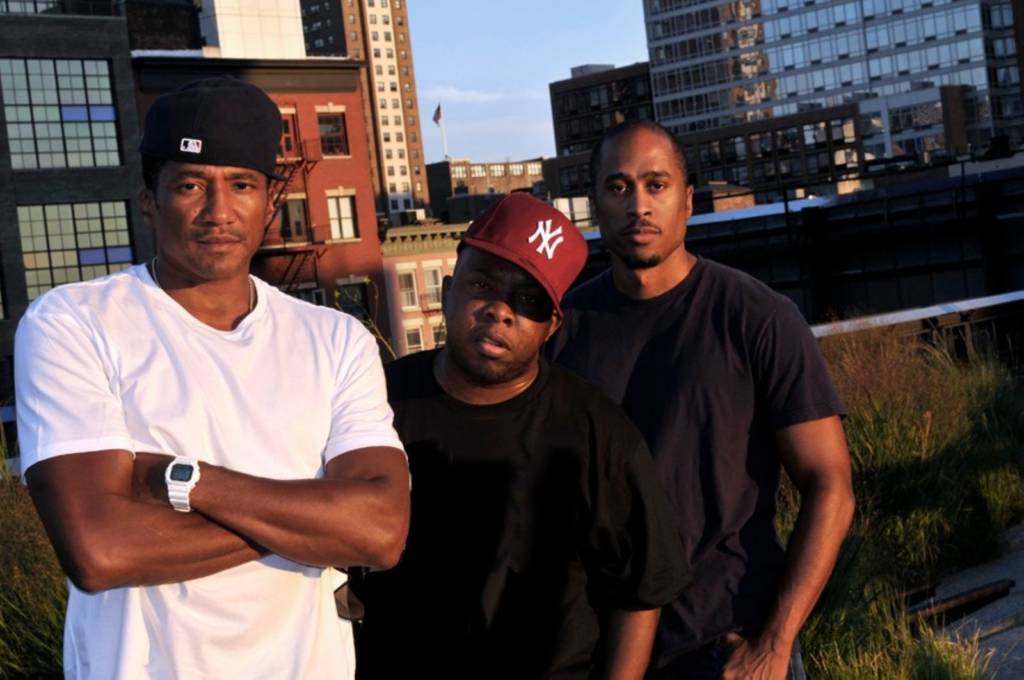
After the group disbanded in 1998, Muhammad formed the R&B supergroup Lucy Pearl with Dawn Robinson, formerly of En Vogue and Raphael Saadiq, formerly of Tony! Toni! Toné! Together with Jay Dee and Q-Tip, Muhammade also formed the music production collective The Ummah. They produced music for Janet Jackson, Mint Condition, Brand New Heavies, Heavy D, Whitney Houston, and more.
“When Q-Tip asked me to join the group back when I was 15, I was in this other group — don’t even remember the name. But with my boy, he went by the name of Gucci. 15. ’85. And I sensed that there was something — Q-Tip and I were friends — but I sensed there was something really special about him. And there were a couple of crews in the school trying to do their thing. And at Murry Bergtraum there used to be this talent show, so there were other rappers and DJ crews and — but it was something about Tip and Jarobi that I felt this was — I had not met Phife at the time he had approached me. I saw — Jarobi had beatboxed for Q-Tip in one of these talent shows. And so — I don’t know. I just felt there was something really special about him. And he asked me to do a mixtape as my audition for the group. I did and I guess he liked it.”
“So from there, he’d come to Brooklyn and my uncle had studio equipment. Uncle Mike. Famous Uncle Mike. And We started carving out what everyone now knows to be A Tribe Called Quest. And when he asked me and I knew, the only thing that I said that I wanted from this was to be able to care of myself, my family, and for the people who cut the checks know who I am. Everyone else, I wasn’t in it for that.”
Over the years, many of the female fans of ATCQ started to take notice of Muhammad as his body has become more cut and defined. When asked about it, Muhammad says he got into being physically healthy through what he learned from singer, producer Raphael Saadiq.
“Singing and touring takes a lot of stamina — and more so for singing. Well, I shouldn’t say more so, cause singing and rapping you’re so exerting so much energy, depending on your style. And so there has a good amount of physical conditioning, and if not then over long term you destroy your body.”
“So there’s that discipline aspect, you know, and it becomes physical in the spiritual sort of a connection. Even though the eye initially sees it and it becomes a sense of vanity. It’s really not. It’s so that, as a singer, as a musician, you have the stamina to maintain your role, your job. No different than a boxer. It’s like being in shape. And that’s what — as much as I have my own rendition of that in A Tribe Called Quest and tried to inspire to the team and the fam to like, “Let’s just exercise.”
Now, with production credits on some of the hottest songs, Muhammad is now using his voice to shed light on some subjects that are important to him.
“I think at some point there may be artists who will get fed up, and they deliberately want to use their art as a means to rock the waves a little bit. And instead of doing the status quo, they’ll deliberately go out to…
… really make a change. I think Kendrick Lamar is an example of that. I think J. Cole definitely is an example of that, in trying to shift the paradigm a little bit. Kanye West is another one.”
“Going back to my individual challenges with music, is it good? Is it not good? Is it helpful? If you take it back to just the tribal, communal interaction with music, it was a place where people sat down in a circle and they communicated. They listened. They vibrated. And then they talked about whatever was happening, what was feeling. That talk about the feeling then became a song. That song then turned back into the conversation. And I think it was used as a way to heal and help and teach the next generation. So that’s what we aspire to.”
“And it takes me back to the beginning of our conversation. It’s why I can’t lower the bar. Because I do truthfully believe that music is transformative.”
“I want to love the songs when it’s over. And I don’t want to look at it and go, “Man, this song really hurt the culture. Yeah, I made 100 million off of it but, man, it killed the culture. Oh, well. Cool. I’m on my yacht. I don’t care.” And I know a lot of people are good like that, but I’m just not one of those people.”


By subscribing, you consent to receive emails from BlackDoctor.com. You may unsubscribe at any time. Privacy Policy & Terms of Service.