
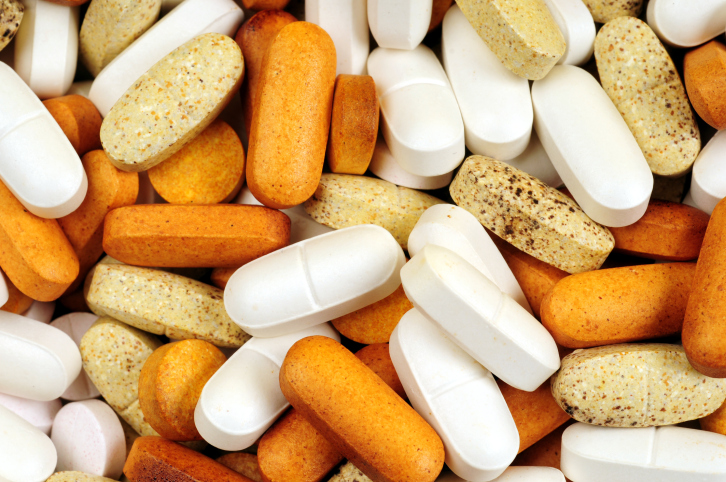
(BlackDoctor.org) — Far from being healthy, supplements such as multivitamins, minerals and folic acid may actually raise the odds for death in older women who take them, a new study suggests.
Dietary supplements are widely used in the United States, often with the hope of avoiding chronic disease. However, the long-term health consequences of many compounds are unknown, the researchers said.
“Our study raises concerns about the safety of a number of commonly used dietary supplements,” said lead researcher Jaakko Mursu, a nutritional epidemiologist at the University of Eastern Finland, in Kuopio. “We would advise people to reconsider whether they need to use supplements and put more emphasis on a healthy diet,” he said.
The report was published in the Oct. 10 issue of the Archives of Internal Medicine.
For the study, Mursu’s team collected data on nearly 39,000 women who took part in the Iowa Women’s Health Study. Specifically, the researchers looked for a connection between taking dietary supplements and the risk of death. The women in the study had an average age of 62 and reported their supplement use in 1986, 1997 and 2004.
Over 19 years of follow-up, 15,594 of the women died. Supplement use increased from 1986, when 63 percent of the women reported taking at least one supplement, to 85 percent in 2004, the researchers found.
One supplement decreased the risk of dying, but most did not, Mursu’s group found.
Multivitamins, vitamin B6, folic acid, iron, magnesium, zinc and copper were associated with increased risk of death, they said. However, calcium supplements seemed to reduce risk of death, they added.
The strongest association between a supplement and an increased risk of death was for iron, Mursu’s team noted. The more iron one took, the greater the risk, and as one aged, it took less iron to increase the risk of dying, the researchers said.
“This, of course, is just one study, and other similar studies have not found such a dramatic increase in mortality,” said Mursu, who is also affiliated with the University of Minnesota. “Nevertheless, these studies have provided very little evidence that commonly used dietary supplements would help to prevent chronic diseases.” It should be noted that the study found an association between supplement use and health risks, but did not prove a cause-and-effect.
Speaking for the supplement industry, Duffy MacKay, vice president for scientific and regulatory affairs at the Council for Responsible Nutrition, said that people who use supplements tend to live healthier lives.
These researchers “really do overstate the potential for harm, and understate any benefit,” he said. “The researchers started out with the intention of identifying harm. I caution against making overstated assumptions and conclusions from this data.”
MacKay noted that “anything, including water, can be harmful if you overdo it.”
In the real world, you cannot get all the needed nutrients from diet alone, he said. So supplements are needed when you fall short. People need to analyze their diet and figure out what supplements they need, MacKay said.
Dr. Goran Bjelakovic, from the University of Nis in Serbia and co-author of an accompanying journal editorial, said that “dietary supplementation has shifted from preventing deficiency to trying to promote wellness and prevent diseases.”
Consumers assume that vitamin and mineral supplements are safe, he said. “We think the paradigm ‘the more the better’ is wrong. We believe that for all micronutrients, there are risks associated with both insufficient intake and too large intake,” Bjelakovic said.
Low levels increase the risk of deficiency; high levels increase the risk of toxicity and disease, he said. “We cannot recommend the use of vitamin and mineral supplements as a preventive measure, at least not in a well-nourished population. Consumption of a varied healthy diet seems a prudent preventive strategy,” Bjelakovic concluded.
Use of calcium should be the subject of further studies, Bjelakovic said.
Another expert, Samantha Heller, a dietitian and clinical nutrition coordinator at the Center for Cancer Care at Griffin Hospital in Derby, Conn., added that “while some vitamin and mineral supplements are beneficial in certain instances, we cannot undo the deleterious health effects of a chronically poor diet with a pill.”
It is best to get healthy compounds from a diet rich in vegetables, fruits, legumes, nuts, seeds and whole grains, Heller said. “A supplement should be just that — a supplement to a healthy diet, not in place of a healthy diet.”


By subscribing, you consent to receive emails from BlackDoctor.com. You may unsubscribe at any time. Privacy Policy & Terms of Service.














