People with rheumatoid arthritis (RA) constantly scour for unique ways to reduce pain and keep their joints mobile. Yoga is a great way to combat chronic pain. Yoga is a valuable tool for dealing with flares and everyday aches and pains that people with RA may experience.
Research indicates that yoga is a fantastic way to help people with arthritis safely improve their physical conditioning and enhance both mental and physical health. Here’s why yoga works for people with RA:
The most significant benefit of practicing yoga while living with RA is how it changes pain. Yoga decreases your perceptions of pain and enhances your capacity to deal with your aches.
Practicing yoga has been shown to help relieve stress and its physical manifestations, like exacerbated pain or a relapse. Reducing stressful feelings and emotional reactions to stress lowers cortisol levels, the main human stress hormone. This has a favorable effect on levels of inflammation throughout the body, including joints that are impacted by RA.
RELATED: How to Fight Rheumatoid Arthritis Fatigue
Patients with RA may struggle with reduced joint range of motion, swollen and sore joints, significant early-morning stiffness, and hardship performing everyday activities with their hands. Yoga can help with symptoms from RA, as it fights some of these issues and preserves current function.
Though you might associate yoga with pictures of gravity-defying postures, you don’t need to do those to get the benefits of the exercise. Yoga is simply breath work with movement and awareness.
Make a fist with your hand and then extend all of your fingers simultaneously. Clench and unclench one finger at a time. Circle your wrists. Keep the movement going and roll your arms up to your shoulders.
While seated in a chair, rock your feet forward and back onto your heels and toes. Curl your toes one at a time. If your foot starts to cramp, back off a little.
Sit comfortably. Lengthen the crown of your head up to the ceiling. Take one hand behind you and the other to your opposite knee. Inhale and exhale as you turn behind you. Breathe, exhale, and return to the center before repeating on the other side.
Gently rock your head from shoulder to shoulder. Drop your right ear to your right shoulder. Inhale back up to center, and drop your left ear toward your left shoulder.
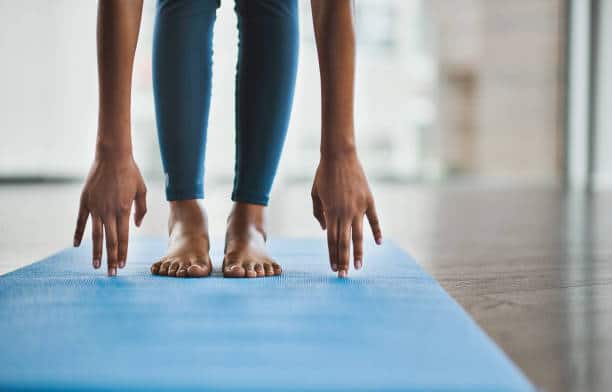
Put your hands on a waist-high object. Step back, extending your arms over your hips and ankles. Press your belly down to the balls of your feet while reaching through your heels.
This pose is a challenge involving balance and coordination.
The bridge pose is commonly used in physical therapy and yoga practices. It’s a versatile pose used to build strength in the back and legs.
RELATED: 7 Ways to Manage RA During the Winter
The corpse pose incorporates breath work and meditation to manage pain. The corpse pose involves lying down and resting. The corpse pose can be beneficial on days when your body doesn’t feel right for higher intensity work.
Chair yoga is especially useful on days when you’re struggling with your mobility. Chair poses can include any pose that brings you the most relaxation and allows you to focus on your breath.
Supine twists help energize the body and get the digestive system working. Many people with RA may lack energy, but the supine twist position can promote a sense of energy and health.


By subscribing, you consent to receive emails from BlackDoctor.com. You may unsubscribe at any time. Privacy Policy & Terms of Service.