There’s a reason you’re confused in the butter aisle. Years ago, butter was a no-no. Vegetable-oil-based margarines
surged in popularity as doctors began to understand the dangers of saturated fat.
But the butter-versus-margarine debate is a slippery subject. Some margarines have unhealthy trans fats, while
others have confusing health claims. Meanwhile, some say butter is an “all-natural” choice.
As recent as late 2015, even the iconic fast-food chain McDonald’s announced it was starting to use real butter in its McMuffins, bagels and biscuits again. Prior to the announcement, McDonald’s was using liquid margarine.
Well, we’ve got the bottom line on butter and its alternatives. Here are some of the best and worst products for your heart.
What experts say
The American Heart Association suggests buying soft, trans-fat-free spreads instead of “traditional” butter or stick margarine.
Choose a blend with the least amount of saturated fat and zero trans fats.
Check the ingredients: If it says partially hydrogenated oils, it still has some trans fat (less than 0.5 gram per serving), even if the label says trans fat free.
These can add up if you have more than one serving.
But as with anything, regular exercise is good to accompany your consumption of butter.
If you like butter better…
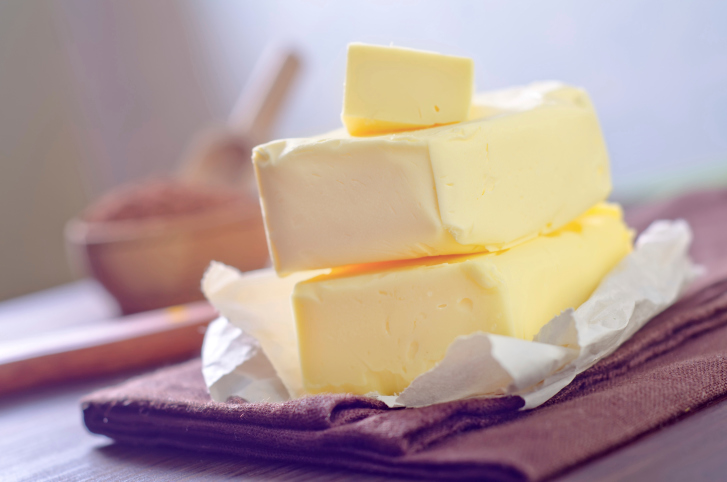
Regular butter is made with one ingredient: cow’s milk or cream, churned or shaken until it reaches a semisolid state. By definition, it contains at least 80% milk fat by weight, and it takes about 11 quarts of milk to make 1 pound of butter.
Traditionally, butter comes in salted and unsalted varieties, and it can be found in solid stick form or whipped and packaged in plastic tubs. Try to choose unsalted. Salted butter, with the normal amount of salt Americans add to cooked foods can be dangerous over time. Use in moderation! You may also find cultured butter, a rich butter made from cultured cream popular in Europe, at your grocery store or specialty foods store.
Worst butter: Traditional sticks
Most “original” butter sticks contain 100 calories per tablespoon, a typical serving size. One serving has 11 grams of fat, and 7 grams of it is artery-clogging saturated fat—about one-third of your recommended daily value! It also contains 30 milligrams of dietary cholesterol (10% of your daily value).
Some have even more fat; Ireland’s Kerrygold Unsalted Pure Irish Butter, for example, contains 12 grams of fat, 8 grams of it saturated.
If you see terms like “rich,” “cultured,” or “European style” (or if it’s made in Europe), check the label.
Better: Whipped butter
The process of whipping adds air to the butter, making it lighter and less dense. If you can stick with the same tablespoon-size portion, you’ll save up to half the calories and saturated fat by choosing whipped butter in a tub.
Land O’Lakes Whipped Butter, for example, contains 50 calories and 6 grams of fat (3.5 grams saturated), and only 15 milligrams of cholesterol per serving.
You can also choose an organic brand like Organic Valley Whipped Butter.
Better: Light butter
If you still prefer a stick over a tub, light or low-fat butter is a smart choice. It’s made with added water or gelatin (and preservatives) to give it a solid consistency, and it generally has half the fat and calories as traditional butter.
A serving of Land O’Lakes Light Butter, for example, has only 50 calories and 6 grams of fat (3.5 grams saturated). Just don’t use twice as much to make up for any difference in flavor, says Janice Baker, RD, a nutritionist and certified diabetes educator.
Better: Vegetable-oil blends
A butter blend with added olive or canola oil won’t cut calories or fat much or at all—most have 100 calories and 11 fat grams per serving—but it will lower saturated fat and cholesterol.
What’s more, these are typically softer and easier to spread right out of the refrigerator.
To lower calories, select a “whipped” or a “light” blend. We like Shedd’s Spread Country Crock Spreadable Butter with Canola Oil (80 calories and 9 grams of fat, 3.5 saturated), and Land O’Lakes Light Butter with Canola Oil (50 calories and 5 grams of fat, 2 saturated).
What is margarine?
Developed in the 1800s in France when butter was scarce and expensive, margarine has had its ups and downs, including several U.S. bans and taxes driven by the dairy industry.
It’s been called a healthier, plant-based alternative to butter, but it also faced a backlash for being…
… artificial and having trans fats, which help keep oil-based ingredients solid at room temperature.
Margarine is any vegetable-oil-based, butter-flavored spread that contains 80% oil; anything with a lower oil and fat content is called a “soft margarine spread.”
Worst margarine: Sticks with trans fat
To stay solid at room temperature, vegetable oils are hydrogenated, which creates trans fatty acids that can raise LDL, or bad cholesterol.
Most solid sticks of margarine contain trans fats and/or saturated fat.
These include Country Crock Spreadable Sticks (80 calories, 1.5 grams saturated fat, 2 grams trans fats), Blue Bonnet Sticks (70 calories, 1.5 grams saturated fat, 1.5 grams trans fat), Land O’Lakes Margarine Sticks (100 calories, 2 grams saturated fat, 2.5 grams trans fats), and Fleischmann’s Original Stick Margarine (80 calories, 2 grams saturated fat, 1.5 grams trans fat).
Better: Trans-fat-free sticks
A gram or two of trans fats may not seem like a lot, but even small amounts are bad for the heart. Baker recommends keeping trans-fat intake as low as possible.
There are trans-fat-free options if you need hard butter or margarine for baking.
Promise Sticks contain 80 calories per serving, and 9 grams of fat (2.5 grams saturated). I Can’t Believe It’s Not Butter Sticks and Earth Balance Vegan Buttery Spreads contain no trans fats, but they still have 3.5 grams and 4.5 grams of saturated fat, respectively, and the same amount of total fat and calories as butter.
Better: Soft spreads
Soft spreads packaged in a tub are generally much healthier for your heart, because they contain less saturated fat and many are trans fat free.
Some examples include Fleischmann’s Original Whipped Tub with 60 calories and 7 grams of fat (1 gram saturated) per serving, Smart Balance Original Buttery Spread with 80 calories and 9 grams of fat (2.5 grams saturated), and Blue Bonnet Soft Spread with 60 calories and 6 grams of fat (1 gram saturated).
These spreads work best for cooking, on bread, or with vegetables; however, they’re not recommended for baking, says Baker.
Healthier options
Your healthiest option may be to skip both the butter and the margarine.
Baker recommends using monounsaturated fat instead: olive oil for dipping bread or vegetable oil for cooking. “If you love the taste of butter and you want to sauté some mushrooms in it, I’m not going to say you can’t do it, but maybe try using a little less butter and a little more oil.”
Use avocado and nut butters in place of butter on sandwiches, she says. “That way you’re getting fat intake but it’s healthy fat intake.” (Calories from any source of fat add up quickly, though, so be conscious of your portion sizes as well.)


By subscribing, you consent to receive emails from BlackDoctor.com. You may unsubscribe at any time. Privacy Policy & Terms of Service.