 Photo by Bob Jimenez
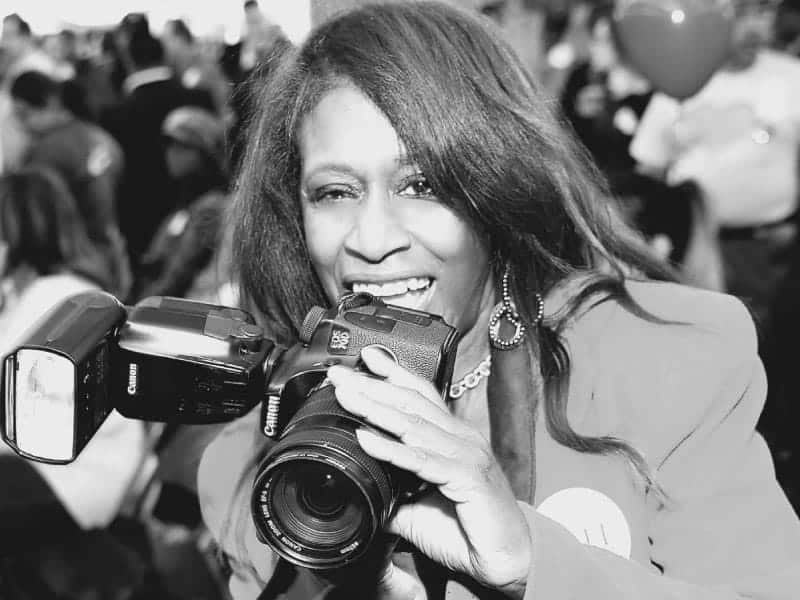
The way freelance photographer Donna Dymally sees it, snapping pictures imparts important life lessons.
“Focus on what’s important, and if you don’t like the shot, take another one,” she says. “We develop from the negative, just like a photo.”
That attitude helped Dymally recover from a stroke at age 58.
She woke up that morning feeling sluggish and with a slight headache. She had a flight to catch, so she took pain medicine and made her way to the airport for a business trip.
As the plane took off, she felt an odd sensation on the left side of her body. Unsure of what to do, she prayed for guidance and fell into a deep sleep. She awoke when the plane landed at Dallas-Fort Worth International Airport, where she had a connecting flight to Birmingham, Alabama.
As Dymally walked through the airport, she grew increasingly sure something was wrong. Her eyesight was blurry, her entire body hurt and she could only walk slowly.
“I felt like an explosion had erupted in my head,” she shares.
She told a colleague who was on her flight what was happening and promised to go to the emergency room when she arrived in Birmingham. A doctor overheard their conversation. He not only recommended she skip her next flight, he insisted on calling 911.
“He said that if I had experienced a stroke, I might not survive the flight,” she adds.
An MRI showed a clot obstructed one of the vessels supplying blood to her brain. This is an ischemic stroke. Doctors told her it was a miracle she lived through the flight.
Dymally said an uncle had also survived a stroke, and her grandmother died after having one. In addition, she had a history of high blood pressure.
RELATED: You’ve Survived the Stroke Now What?
As she rested in a dark hospital room, Dymally winced in pain at even the quietest sound or ray of light, her hand curled in a ball. Determined to correct her slurred speech, she quietly repeated vowel sounds over and over. Despite how she felt, she started walking as soon as she was able.
“I knew exercise would help me heal,” she says.
A week later, she flew back to Los Angeles. Dymally said a lack of health insurance kept her from joining a rehabilitation program.
To this day, she deals with the aftereffects of her stroke, including pain and sensitivity on her left side, a condition called complex regional pain syndrome.
“It’s kind of like pins and needles when you hit your funny bone,” she shares, noting that even picking up a napkin is painful.
Dymally had been working as a freelancer. She said she worked in a variety of industries, from helping high school students prepare for college to taking real estate photos. After the stroke, she struggled to find work. She said it cost her nearly everything she had, including her longtime home.
“I learned that material things aren’t important,” she adds. “The stroke made me look at everything with a new perspective.”
Indeed, a chance meeting with a magazine publisher led to gigs photographing red carpet events.
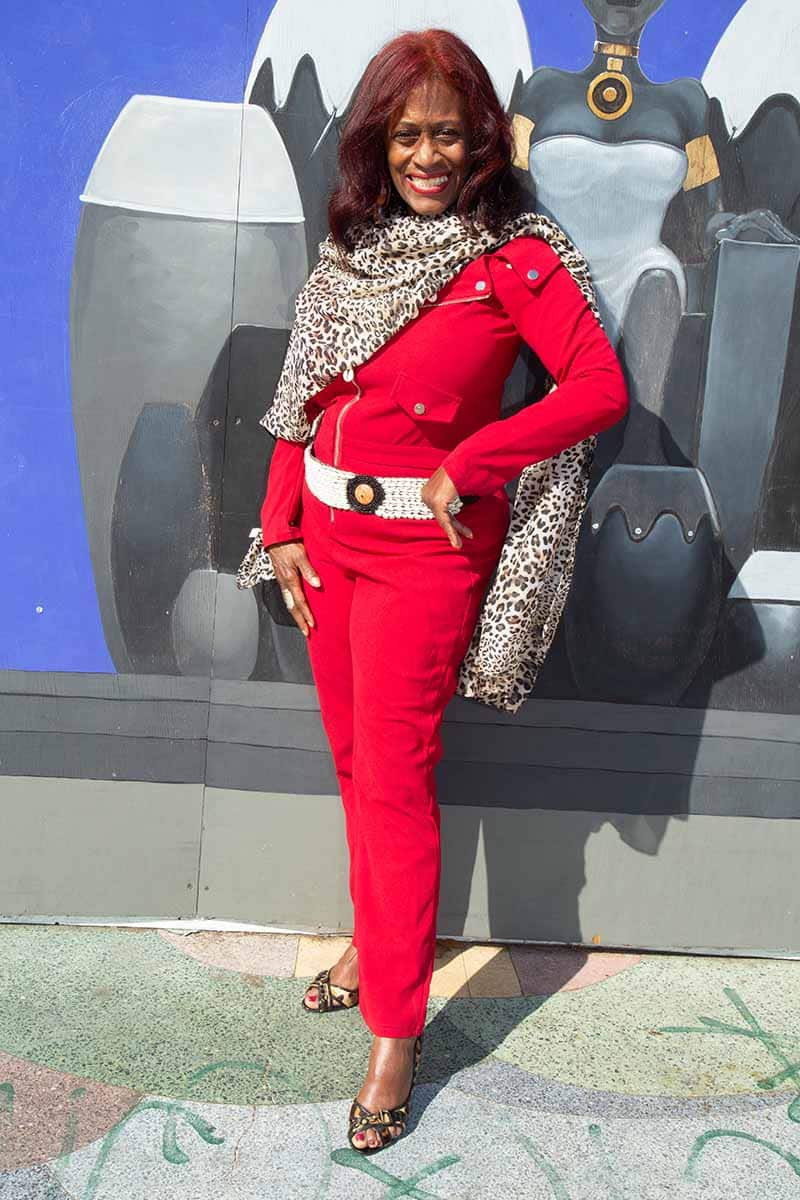 Photo by Richard Darryl Nichols
Dymally realized the only way to learn how to shoot better using only one hand was to take more pictures using only one hand. So she began taking photos at comedy clubs. She believes the experience helped her emotionally as much as it did professionally.
“Laughter is healing,” she says. “My pictures were not always the best, but I never quit.”
As her work improved, so did her prospects. She began snapping red carpet events for other organizations. Over the years, she’s photographed a who’s who of celebrities, including Eric Roberts, Jamie Foxx and Smokey Robinson.
Meanwhile, Dymally struggled to control her blood pressure. Following her 2012 stroke, she began taking two medications. When physician assistant Donna Garnier began treating Dymally in 2016, she prescribed a third medication. Finally, her blood pressure settled at a normal level.
“Donna’s risk for having another stroke is higher than someone who hasn’t had a stroke, so it’s important to keep her blood pressure down so her heart and blood vessels don’t have to work so hard,” Garnier shares.
Garnier also advised Dymally to get enough sleep, eat a healthy diet and watch her salt intake.
“She understands the significance of her keeping her blood pressure down and taking better care of herself,” Garnier adds. “She’s been doing fantastic.”
RELATED: Spot Signs and Symptoms of a Stroke F.A.S.T.
Eager to pay it forward, Dymally now volunteers with an online support group. And in 2019, she self-published an autobiography that she hopes will raise awareness about the warning signs of stroke: When you see facial drooping, arm weakness or speech difficulties, it’s time to call 911.
“I’m an educated woman, and I knew nothing about strokes,” she shares.
Perhaps fittingly, Dymally has reframed her experience, turning what could have been a negative into a positive that will hopefully inspire and educate others.
“Everything happens for a reason,” she concludes. “I want to give other stroke survivors hope, and hopefully inspire them to know that they can move through it too.”
According to the American Stroke Association, stroke is the No. 5 cause of death and a leading cause of disability in the U.S. Stroke can happen to anyone — any age, any time so it is important to know the warning signs.
On average, 1.9 million brain cells die every minute that a stroke goes untreated.
By American Heart Association News


By subscribing, you consent to receive emails from BlackDoctor.com. You may unsubscribe at any time. Privacy Policy & Terms of Service.