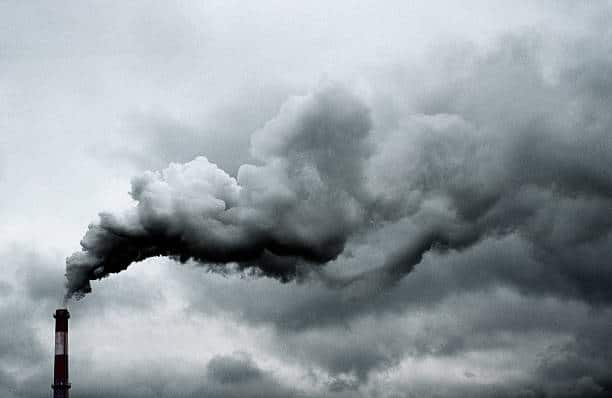
Lung cancer can affect anyone; however, smoking is responsible for the vast majority (approximately 90%) of cases. The second-largest cause of lung cancer is exposure to radon, a naturally occurring radioactive gas. Lung cancer can also be caused by air pollution, which introduces dangerous compounds into the atmosphere.
The World Health Organization’s International Agency for Research on Cancer (IARC) formally labeled outdoor air pollution a Group 1 carcinogen in 2013.
Particulate matter, commonly known as “particle pollution,” was found to be most closely linked to an elevated risk of cancer. Particle pollution is the presence of microscopic solid and liquid particles in the air we breathe.
Breathing in tiny particles discharged into the air can cause cancer over time. Small particles might become lodged in the lungs. A buildup of these particles can harm the cells of the lungs, causing inflammation.
Long-term inflammation can create alterations in how these cells multiply.
Long-term exposure to air pollution may induce DNA damage, mutations, and altered gene expression, according to a 2014 study. These alterations may promote the uncontrollable growth of lung cells.
According to research, air pollution has also been linked to other health issues, such as:
RELATED: Air Pollution & Your Diet: 5 Foods That Help You Breathe Easier
Air pollution is a complicated mixture of particulate matter and gases emitted by industrial and commercial activity, as well as various modes of transportation such as buses, trains, airplanes, and automobiles.
A variety of air contaminants have been related to cancer. However, the WHO states that particulate matter (PM) from trusted sources is more directly connected with cancer. Particulate matter is a mixture of microscopic solid and liquid particles suspended in the air.
Both indoor and outdoor air may contain particulate matter. Because these particles are often quite minute, the individual particles cannot be seen.
Pollutants in the air include:
Indoor pollutants can be produced by utilizing open fires or conventional stoves for cooking, heating, and lighting in the home, among other things.
According to the WHO, women and children in developing nations are particularly vulnerable to air pollution in their own homes.
Solid fuels, such as wood and charcoal, coal, or kerosene, are examples of indoor air pollutants, along with asbestos, carbon monoxide, and lead.
Anyone who lives in an area with high particle pollution levels is in danger.
According to the WHO, individuals in low- and middle-income nations bear a disproportionate share of the burden of outdoor air pollution, particularly those residing in Southeast Asia and the Western Pacific. Many of these air pollution sources are beyond the control of individuals.
The following factors enhance your risk of developing lung cancer as a result of air pollution:
Furthermore, a new survey from the American Lung Association discovered that individuals of color were 61 percent more likely than white people to reside in a U.S. county with poor air quality.
Keep in mind that incidences of lung cancer might be linked to more than one risk factor simultaneously.
Air pollution, according to research, may increase lung cancer mortality in people who already have the disease.
For example, a large population-based research study of nearly 350,000 people with lung cancer discovered a link between lower survival rates and higher average exposure to air pollution.
In the United States, lung cancer is a leading cause of cancer death. While there is a proven and alarming association between air pollution and lung cancer, active smoking continues to be the leading cause of lung cancer.
Particulate matter exposure accounts for just a small proportion of lung cancer cases. Some people are more vulnerable, particularly those who reside in places with high levels of air pollution.


By subscribing, you consent to receive emails from BlackDoctor.com. You may unsubscribe at any time. Privacy Policy & Terms of Service.