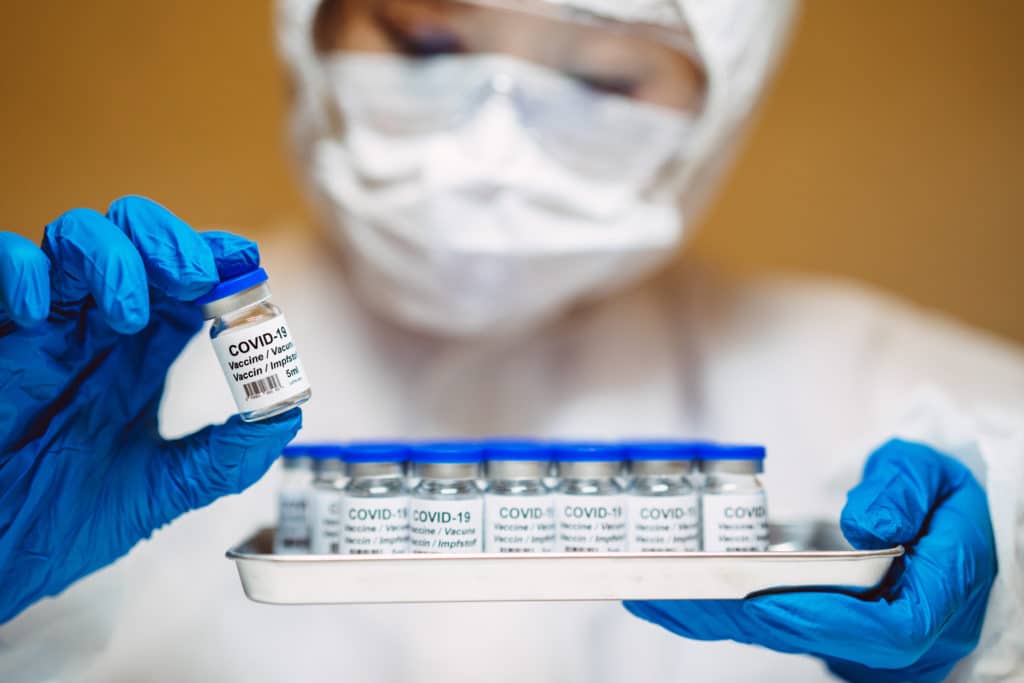
Pharmaceutical giant Pfizer said Monday that initial data from its coronavirus vaccine shows it is more than 90% effective — a much better than expected efficacy than had even been hoped for.
Pfizer said that the vaccine, made with German partner BioNTech, had an efficacy rate higher than 90% at seven days after the second dose, which means protection is achieved 28 days after a person begins vaccination. The vaccine requires two doses. The US Food and Drug Administration has said it would expect at least 50% efficacy from any coronavirus vaccine.
The companies looked at the first 94 confirmed cases of Covid-19 among the more than 43,000 volunteers who got either two doses of the vaccine or a placebo. It found that fewer than 10% of infections were in participants who had been given the vaccine. More than 90% of the cases were in people who had been given a placebo.
Pfizer and BioNTech SE are the first drugmakers to show successful data from a large-scale clinical trial of a coronavirus vaccine. The companies said they have so far found no serious safety concerns and expect to seek U.S. emergency use authorization later this month.
If authorized, the number of vaccine doses will initially be limited. Many questions also remain including how long the vaccine will provide protection. However, the news provides hope that other vaccines in development against the novel coronavirus may also prove effective.
“Today is a great day for science and humanity,” Albert Bourla, Pfizer’s chairman and chief executive, said in a statement. “We are reaching this critical milestone in our vaccine development program at a time when the world needs it most with infection rates setting new records, hospitals nearing over-capacity and economies struggling to reopen.”
Dr. Anthony Fauci, the nation’s top infectious disease expert, said Pfizer’s findings of a coronavirus vaccine candidate that is more than 90% effective were “extraordinary,” per a report.
“The results are really quite good, I mean extraordinary,” said Fauci, director of the National Institute of Allergy and Infectious Diseases, according to the Washington Post.
Pfizer expects to seek broad U.S. emergency use authorization of the vaccine for people aged 16 to 85. To do so, it will need to have collected two months of safety data on around half of the study’s roughly 44,000 participants, expected in late November.
“I’m near ecstatic,” Bill Gruber, one of Pfizer’s top vaccine scientists, said in an interview. “This is a great day for public health and for the potential to get us all out of the circumstances we’re now in.”
Normally, clinical trials like these are
categorized as Phase I to IV trials. They are generally described as follows:
Phase I (small number of participants, normally between 6-10 healthy volunteers, or very sick patients for whom treatment options are lacking)
Phase I studies are designed to allow scientists and medical doctors to understand what effects an investigational compound has in human subjects. The goal is to study what happens to the compound in the body from a safety and tolerability point of view after it is swallowed, injected or infused. .Study participants are monitored for the occurrence and severity of any side effects that they may experience.
Phase II (once the initial safety of the study drug has been confirmed in Phase I trials, Phase II trials are performed on larger groups of patients, generally 20-300 depending on the type of disease)
Phase II studies are designed to begin to evaluate the safety and efficacy of an investigational medicine in patients, and often used to determine if different dosages of the treatment have different effects. The patients are given various doses of the compound and closely monitored to compare the effects and to determine the safest and most effective dosing regimen. In many instances, multiple Phase II studies are conducted to test the compound in a variety of patient populations or indications.
Phase III (carried out on large patient groups, 300–3,000 or more depending upon the disease being studied)
Phase III studies are designed to confirm the safety and efficacy of an investigational medicine. Large numbers of patients are generally involved in order to adequately confirm benefit and safety. These studies, as in the earlier phases, may involve one or more ‘treatment arms’, which allow for the safety and efficacy of the new investigational drug to be compared to other available treatments, or to be tested in combination with other therapies. Information obtained from Phase III studies is used to determine how the compound is best prescribed to patients in the future.
Phase IV (also known as Post-Marketing Surveillance Trials)
Phase IV studies take place after the medicine has received regulatory approval (market authorization) and are designed to provide broader efficacy and safety information about the new medicine in large numbers of patients, subpopulations of patients, and to compare and/or combine it with other available treatments. These studies are designed to evaluate the long-term effects of the drug. Under these circumstances, less common adverse events may be detected.


By subscribing, you consent to receive emails from BlackDoctor.com. You may unsubscribe at any time. Privacy Policy & Terms of Service.