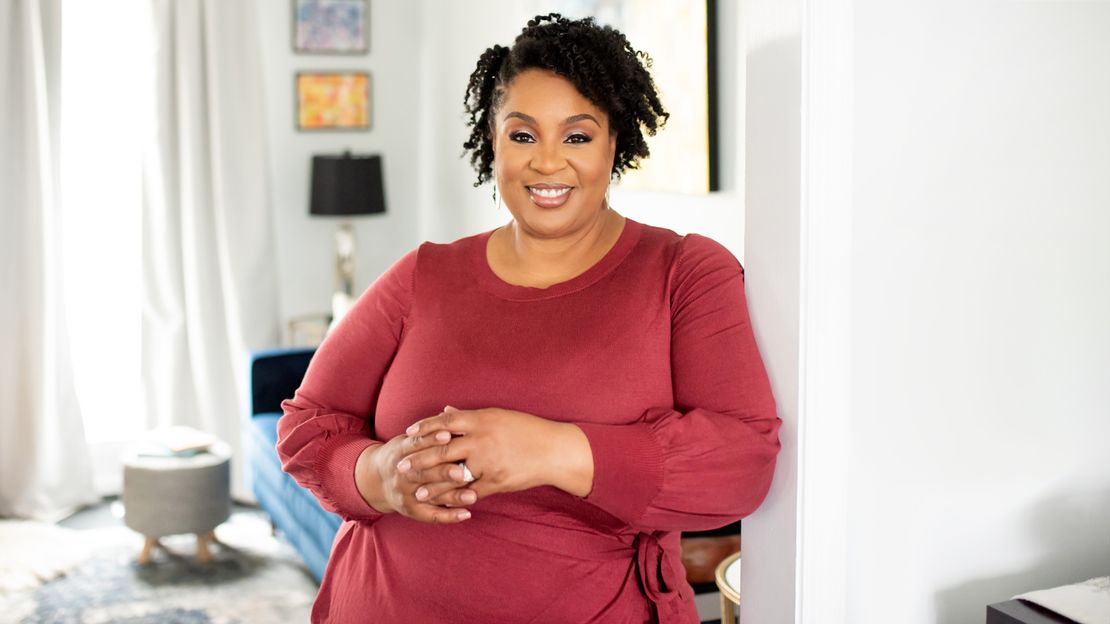
Photo courtesy of Danielle Finney Photography/ Everyday Health
As a young news producer working in Washington, D.C., Tamika Felder was living the dream with no concerns about her health when she received the shock of a lifetime: she had cervical cancer.
“After not being screened for cervical cancer for a few years due to several factors, including lack of insurance, I was finally screened after obtaining health insurance through a new job. So, essentially, it was found after a routine screening,” Felder tells Everyday Health. She was only 25 at the time and was diagnosed with Stage 2A cervical cancer.
Felder’s diagnosis led her to a specialist and a gynecologic oncologist at Johns Hopkins University in Baltimore. It was recommended that she get a radical hysterectomy, which would end her lifelong dream of becoming a mother. Not satisfied with this option, she decided to get a second opinion.
“I was completely shocked; I was numb. Scared and a bit in denial. My fear was that I was going to die and I wasn’t ready. I had more living to do. I feel the same now at 47,” Felder adds. “The disparity of Black and Hispanic women dying from cervical cancer is unacceptable. We have the tools, yet this health inequity exists in the United States. This is all a direct result of slavery, which leads to a mistrust of the medical system. Black women should be able to be seen, heard, and be able to trust their medical providers.”
RELATED: 10 Questions you Should Ask Your Doctor About Cervical Cancer
According to a study published in the Journal of Health Care for the Poor and Underserved, Black women are 41 percent more likely to develop cervical cancer than white women and 75 percent more likely to die from it.
Hoping to maintain her dream of having children, Felder explored getting in vitro fertilization, but her hopes were crushed when she was denied by her insurance company because she wasn’t married and actively trying to conceive.
Ultimately, she decided going through with the radical hysterectomy would be her best option. After her hysterectomy, Felder underwent chemotherapy and radiation therapy.
“My treatment and care were very good. But I’ve heard horror stories and seen firsthand how Black women are treated and how we are not seen or heard,” Felder says. “I was lucky that I ended up with a great care team. There are instances where the system failed me in terms of fertility preservation, but my care team at Johns Hopkins gave me excellent care. It’s why I’ve done so well after cancer treatment.”
Although Felder’s experience was positive, she realizes that isn’t always the case for Black women. “I’m in the minority. Everyone deserves access to excellent care,” Felder shares.
For many cancer patients, the road to recovery is just as challenging as receiving the diagnosis and undergoing treatment. This was the case for Felder, who wrestled with feelings of isolation and anger as she tried to return to her old life.
In 2005, Felder founded Tamika and Friends (now Cervivor, Inc), which aims to inspire and empower women impacted by cervical cancer. The organization also hopes to provide education and awareness, destigmatize the disease, and help find a cure for it.
RELATED: Treatment Options for Cervical Cancer: What Black Women Need to Know
With nearly 22 years of being cancer-free under her belt, Felder is thriving, although she occasionally experiences the effects of her diagnosis.
“Overall, I’m doing great. I have to deal with several secondary post-cancer issues; but overall, I’m alive,” she says. And it’s not just about being alive, but your quality of life beyond cancer. “That’s another issue that Black women have to face. Receiving care should also mean a good quality of life post-cancer,” Felder notes.


By subscribing, you consent to receive emails from BlackDoctor.com. You may unsubscribe at any time. Privacy Policy & Terms of Service.