Sickle Cell Disease is a condition that has long been plagued by misunderstanding and neglect, especially within Black communities. For many, the journey involves navigating a system where their pain is too often minimized, their symptoms misunderstood, and their care delayed or denied.
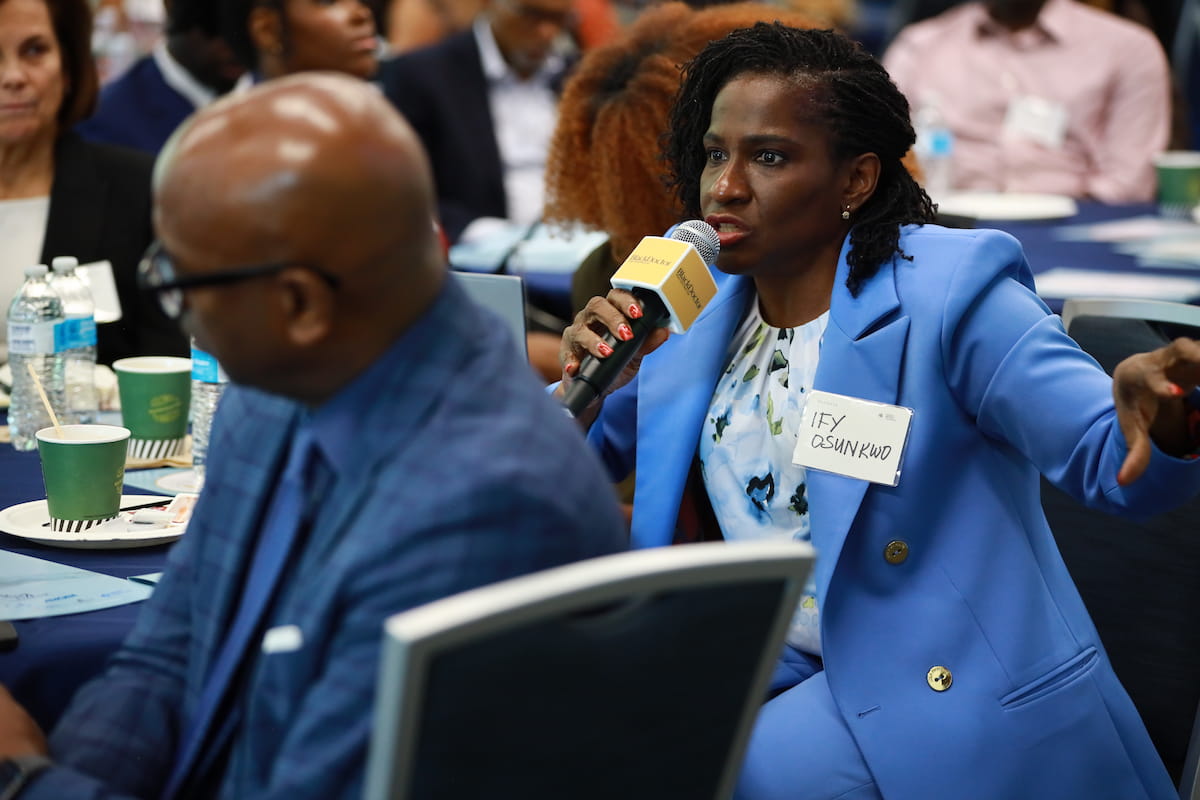
This reality took center stage at the “Ending the Status Quo in Sickle Cell Disease” fireside chat with Yvonne Bryant (Novo Nordisk), held at BlackDoctor’s 10th Annual Thought Leadership Summit. In a candid and insightful fireside chat with Ifeyinwa (Ify) Osunkwo (Novo Nordisk) and Shawn-Ta Brown, Bryant addressed head-on the progress made, the challenges that remain, and the critical importance of advocacy in changing outcomes for those living with Sickle Cell Disease (SCD).
The discussion opened by dispelling a common misconception: SCD is not simply a pain disorder. The session began with a dramatized reenactment of a “day in the life” of Kenneth, a 27-year-old in a severe vaso-occlusive crisis (VOC). Despite describing the sensation of “thousands of knives” stabbing his body, Kenneth languished in a hospital waiting room for over three hours.
When finally seen, he was met with clinical skepticism. When he reported his pain at a “15 out of 10,” the physician focused on the high dosage of medication required rather than his distress. This interaction humanized the “drug-seeker” stigma many patients face. Statistics shared in the video reveal that nearly half of SCD patients report that emergency providers disbelieve their symptoms, leading one in five to delay seeking care to avoid trauma.
“That experience… is very common for people living with Sickle Cell Disease who frequently are going to emergency departments. The care is being delayed. The lack of understanding of what sickle cell is and that experience is really detrimental to the health of these individuals,” Bryant shared.
Brown, whose close friend’s fear of the medical system’s bias eventually cost him his life, can relate to Kenneth’s experience.
“He called me one day and he was like, ‘I’m having a sickle cell crisis, and I am not going to the ER this time.’ And he refused to go because he knew what comes with that… He was tired and he just didn’t want to deal with it anymore,” she shared.
Sickle cell disease often means living with unpredictable crises and frequent hospital visits. Patients experience the emotional toll of waiting for care and the anxiety of not knowing when the next crisis will strike. Their lives are disrupted by the disease, missing school, work, and major life moments.
“Imagine you have a tornado tied on your arm, and somebody forgot it. And after a while, you go numb, and then you begin to hurt… Ischemic pain is one of the worst kind of pain. They described it as worse than the root canal, worse than labor, worse than a fracture,” Osunkwo shared.
Osunkwo also highlighted the “cliff” that occurs when patients transition from pediatric care to an adult system ill-equipped to care for them.
“I was shocked when I started graduating my young adults out of pediatrics, there’s a three times higher chance that they’re gonna die within five years of leaving me… the adult healthcare system wasn’t used to seeing adults living with sickle cell disease, so there was no plan,” she said.
To combat this, the medical community must stop treating SCD as an episodic pain issue and start treating it with the same rigor as other chronic, progressive conditions.
“If we focus only on when they have these acute pain episodes, it’s like saying that you have diabetes, and I will only take care of you when your sugar level is over 500. It’s a chronic, progressive life-shortening disease, and it requires holistic, comprehensive care that is multi-sectoral, not just medical,” she added.
The panelists closed by acknowledging the progress being made, from scientific breakthroughs to new therapies that offer hope for improved quality of life. There is a growing network of support among patients, families, and advocates who are working to end the status quo. Still, more work needs to be done.
“For our nurses, our pharmacists, our physicians, our dentists, everyone needs to have the knowledge to be able to treat and treat in an ethical way to show empathy, to not assume,” Brown noted.
She concluded with a strategic argument for why investing in SCD research benefits the entire medical community: “If you put resources into certain populations, certain genes, you may unlock answers to other diseases… It may unlock codes within our genetics to help other disease states and also come up with cures and prevention.”
The conversation closed on a note of empowerment: We have the power to demand better. Every person with sickle cell disease deserves dignity, respect, and the best possible care.
The final takeaway for anyone affected by sickle cell disease: advocate fiercely, build community, and never settle for the status quo.


By subscribing, you consent to receive emails from BlackDoctor.com. You may unsubscribe at any time. Privacy Policy & Terms of Service.