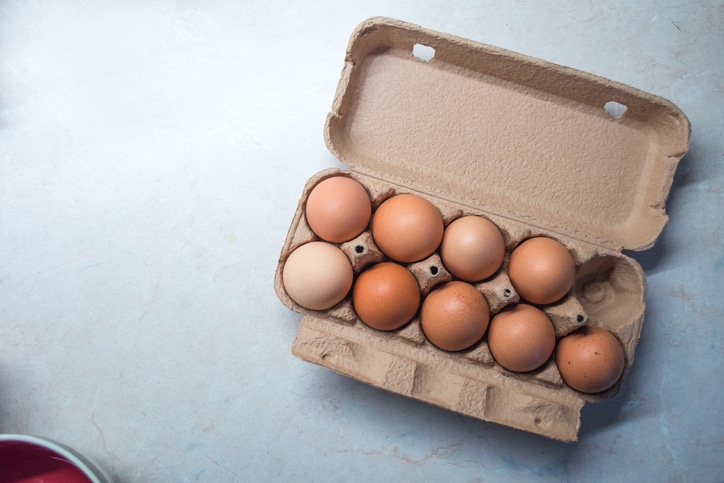
In the multi-billion dollar industry of eggs, you have a variety of choices: brown eggs, white eggs, grade A, farm fresh, free range, organic, etc. Whew! The list goes on and on and can be confusing. Before we get started as to what each label means, here are the labels to ignore at ALL TIMES simply because these labels mean nothing.
What To Ignore
Vegetarian-fed: “Chickens are omnivores, so vegetarian feed means they’re not being fed a natural diet,” says Jones. So instead of natural proteins from worms and insects, vegetarian fed chickens are most likely getting protein from soy or fortified corn.
No hormones or antibiotics: It’s illegal to inject hormones into poultry, and antibiotics are rarely used in the egg industry. So advertising as such isn’t really saying much.
The color of the egg: “The color of the egg only has to do with the chicken’s breed, and doesn’t reflect what the chicken eats or how it’s raised,” Jones says. So wheat bread vs. white bread isn’t the same as white eggs vs. brown eggs.
So, now that we’ve gotten that out of the way, here’s the real difference in the types of eggs you see.
I. Farm Fresh Eggs
Doesn’t that sound appetizing? Eggs… fresh from the farm? Well, it would be if it was true, unfortunately, unless you are literally buying the eggs from a farm or a local super market that actually sells genuine eggs from a farm, the label “farm fresh” means nothing other than it is just eggs… picked from chickens in battery cages.
According to the Humane Society, “On average, each caged laying hen is afforded only 67 square inches of cage space—less space than a single sheet of letter-sized paper on which to live her entire life.” There’s a whole bunch of concerns about these chickens if you are in to animal welfare, but for me, to be totally honest, I just prefer my eggs to come from healthy chickens.
II. Cage Free Eggs
Now, that sounds better. Chickens that don’t spend their entire lives in battery cages! But, what does “cage free” really mean? Well, to start with, yes they are in a slightly better condition than “farm fresh eggs”. They literally are not confined in cages, but…(yes, there is a but).
Before you get an imagery of a bunch of happy chickens taking a brisk walk outside in the sun and laying happy eggs, like this below:
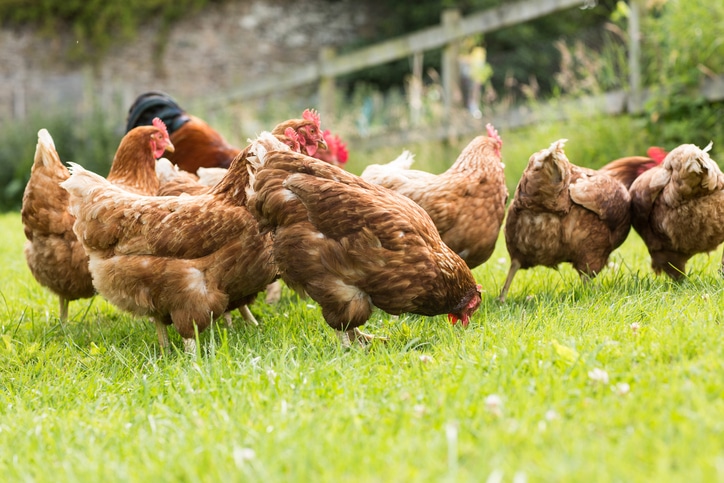
You’ve got to realize that cage free only means cage free. Unless the packaging states that it is “free range” also, the eggs are most likely laid by chickens that don’t see the light of day as they spend their lives cramped up in hen houses, often in cramped conditions.
III. Free Range Eggs
“Free Range” actually means different things in different countries.
In the U.S., if the packaging says the eggs come from “free range” chickens, it means that the bird gets to spend…
… only part of its time outside (This is what’s required by the U.S. Department of Agriculture). The official governance reads as such, “Producers must demonstrate to the Agency that the poultry has been allowed access to the outside.”
When you hear the term, you probably think of a wide open field where chickens are allowed to peck at grass and insects as please. But, think again.
However, around 99.9 percent of chickens raised for meat in the United States are raised in factory farm conditions. So, rather than just having a few birds to keep track of, the typical factory farm “farmer” has around 20,000 to look after. Usually, these birds are confined to warehouses, where they may technically have access to a door that leads to designated outdoor area, but because of the mass crowding of birds – it is highly likely that many will never see the daylight during their extremely short lifetimes.
In addition, chickens who are labeled “free-range” are also subjected to painful industry practices such as debeaking, which involves searing off the sensitive tip of the chicken’s beak without pain-killers.
IV. Organic Eggs
If the packaging says “organic” in the U.S., it means that the chickens were fed an organic diet – no antibiotics (unless the chickens were sick), and the chickens must live in a cage free and free range environment. So antibiotics aren’t used unless they have to.
Another thing to consider is that with all the other chickens I’ve previously mentioned, forced molting (where egg producers starve the chickens for some time to force chicken’s natural replacement of old feathers by new ones) is allowed. However, with organic eggs, only natural molting can occur.
V. Pastured Eggs
Pastured eggs are from chickens that are raised in a pasture and have access to coops to sleep at night. Typically, these chickens get to spend most of their times outside and eat bugs like chickens are meant to. Unfortunately, pastured eggs are harder to find in your typical supermarket/grocery store, but if you have access to pastured eggs from local farmers, be sure to get on that.


By subscribing, you consent to receive emails from BlackDoctor.com. You may unsubscribe at any time. Privacy Policy & Terms of Service.