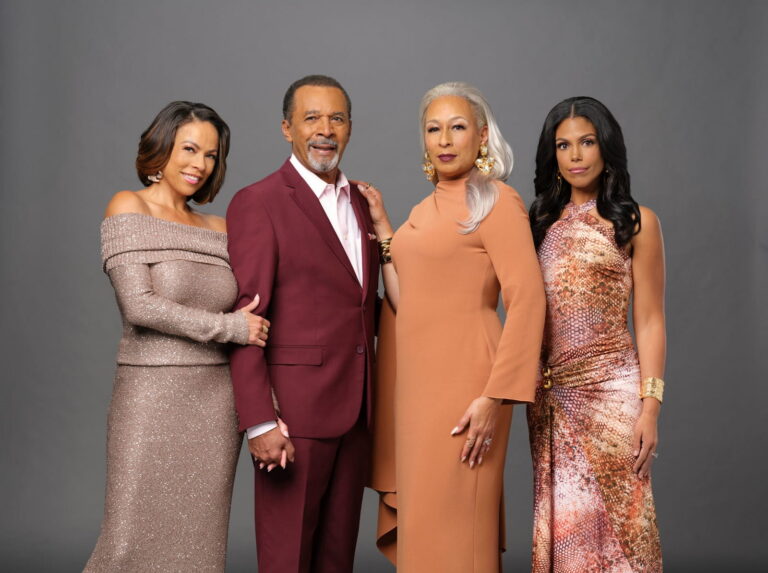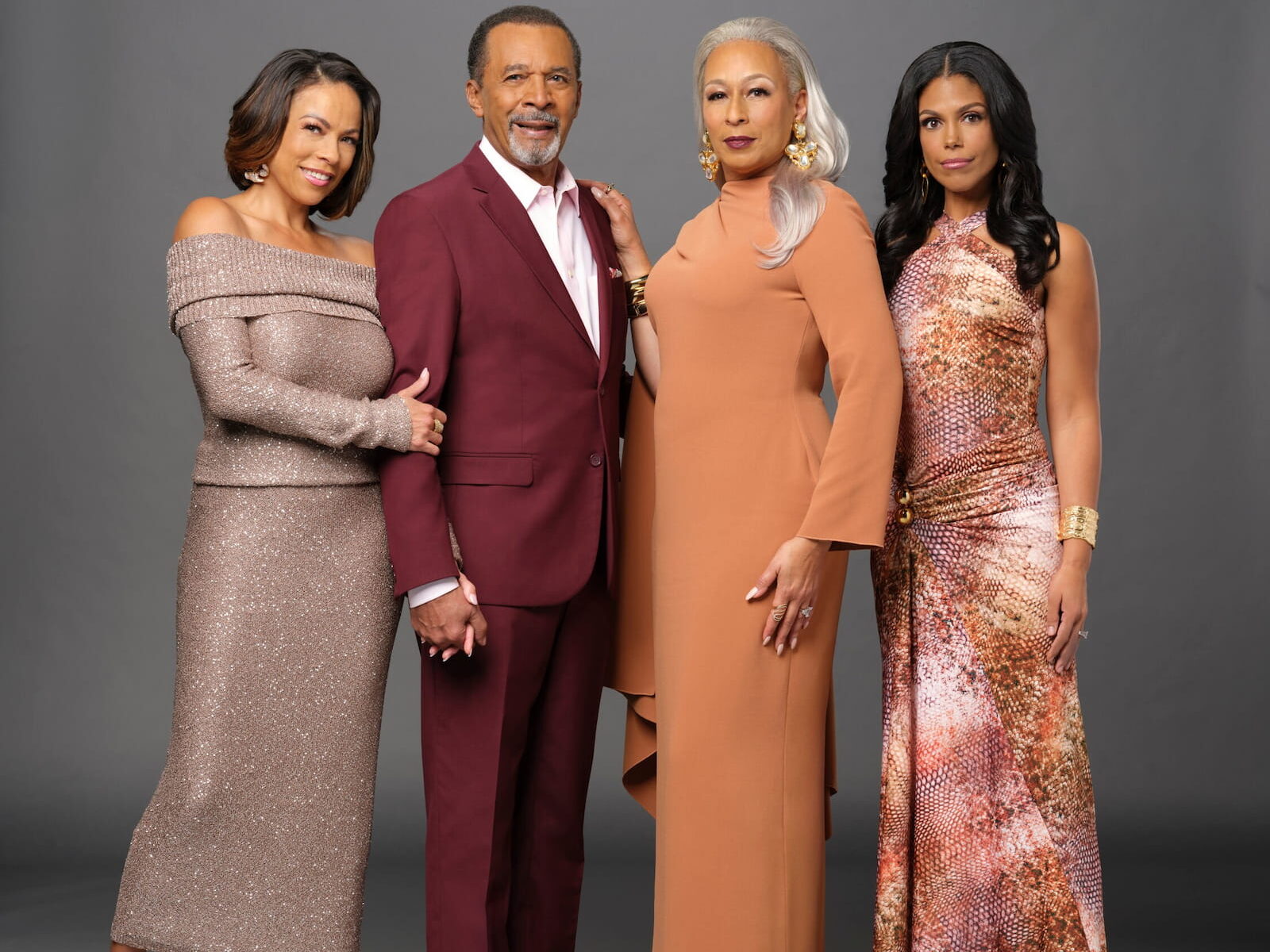
On CBS’s daytime drama Beyond the Gates, Anita Dupree is the woman everyone expects to stand tall. She is the fierce matriarch of the Dupree family, a former superstar, Vernon’s wife, Dani and Nicole’s mother, and a grandmother whose sheer presence shapes the entire family. Played with commanding grace by Tamara Tunie, Anita has always carried herself with elegance, authority, and control.
That is exactly what makes her breast cancer storyline so gripping. The show is not just asking viewers to watch a beloved character get sick. It is asking them to watch what happens when the woman who holds everyone else together has to face raw vulnerability, fear, and a heavy medical reality.
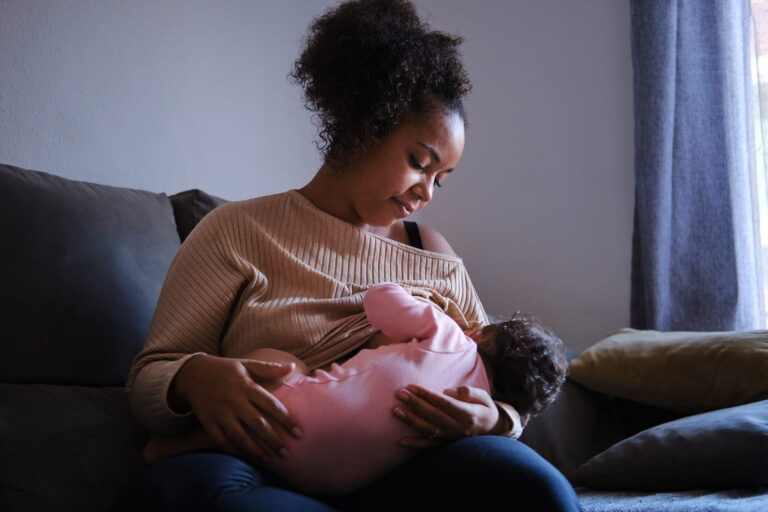
In partnership with the Know Your Lemons Foundation, Beyond the Gates is following Anita through a diagnosis of triple-negative breast cancer (TNBC). This is an aggressive subtype that disproportionately impacts Black families. According to the American Cancer Society, Black women are twice as likely to be diagnosed with TNBC than white women, and they face a 40 percent higher overall breast cancer mortality rate. Because TNBC lacks the three common hormone receptors that modern targeted therapies lock onto, it is notoriously difficult to treat, spreads rapidly, and is tightly linked to hereditary mutations.
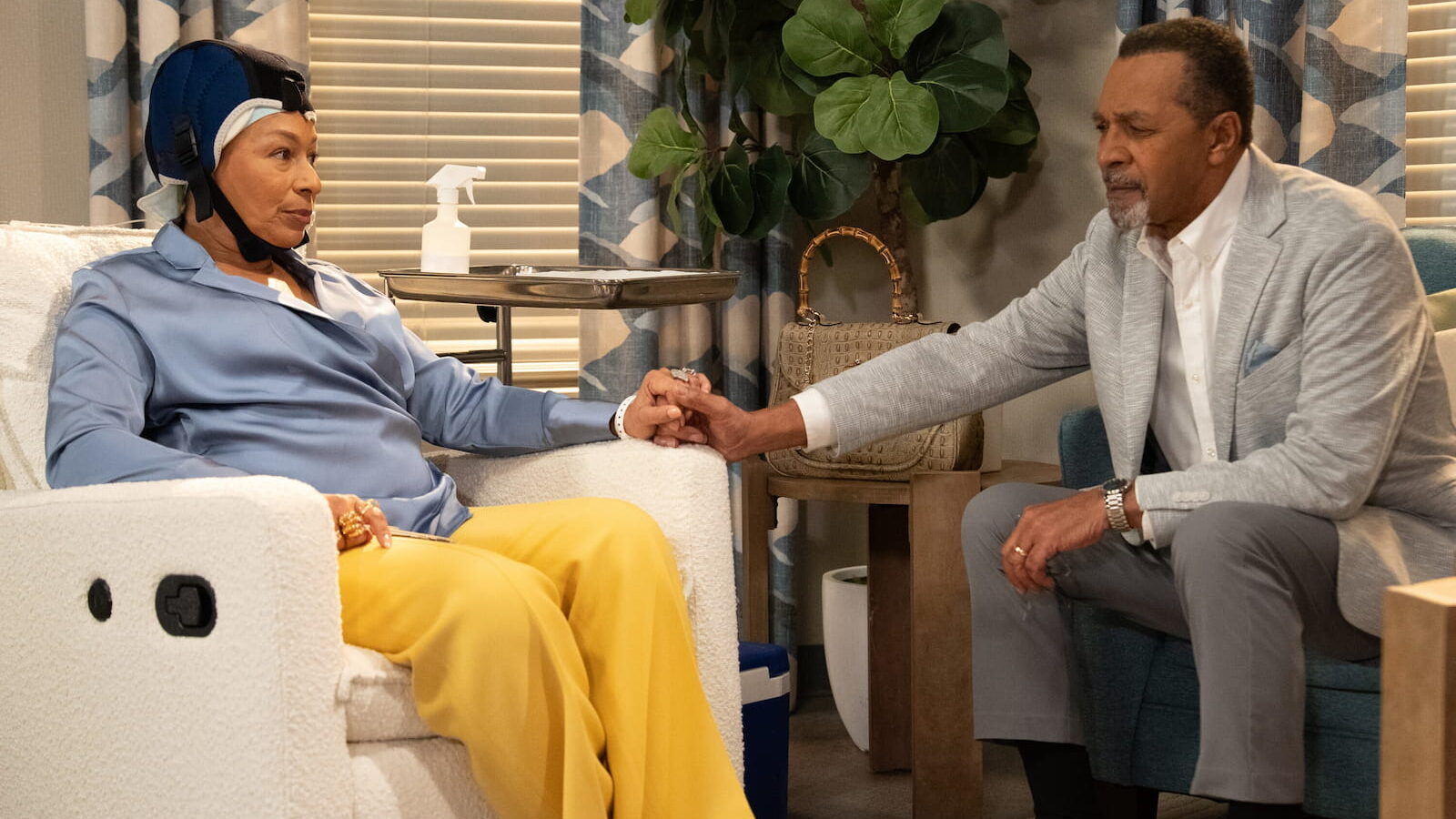
By tracking Anita through chemotherapy, hair loss, genetic testing, and the complex emotional fallout moving through her marriage, her daughters, and her grandchildren, the series is using daytime fiction to confront a literal matter of life and death. Central to her journey is the difficult decision-making process regarding her care, including Anita’s choice to undergo a lumpectomy rather than a mastectomy, a pivotal moment that highlights the personal, often agonizing trade-offs patients must navigate.
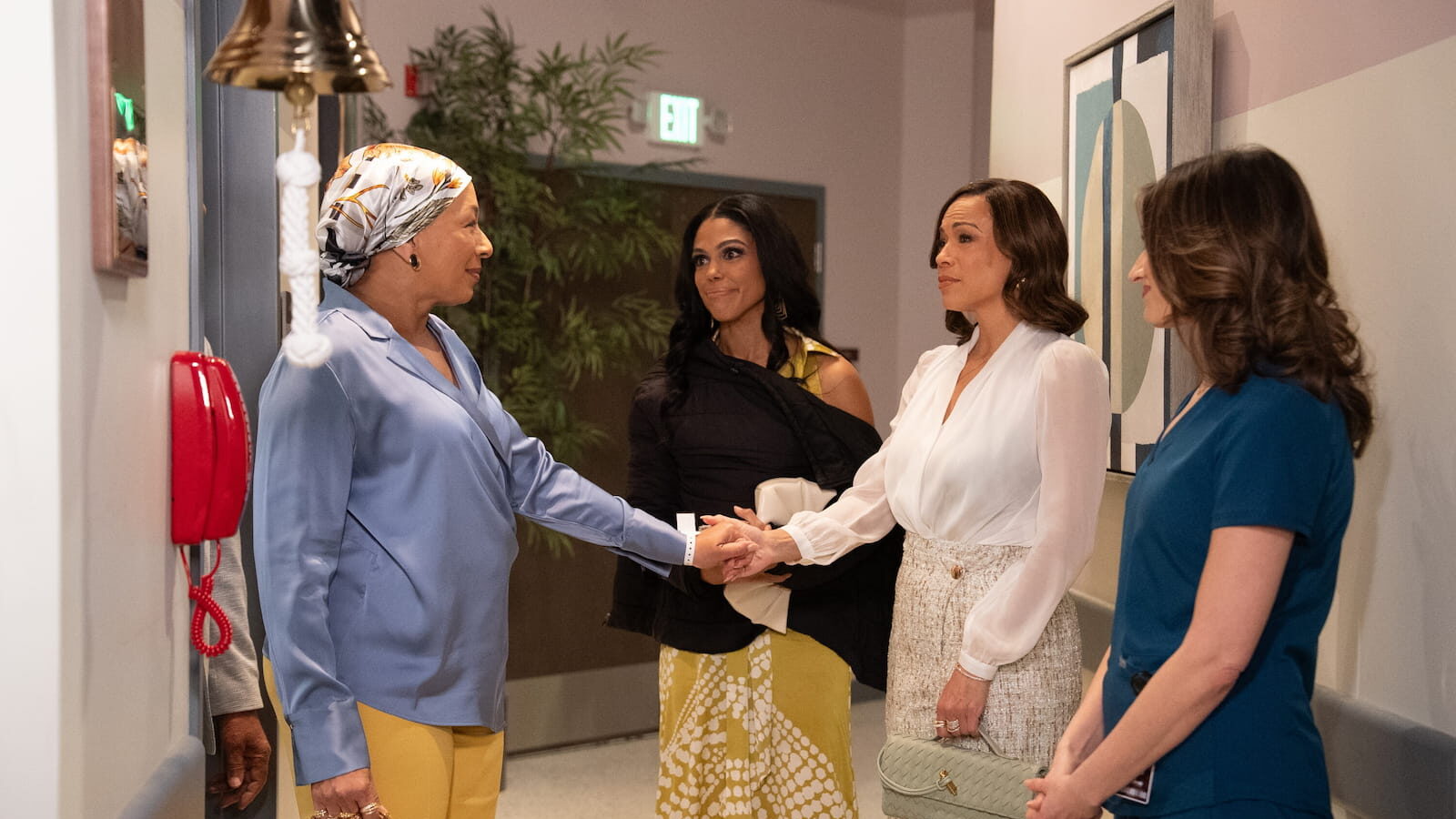
“I did pause,” Tunie told BlackDoctor.com when reflecting on the moment show creator and head writer Michele Val Jean first broke the news of the storyline to her. “I was concerned about portraying such a very important subject, such a very personal subject to so many people, so many women as well as men. My hesitancy was the concern that we would do it right and do it with the gravitas and the importance and the seriousness that comes along with someone having to deal with that kind of diagnosis.”
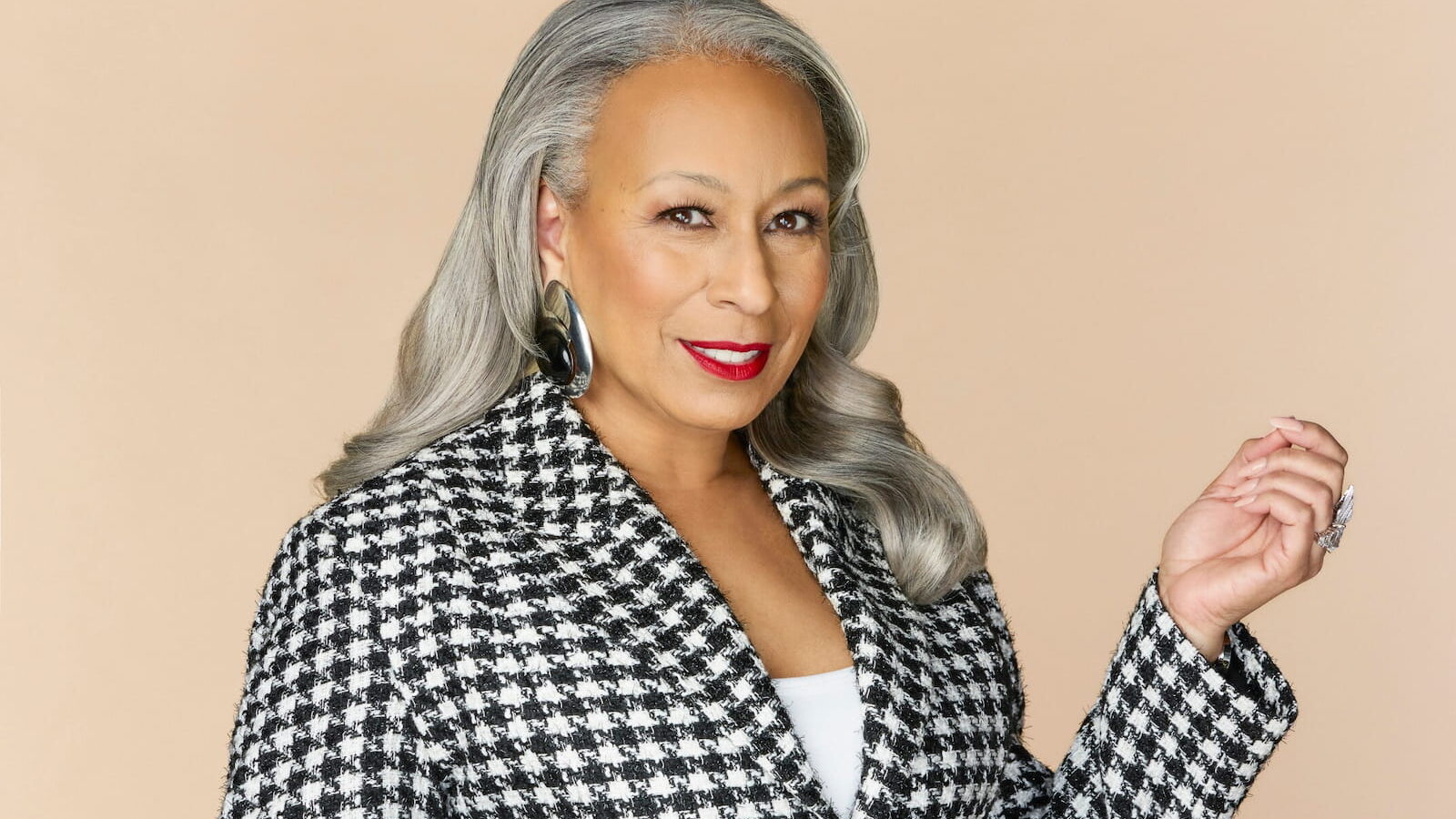
With reassurance from the creative team, Tunie says she dove in 110 percent, drawing from extensive research to bring authenticity to the screen. “The conversations that we had, what that did to their energy, what that did to their spirit, the moments when they felt like they couldn’t fight anymore, the moments when they rallied back, it was a combination of research and the big ‘what if.’”
Anita’s journey begins in a way that mirrors the chaotic lives of many Black women: with a routine screening. Co-executive producer and head writer Tracy Thomson notes that this detail was a vital point for the writing room to emphasize. Anita was busy, she had a demanding life, and she easily could have delayed the appointment. “Anita found her cancer on a routine screening,” Thomson said. “And she was busy and she would have put the appointment off had Laura not scheduled it for her. She was completely caught off guard by it. That’s kind of what we wanted. You’re going about your everyday life and boom; you get this news.”
Before sharing the diagnosis with the Dupree house, Anita initially keeps the terrifying news to herself. This is a protective reflex Tunie identifies as deeply cultural, but it is also tied to her public-facing legacy as a celebrity. “I think that Anita’s decision was one wanting to have all the information before sharing it,” Tunie explained. “Because to just drop it in the middle of the family and have no answers or no strategies in place, and also, she didn’t want anyone to worry. It was the holidays, so she didn’t want to cast a pall on the holidays. She also said, ‘This is my last holiday, I want it to be joyful and full of love.’ We’re the first people as Black women to give help and the last people to ask for it.”
When Anita finally absorbs the reality of her diagnosis, Tunie plays it as an internal turning point. “The scene where she gets the diagnosis, the reality alters, the reality shifts,” Tunie said. “You could see her listening to the doctor, but you could also see her disappearing in her own story of where this could go and what this could mean, and how this could change life.”
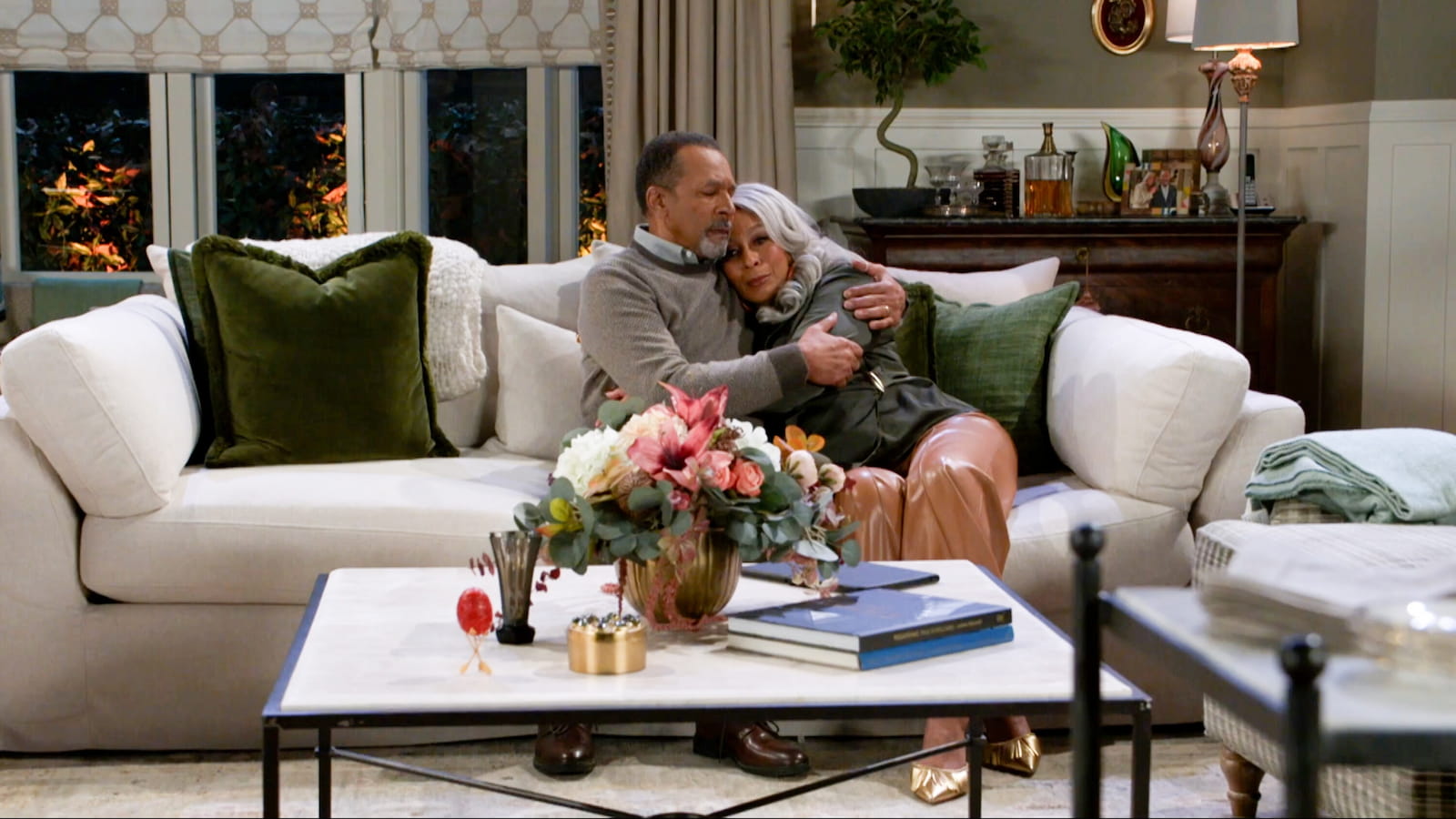
Thomson emphasized that while the creative team wanted Anita’s core strength to remain intact, they refused to sanitize the brutal physical and emotional tolls of cancer treatment. “To know that she could be vulnerable and really see her at her lowest, we tried to make sure that it’s very character-driven,” Thomson said. “Yes, it’s plot, but we wanted to show every aspect of it.”
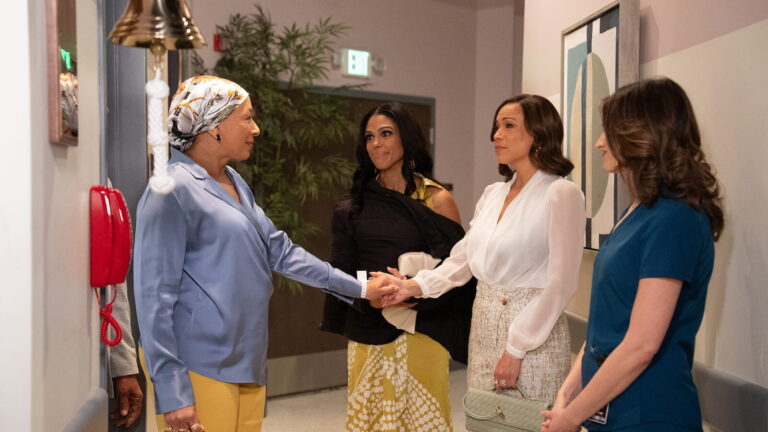
For Tunie, that meant stripping away any sense of vanity. “This was an opportunity to see the vulnerability, to see weakness, to see her humanity in all of its aspects,” Tunie said. “From the lowest lows to the highest highs. I’m not afraid to be ugly. I’m not afraid not to be pretty. I don’t cry pretty. If I’m weeping, it’s ugly. There are tears and snot and everything.” When Anita’s hair begins falling out in clumps, it represents a terrifying loss of bodily autonomy. “She runs her fingers and clumps of hair come out of her hands and she’s like, ‘Okay, I’m going to take control of this,’” Tunie recalled. “So, she goes and she cuts her hair, and then Dani helps her.” Working closely with head hair stylist Kiya Hinkson and head makeup artist Stevie Martin, Tunie committed to showing the realistic progression of the disease.
The audience sees everything from thinning strands to headscarves, specialized wigs, gradual regrowth, and eventually stepping out with a short, confident haircut. “Even though Anita, if she was going out in public, she would put on her makeup, she would put on a nice wig, and she would go and present in public and say, ‘Yes, I’m still Anita Dupree. I may be sick, but that doesn’t define me,’” Tunie said. “I hope that a lot of people who may experience this can also embrace that. I can still be who I am and look the way I want to look. You sometimes got to find the funny in order to just keep going forward.”
Standing directly at the epicenter of Anita’s daily battle is her husband, Vernon Dupree, played by legendary actor Clifton Davis. On screen, Vernon faces a challenge that hits millions of spouses: unlearning the instinct to fix a crisis he has absolutely no clinical control over.

“Vernon himself has no medical background,” Davis revealed. “My daughter Nicole and his former son-in-law Ted Richardson is a physician, so they have the medical background. I’m like the ordinary guy in the audience. I’m just a husband whose wife has come down with cancer, and we throw up our hands and say, ‘What do I do?’” For Davis, navigating that space meant leaning heavily on faith and learning how to stand back. “First the faith kicked in for Vernon, and then he looked for answers within himself emotionally: ‘How can I help the woman I love to make it through this moment? Not all the moments. Just this one. This one she’s experiencing right now.’”
However, Vernon’s fierce devotion quickly crosses the line into hyper-vigilant panic. “Each of those awarenesses that Anita had, Vernon tried to be of assistance in some way. Now he became overbearing. A bit obnoxious and just too much,” Davis said. “She finally said ‘please,’ and she threw him out of the house! He’s like, ‘Wait a minute. I’m trying to save your life. Why are you throwing me out of the house?’” It takes stepping away from the house and listening to the younger generation to break his tunnel vision. “Once he stepped out of the house and got together with his grandkids and talked to them, he began to understand what she was feeling,” Davis shared. “They helped him get a better perspective. He backed off a little bit and waited until her need was greatest, and then he stepped up to offer strong arms and a strong, full heart.”
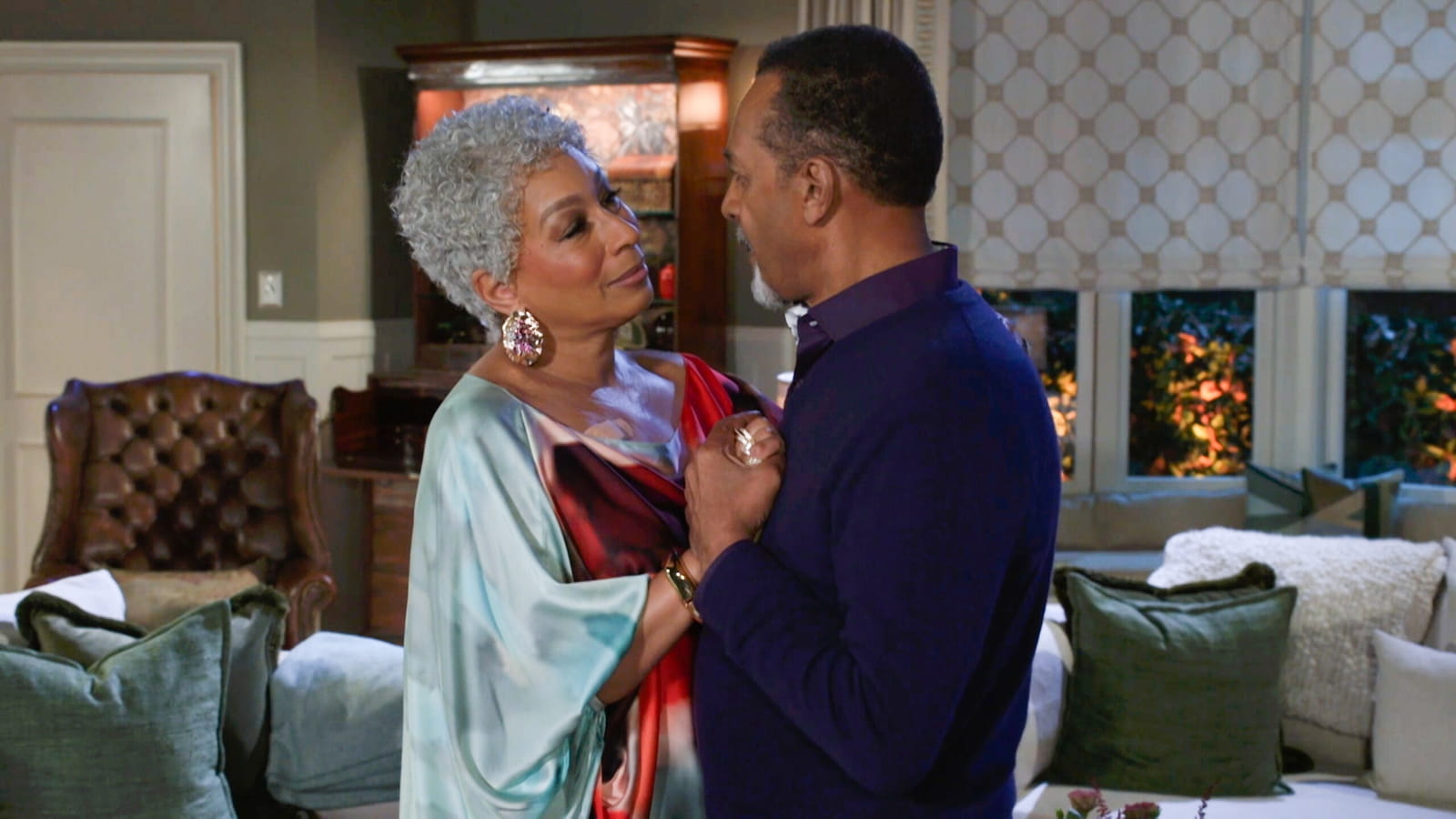
Despite the medical chaos, Vernon’s romantic adoration for his wife remains entirely unbroken. Even when Vernon rents out an entire restaurant to take Anita dining and dancing, only for the evening to be cut short when her hair begins to shed, his eyes never shift. “She was still beautiful,” Davis said. “This was not something Vernon said to make her feel better. This was something Vernon said because it was his truth. He doesn’t have to look into the past or look past her present looks in order to see the beauty that she used to be. She looks great right now. Just as she is.”
The parameters of the storyline expand into a communal family crisis the moment the doctors introduce genetic testing. This shifts the focus from a single patient to the biological blueprint of the entire family tree, specifically looking at the BRCA1 and BRCA2 genes.
Everyone carries BRCA genes. Their normal, healthy job is to produce proteins that suppress tumors and repair damaged DNA. However, when a person inherits a mutated or altered version of a BRCA gene, those natural cellular defenses fail. According to the National Cancer Institute, these genetic mutations drastically escalate the lifetime risk for breast, ovarian, prostate, and pancreatic cancers. Because these variations are passed down from parent to child, they cross gender lines entirely. Anita’s personal diagnosis instantly transforms into a heavy emotional inheritance for her bloodline. Nicole, played by Daphnee Duplaix, is caught in the middle. As Anita’s daughter, Dani’s sister, and the mother of Martin and Kat, the news hits her from every side. Even as a professional therapist, her clinical armor dissolves when the patients are her own family. “She was very regimented. She was very Type A,” Duplaix observed. “You started to see more of a real person. She wasn’t so put together. She wasn’t perfect, even though she was trying so hard to be, which is most women in general.”
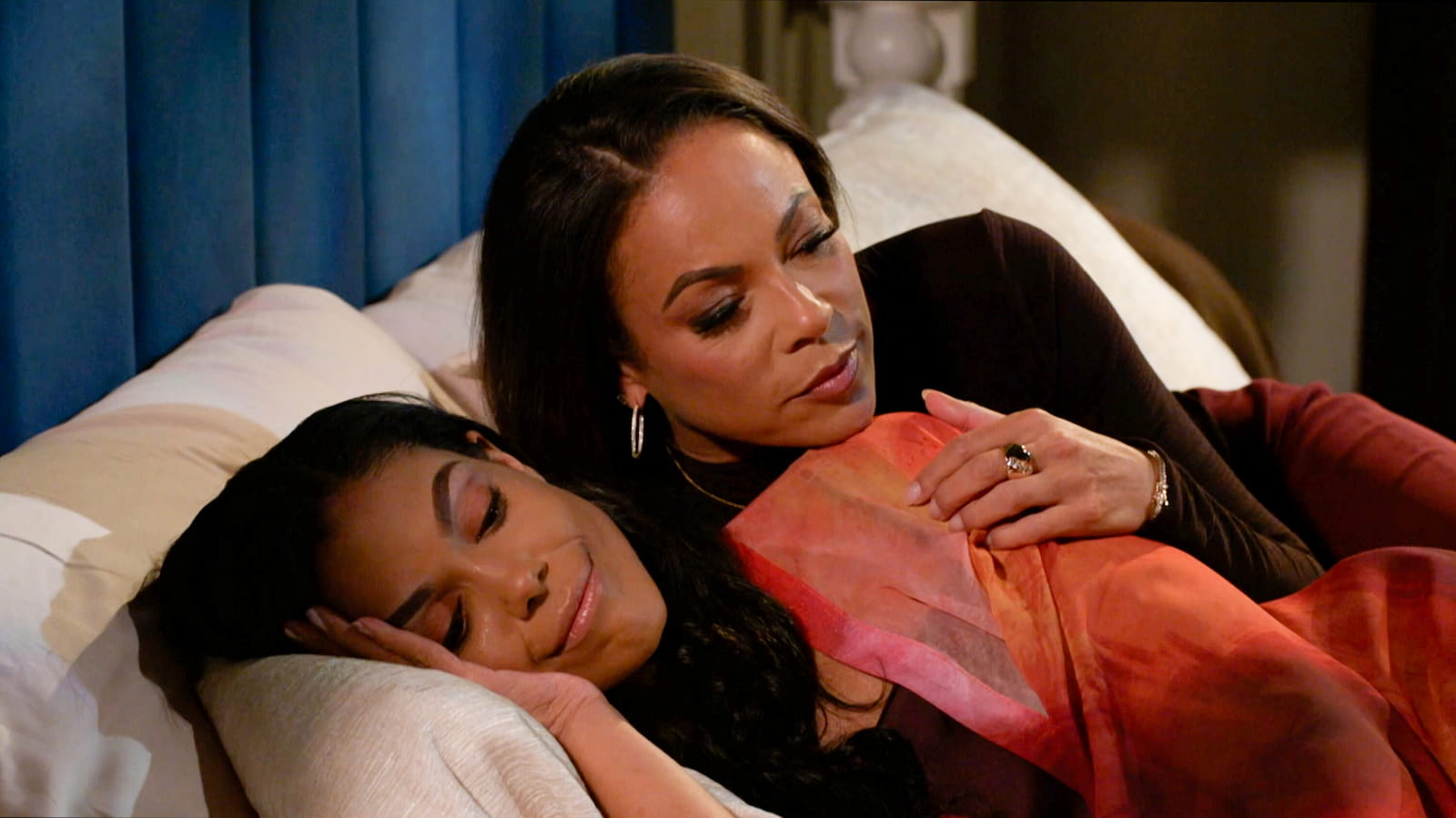
When her son Martin tests positive for the BRCA gene, Nicole must stop focusing on her mother’s care and start dealing with the risks facing her own children. Duplaix noted that the pacing of how the family uncovers the truth made the story hit home. “Anita and Vernon handled it together alone first, and then they slowly told the family,” Duplaix explained. “Dani and Nicole. And then obviously we went and told our children. Those tiny little moments mean so much because they really cared for that storyline. They cradled it like a baby and made sure that everybody felt seen and heard.”
The producers and the cast noted that this multi-generational dynamic provided a canvas to show the weight of genetic risk. “The burden gets a lot heavier,” Clifton Davis explained. “Because now not only is the love of his life stricken with this disease, but the other loves, other people closest to him, may be stricken as well.”
The show also highlights how the next generation copes with genetic certainty. While Dani immediately tests positive for the gene and turns her focus to protecting her kids, her daughter Naomi handles her diagnosis in total isolation. Meanwhile, Kat chooses to avoid testing, highlighting that there is no single right way to process hereditary risk. “How some people want to know if they’re a gene carrier, some people do not,” Thomson said. “We played that struggle with Kat, and I think it’s important to just show that there are many different options and no matter which one you pick, it’s personal.” Tamara Tunie was grateful the writers did not make the medical arc one-note. “When they first brought up the cancer story, my question was, ‘Are we just going to be preaching one thing?'” Tunie recalled. “But in having the BRCA component and having these other women deal with that and choosing different ways to deal with it, it was able to have all these different conversations.”
By intentionally weaving the physical educational resources of the Know Your Lemons Foundation directly into the narrative fabric, Beyond the Gates transcends daytime entertainment. It challenges an engrained cultural silence, especially among Black men who often avoid medical realities entirely.
“It is anthropological history that Black men do not talk about their illnesses,” Davis stated. “They always say, ‘Nothing wrong with me. I’ll be fine. No, I don’t need to go. No, I’m good.’ That’s just the way Black men are. We should include in the storytelling a sense of our medical history as well, because it could help you to anticipate an illness that may be coming your way that you’re really not anticipating.”
The viewer response to Anita’s battle has been profoundly emotional precisely because Black families instantly recognize the raw truth of these scenes. Davis notes that the production team has heard from thousands of viewers, including a male caregiver whose perspective was completely reshaped by Vernon. “He said watching Vernon Dupree manage this situation, how he loved his wife, how he was patient with her, how he was helpful to a fault, how he was patient and encouraging, helped him to deal with his wife’s cancer,” Davis shared. “And it moved him to tears. And he thanked us for giving him help to make it through such a difficult time.”
The narrative has also shattered the invisible walls of fear keeping women from booking vital screenings, proving that seeing a matriarch prioritize her health can trigger a massive chain reaction across real-world families. “Too many women go, ‘I’m too busy, I’m too busy, there’s too much going on,'” Duplaix noted. “Well, it should be number one on the list, because nothing else matters if you’re not healthy. Without a doubt, go make your appointment. There’s nothing to fear. Even the results, if something does come up, it’s better to catch it early than late.”
“The feedback that I have gotten from viewers are things like, ‘I haven’t had a mammogram in several years and I’ve made my appointment to go,’ Tunie added. “Or, ‘Thank you for portraying this because when I went through it, I felt so alone. And now I feel seen.’
Ultimately, Anita Dupree’s breast cancer battle is bigger than a single medical diagnosis. It is a profound, messy, and fiercely beautiful exploration of a Black family’s collective survival. By pulling back the curtain on genetic fear, marital intimacy, and the heavy crown of the strong Black matriarch, Beyond the Gates is demonstrating that early detection doesn’t just save one woman, it preserves the legacy of the entire family.
Watch Beyond the Gates weekdays on CBS from 2-3 PM ET or 1PM PT and stream it on Paramount+. For breast health tools and resources, visit KnowYourLemons.org.
Photos courtesy of CBS Beyond the Gates

By subscribing, you consent to receive emails from BlackDoctor.com. You may unsubscribe at any time. Privacy Policy & Terms of Service.