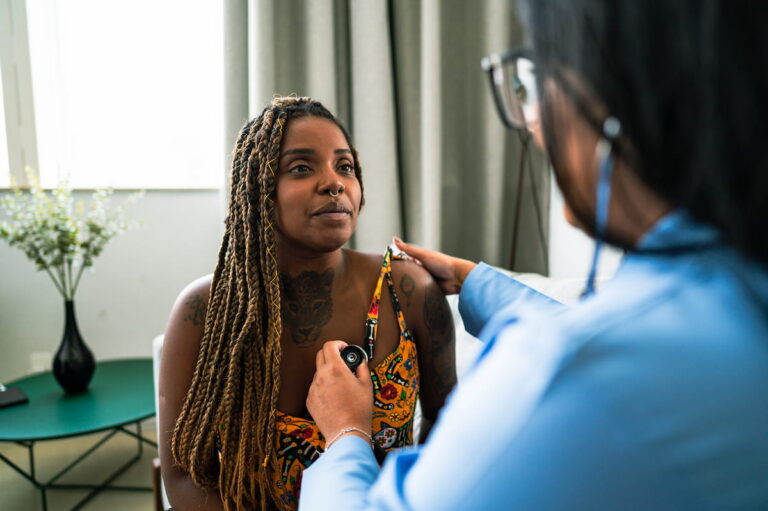
For many, the transition from the high energy of the holiday season to the quiet, cold reality of January brings more than just a calendar change—it brings a heavy emotional shift. While the world pushes “resolutions” and “resets,” the reality of shorter days and the “post-holiday comedown” can take a significant toll on our mental and physical well-being.
BlackDoctor sat down with Dr. Alexa Mieses Malchuk, a board-certified family physician, to discuss why January is so difficult, how stress “keeps the score” in our bodies, and why the best way to move forward isn’t a giant leap, but a series of small, attainable steps.
Once the festivities end, many people find themselves struggling with a lack of motivation or low mood. The answer for many is seasonal depression.
“If you live in a warmer climate, that can mean shorter days, which all has an impact on mental health,” Dr. Mieses Malchuk shares. “I think the combination of coming down off the holiday season with some of the things that are inherent to the winter can definitely impact mental health.”
While there is significant overlap, depression and anxiety are distinct conditions. Recognizing the warning signs is the first step toward management.
Symptoms of Depression
Symptoms of Anxiety

Mental health isn’t just “in your head”; it has a direct physical impact. Dr. Mieses Malchuk notes, “There’s a saying that your body keeps the score. When you’re stressed, it absolutely has physical manifestations that you might notice.”
Over time, this chronic stress can lead to a dangerous physiological cycle. “….If they’re always in what we call ‘fight or flight’ mode, your body releases chemicals that can increase your heart rate, increase your blood pressure, and increase inflammation throughout your body,” she adds.
This can also lead to a behavioral spiral: “If you’re not sleeping well, if you’re not eating well, or if you’re relying on risky substances to improve your mental health symptoms, all of those things cumulatively contribute to poor health.”
RELATED: How Exercise Improves Your Mental Health (No Therapy Required)
While a new year can feel like a fresh start, the pressure of “resolutions” can often backfire.
“It’s nice that people think of the new year as a time of renewal, but really every day, every hour, perhaps even every minute is an opportunity to do something new or different. So the problem with New Year’s resolutions is it’s very sort of black and white, all or nothing thinking,” Dr. Mieses Malchuk says. “People set out to achieve a goal, and it’s usually a very lofty goal. And naturally, as humans, we’re going to have ups and downs in our commitment to something, or how hard we’re working towards something. So it can just feel like failure if you make a little misstep.”
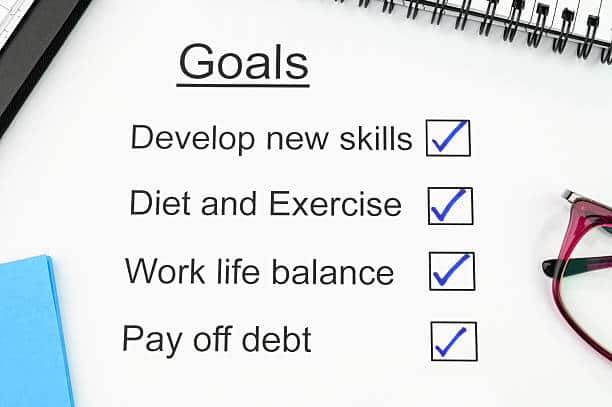
Instead of succumbing to the pressure of massive lifestyle shifts, Dr. Mieses Malchuk advises a more sustainable approach:
“The first thing that I always talk about with my patients is to set a specific, measurable and attainable goal…. I actually went through this with a patient of mine recently,” Dr. Mieses Malchuk explains. “She wants to get back into exercise to help her anxiety. And I said to her, ‘Okay, so what is the ultimate dream?’ I said, ‘Forget weather being a factor. forget your work hours or your work schedule being a factor. At the end of this road, what is your ideal scenario?”
“You can learn just as much, if not more, from the goals that you failed to achieve than the goals that you achieve,” she adds. “If you look back and you’re like, ‘Hey, I didn’t do what I said I was going to do this week.’ Go back and think about the things that got in your way. Anticipate that those things are going to come up again and try to problem-solve if they come up again, which they almost certainly will. What can you do differently to kind of get around those roadblocks?”
“Maybe it’s I’m going to cook breakfast two or three times this week. And from there, you can build. … You might be out of step with your routine, but when you break it down chunk by chunk, start to implement one chunk at a time. And once you have made that little chunk a habit, then you can kind of add more habits onto it,” Dr. Mieses Malchuk says.
If you are in a state of crisis, support is available immediately.
“You can dial 988 at any point in the day and be connected with someone who can talk you through a time of need and make sure that you’re safe,” Dr. Mieses Malchuk concludes. “If you or a loved one is concerned about your safety, you can also call 911. An ambulance can take you to the nearest hospital just to ensure your safety.”


By subscribing, you consent to receive emails from BlackDoctor.com. You may unsubscribe at any time. Privacy Policy & Terms of Service.