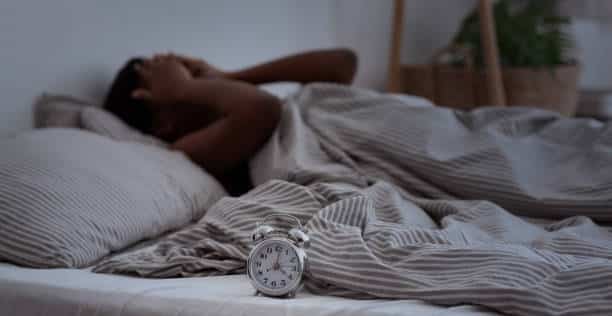
If you work from home and can’t sleep, it may be because your circadian rhythms are out of sync, a new study suggests.
In short, your sleep-wake cycle may be out of whack, according to Randy Nelson, director of the West Virginia University Center for Foundational Neuroscience Research and Education.
“During the course of evolution, the temporal rhythm of our rotating planet was internalized in our bodies. Virtually, all organisms on the planet have self-sustaining, internal biological clocks,” Nelson says. “In humans, virtually every aspect of our physiology and behavior, ranging from sleep to hormone secretion, to body temperature regulation, metabolism and food intake, is mediated by our internal clocks.”
These internal rhythms synced to the solar days are called circadian rhythms, and the biological clocks that generate circadian rhythms are called circadian clocks.
Coronasomnia: The Sleep Disorder No-one Saw Coming
If you are struggling to sleep throughout the night, try these tips for a better night’s rest:
“If you were placed in a dimly lit cave for several weeks, your sleep-wake cycle might be about 24 hours and 15 minutes, but not precisely 24 hours, as it would be above ground where the circadian clock is being reset daily by exposure to light,” Nelson explains.
Exposure to artificial light at night can cause havoc with the
temporal coordination of physiology and behavior, according to Nelson.
“In addition to jet travel and nightly exposure to artificial light, a common way that we impair the function of our internal clocks is something called ‘social jet lag.’ Social jet lag is the phase delay in your internal clock and sleep that occurs when you stay up late on Friday and Saturday nights to socialize and then sleep in on the following days to catch up,” Nelson adds.
“Social jet lag is what often makes Monday mornings so miserable,” he notes, comparing the feeling to actual jet lag.
When we transition from working from home to returning to the office, this requires a shift in wake times to allow for preparing and commuting.
“The key to good circadian hygiene is consistency in daily functioning,” Nelson says.
Nelson recommends making your bedroom completely dark (during the day if you are working night shifts) and make your workspace bright during the day (or if on night shift). In other words, mimic the natural day-night cycles in your home and office.
RELATED: Exhausted in The Mornings? It Could Be Something More Serious
“If possible, get 30-plus minutes of exposure to sunlight in the morning [take a walk or run]. Use bright illumination during the day to mimic daylight and use blackout curtains, or a sleep mask at night,” Nelson says. “Ask your personal physician about whether she would recommend melatonin; melatonin helps align circadian rhythms in most folks when taken two hours before sleep onset.”
Sleep is essential to your overall health, both mentally and physically, so it is important that you get to the root of your sleep problems.
If you have tried everything and are still having trouble sleeping, consult with your doctor. Your sleep problems may be a sign of something more serious.


By subscribing, you consent to receive emails from BlackDoctor.com. You may unsubscribe at any time. Privacy Policy & Terms of Service.