Here’s a summary from Dr. Nares Smitasin, a senior consultant with National University Hospital’s Department of Medicine, Division of Infectious Diseases, on how Mpox and chickenpox compare:

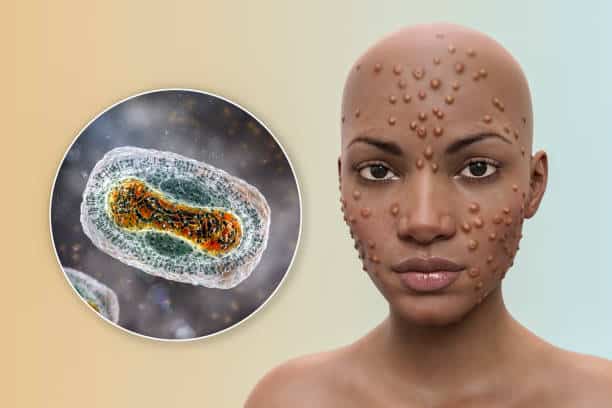
Anyone who gets a new, unexplained skin rash should call their doctor and get medical care in case it’s Mpox (formerly monkeypox), public health officials advise.
But, how can you tell when it is time to worry?
The American Academy of Dermatology offers some tips for helping distinguish monkeypox, which is disproportionately affecting Blacks and the LBGTQ community, from other health issues that cause rashes and for getting care.
RELATED: Why Are Blacks Disproportionately Being Affected By Mpox?
“This time, Mpox looks different,” says board-certified dermatologist Dr. Esther Freeman. She is director of Global Health Dermatology for Massachusetts General Hospital and Harvard Medical School, as well as a member of the American Academy of Dermatology’s Mpox Task Force.
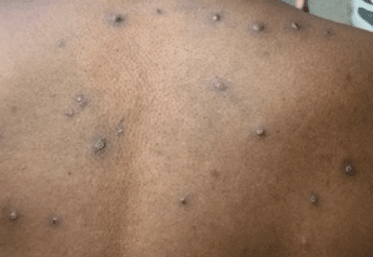
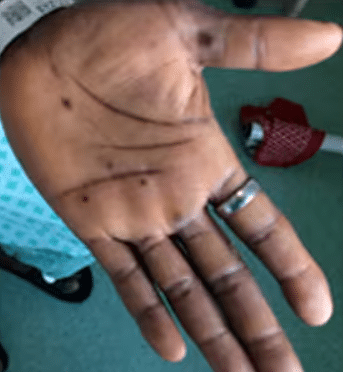
While past outbreaks of Mpox have started with a fever and flu-like symptoms and a rash that could include more than 200 bumps, this time it’s more common for people with Mpox to get fewer skin bumps. They may also not have a fever or flu-like symptoms.
“During this particular outbreak, we’re seeing that the rash may start in the groin, genital region, or around the anus — and sometimes stay in the spot that it started instead of spreading,” Freeman said in an academy news release.
People may have only one or two blisters, pus-filled bumps, or open sores, which can be very painful.
A dermatologist can narrow down the causes of a rash by its pattern on the skin and where it appears, confirming suspected Mpox with a swab sent to a lab.
“While the Mpox rash can be mistaken for chickenpox, shingles or herpes, there are differences between these rashes,” Freeman said.
Mpox is contagious and can spread until the bumps are gone, which is about two to four weeks.
If you have had chickenpox before, some of the symptoms of Mpox might sound especially familiar, however, there are differences.
Here’s a summary from Dr. Nares Smitasin, a senior consultant with National University Hospital’s Department of Medicine, Division of Infectious Diseases, on how Mpox and chickenpox compare:
| CHICKENPOX | MPOX | |
| How is it transmitted? |
|
|
| What is the incubation period? | 10 to 21 days (average 14 to 16 days) | 4 to 21 days (average 5 to 13 days) |
| What are the initial symptoms? |
|
|
| How do the rashes and blisters look? |
|
|
| How long does it take to recover? | 7 days after the rash begins (non-infectious when all rashes have crusted). | 7 to 14 days after the rash begins (non-infectious when all rashes have crusted). |
People can contract this virus in several ways, including through touching the rash or scabs of an infected person during intimate contact. This is the most common type of transmission. The virus can also less commonly spread through respiratory droplets. It can also be passed by touching unwashed clothing or bedding from an infected person.
Mpox can also be spread by animals in areas where the virus is endemic, including central or western Africa, through a bite or scratch, by handling a live or dead infected animal, eating an infected animal, or using a cream or powder made from the animal.
RELATED: Not Another Epidemic! Best Ways to Stay Safe And Protected From Monkeypox
“Not every new rash is Mpox. However, if you do think you have Mpox, it’s important to see your doctor quickly. Patients who delay getting medical attention may be diagnosed later when fewer treatment options are available. Waiting also means that you can expose more people to the virus, so family and others may develop Mpox,” Freeman said.
You should call your doctor’s office instead of going in, explaining symptoms first, and then getting advice about what to do.
People vaccinated against smallpox have less risk of developing Mpox. Most people under age 50 have not received this vaccine because the vaccines stopped being routinely given in the United States in 1972. By then, smallpox had been eradicated.
Though no specific treatment for Mpox is approved by the U.S. Food and Drug Administration, people at risk of developing severe disease may receive treatment with an antiviral medication for smallpox known as TPOXX.


By subscribing, you consent to receive emails from BlackDoctor.com. You may unsubscribe at any time. Privacy Policy & Terms of Service.