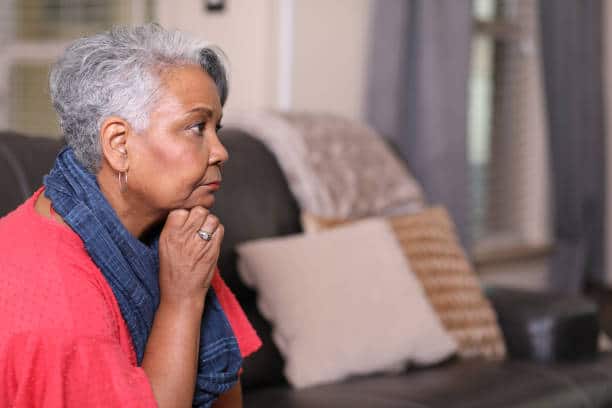
It’s a fate many older women fear: loneliness and isolation as they age. Now, new research suggests those feelings may also predispose them to heart disease. Heart disease is the leading cause of death for U.S. women, accounting for 1 in every 5 deaths, according to the U.S. Centers for Disease Control and Prevention. Additionally, 49 percent of Black women 20 and older have heart diseases.
The findings may be especially relevant now because of the social distancing required by the pandemic.
“We are social beings. In this time of COVID-19, many people are experiencing social isolation and loneliness, which may spiral into chronic states,” says study first author Natalie Golaszewski, a postdoctoral scholar in the Herbert Wertheim School of Public Health and Human Longevity Science at the University of California, San Diego.
“It is important to further understand the acute and long-term effects these experiences have on cardiovascular health and overall well-being,” she added in a university news release.
The study included nearly 58,000 postmenopausal women in the United States who responded to an initial questionnaire assessing social isolation in 2011-2012, followed by another questionnaire in 2014-2015 that assessed loneliness and social support.
The women were followed through 2019 or until they were diagnosed with heart disease. During that follow-up, nearly 1,600 were diagnosed with heart disease.
RELATED: Four Factors in Midlife Predict a Healthy Old Age for Women
Social isolation and loneliness independently increased heart disease risk by 8% and 5% respectively. Women with high levels of both had a 13%-27% higher risk than those with low levels of social isolation and low levels of loneliness.
The researchers pointed out that socially isolated people are not always lonely, and that lonely people are not necessarily socially isolated.
“Social isolation is about physically being away from people, like not touching or seeing or talking to other people. Loneliness is a feeling, one that can be experienced even by people who are regularly in contact with others,” explains senior author John Bellettiere, assistant professor of epidemiology at the Wertheim School of Public Health.
“We do not yet know whether the increased risk of cardiovascular disease is due to acute exposure to social isolation and loneliness, or whether prolonged exposure accumulated over a lifetime is the culprit. Further studies are needed to better understand that,” Bellettiere said in the release.
RELATED: Top 10 Myths About Aging
One-fourth of adults 65 and older report social isolation, while one-third of adults 45 or older report being lonely. Previous research shows that social isolation is more common among women than men.
“Measures of social isolation and loneliness — even with brief questions as was done in our study — should be incorporated into standard care,” Golaszewski shares.
“We monitor our patients’ blood pressure, weight and temperature, and it might also be beneficial to capture the social needs that individuals may be lacking to better understand cardiovascular risk and develop solutions,” she adds.
If you are dealing with social isolation and loneliness, these tips may help you cope:
“We can use [loneliness] as an opportunity to get to know ourselves better,” Kate Balestrieri, a licensed psychologist in Los Angeles, California shares. Take yourself to dinner, a movie, the park, a museum, a place you’ve always wanted to go. Many people look to relationships to regulate their emotions and feeling lonely can be an opportunity to learn to do that for yourself.”
“What you’re trying to do is engage your body and engage your mind out of the loneliness,” Lisa Bahar, a licensed marriage and family therapist in Newport Beach, California explains. You can try surfing, playing soccer, sailing, walking barefoot in sand or grass, etc. All of these activities can help you pay attention to the sensations in your body.
If you are feeling lonely, having a therapist to talk to can help. “Sometimes it’s just about somebody listening to you,” Bahar says. “And that’s very important.”
Last, but certainly not least, remember that you are in charge of your future. “You are the architect of your future,” Balestrieri says. “You get to go out and make new bonds.”


By subscribing, you consent to receive emails from BlackDoctor.com. You may unsubscribe at any time. Privacy Policy & Terms of Service.