Most tickborne infections occur during the summer, but Black people are also more likely to be diagnosed outside of the typical Lyme disease season, further suggesting a delay in early diagnosis, study author Dr. Dan Ly says.
About 34% of Black patients showed neurologic signs of Lyme disease when they were first diagnosed, compared to only 9% of white patients, the study found.
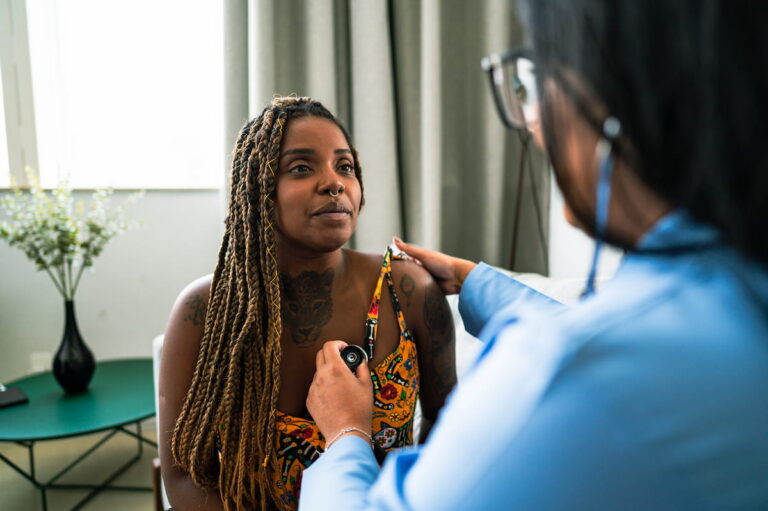
The tell-tale sign of Lyme disease is its bulls-eye rash, but that might be harder to spot in Black people, who are often diagnosed with more advanced disease than white people are, new research suggests.
The first sign of Lyme disease looks different on darker skin, and these differences are not usually reflected in images found in medical textbooks, Ly explains.
“This may lead to physicians not recognizing such rashes as well in Black patients and, as a result, Black patients are more likely to present with later complications of Lyme disease such as neurologic complications,” Ly adds.
RELATED: What’s Bugging You? 10 Most Common Bug Bites
The bulls-eye rash typically surfaces soon after a bite from an infected deer tick, along with fever, headache, chills and muscle pain.
However, not everyone gets a rash with Lyme disease, according to Dr. Sunjya Schweig, the CEO and co-director of the California Center for Functional Medicine in Kensington.
“Don’t rely on a rash to determine if you have a tick-borne disease,” Schweig adds. “Know the symptoms of the first stage of Lyme disease, which include
headaches, flu-like symptoms, joint pain, fatigue and sometimes a rash.”
“If you miss Lyme disease in its early stages, there can be serious consequences,” Dr. Adam Friedman, chair of dermatology at George Washington University’s School of Medicine & Health Sciences in Washington, D.C. says. “On lighter skin, the classic Lyme disease bulls-eye rash may appear red or pink, but on darker skin, it can be brown, black, purple or even off-white.”
RELATED: Natural Bug Repellent Recipes
Taking steps to prevent tick bites will lower your risk of developing Lyme disease.
Prevention includes:
Lyme disease often resolves quickly when caught and treated early with antibiotics, but missing it in its earlier stages increases the risk it will spread and cause other potentially serious health problems, such as numbness, tingling, muscle weakness and/or meningitis (an inflammation of the membranes covering the brain and spinal cord).
If you notice any symptoms of Lyme disease, you should alert your doctor as soon as possible. He or she may suggest an oral antibiotic to eliminate the infection.


By subscribing, you consent to receive emails from BlackDoctor.com. You may unsubscribe at any time. Privacy Policy & Terms of Service.