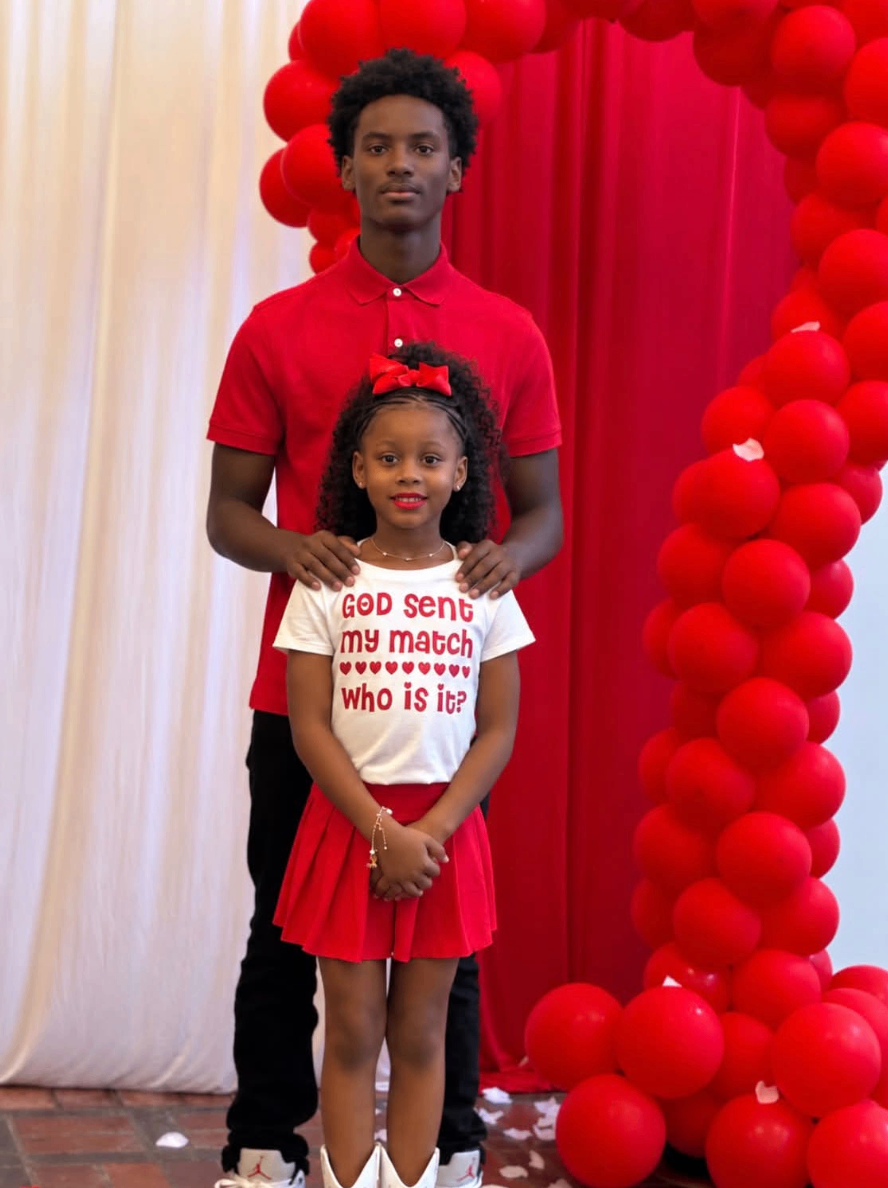
For nine-year-old Alexa Turner, the person who may help give her a life without sickle cell disease has been right beside her all along. Her 13-year-old brother, Amari Rose, is a match.
The Alabama siblings are now preparing for a stem cell transplant planned for January 2027. This procedure could potentially cure Alexa’s sickle cell disease after years of hospital stays, serious complications, and treatments.
When their mother, Jennifer Turner, asked Amari whether he would donate if he was a match, he apparently had little to think about.
When asked if he would donate bone marrow to help his little sister, Amari didn’t hesitate. According to the family’s fundraiser, he said he would do anything for her.
It’s the kind of answer you might expect from a protective big brother.
But for Alexa, receiving healthy blood-forming stem cells from a matched sibling could be life-changing.
RELATED: What to Say (and What Not to Say) When Explaining Sickle Cell
Alexa’s family learned early that sickle cell disease would be part of her life.
According to a fundraiser organized by Alexa’s aunt on behalf of her mother, Alexa has dealt with complications including acute chest syndrome, repeated hospitalizations, and blood transfusions.
Her family says doctors also discovered that Alexa had experienced silent strokes.
Unlike the stroke symptoms many of us recognize—such as sudden weakness, facial drooping, or difficulty speaking—a silent stroke can cause brain injury without obvious outward symptoms. According to the National Heart, Lung & Blood Institute, children with sickle cell disease are at increased risk of both overt and silent strokes.
For Alexa and her family, finding a treatment that could stop sickle cell from continuing to damage her body became increasingly important.
Then came the news they had been hoping for. Alexa was a candidate for a transplant. Now they needed a donor.
RELATED: The Sickle Cell Comfort Kit: What to Keep Ready for Difficult Days
Finding a donor for a stem cell transplant isn’t as simple as finding someone with the same blood type. Doctors look at markers called human leukocyte antigens, or HLA, which help determine how closely a donor’s cells match the recipient’s. A close match can reduce the risk of serious complications after transplant.
According to the CDC, a brother or sister is usually the best donor for a person with sickle cell disease undergoing a bone marrow or stem cell transplant. But having siblings doesn’t guarantee finding a match. According to American Society of Hematology guidelines, fewer than 20 percent of people with sickle cell disease have an HLA-matched sibling donor.
Alexa has five siblings, and all five were tested. Two emerged as potential donors, and 13-year-old Amari was selected.
That’s part of what makes Alexa’s story so remarkable. After years of watching sickle cell affect their daughter, the Turners found a compatible donor within their own family, and Alexa’s big brother will play a direct role in what they hope will be a new chapter in her life.
RELATED: Meet Daniel Cressy, the 23-Year-Old Who Beat Sickle Cell Disease to Chase His Dreams
Sickle cell disease is an inherited blood disorder that affects hemoglobin, the protein in red blood cells that carries oxygen throughout the body. Instead of remaining round and flexible, some red blood cells become hard, sticky, and shaped like a crescent or sickle. Those cells can block blood flow, causing severe pain and potentially damaging organs throughout the body.
A stem cell transplant takes a different approach from medications that help manage symptoms and complications. Before transplant, a patient undergoes treatment to prepare the bone marrow for the donor’s healthy blood-forming stem cells. Those new cells can then begin producing healthy red blood cells that don’t contain large amounts of abnormal hemoglobin S, which causes sickling.
The American Society of Hematology describes hematopoietic stem cell transplantation as a potentially curative therapy for sickle cell disease. A transplant isn’t appropriate for every person with sickle cell disease, and it comes with serious risks. Complications can include infections, graft failure, and graft-versus-host disease, in which donated cells attack the recipient’s tissues.
Doctors and families have to weigh those risks against the potential benefits. But for some people with severe sickle cell disease and a well-matched donor, a transplant can replace the blood-forming cells that produce sickled red blood cells with healthy donor cells.
RELATED: “They Don’t Believe My Pain”: Navigating ER Visits With Sickle Cell
Alexa’s family is preparing for the transplant process, with the procedure scheduled for January 2027. Amari will also undergo his own medical evaluation and donation process as his little sister prepares for treatment.
Even after the transplant, Alexa won’t immediately return to a normal childhood. According to the family’s fundraiser, she is expected to spend several weeks in the hospital and may need to remain isolated for at least nine months while her immune system rebuilds. Her mother, who owns a salon, plans to step away from work for several months to care for Alexa and support Amari through the donor process. The family launched the fundraiser to help with expenses during that time.
Still, the Turners are looking toward something they haven’t been able to before: the possibility of Alexa growing up without sickle cell dictating so much of her life.
She has already spent much of her childhood doing more than managing her own disease. Alexa participates in toy drives and raises awareness about sickle cell while still doing what a nine-year-old should do, like going to school, cheerleading, and spending time with friends.
Now her big brother is stepping into her story in an entirely different way. A successful transplant isn’t guaranteed, and Alexa’s recovery will take time. But after years of living with a disease that has already affected her body in serious ways, she has something her family has been hoping for: a possible path toward a life without sickle cell, and her brother is helping make that possibility real.

By subscribing, you consent to receive emails from BlackDoctor.com. You may unsubscribe at any time. Privacy Policy & Terms of Service.
Enter your name and email to receive the download link.