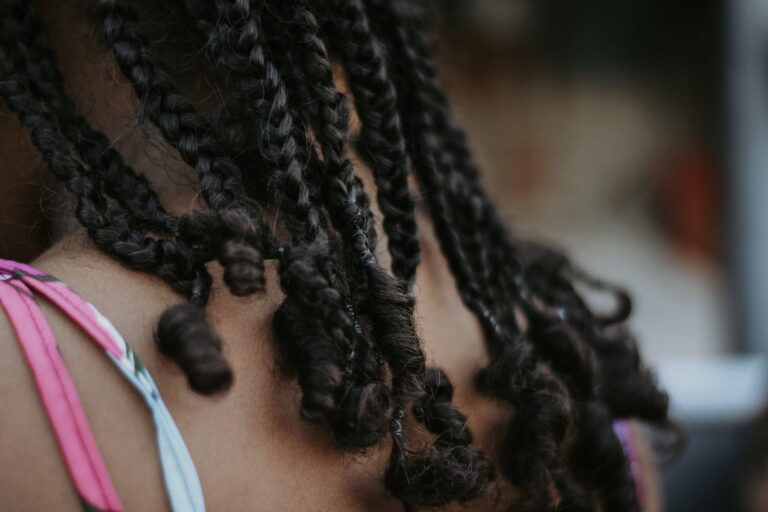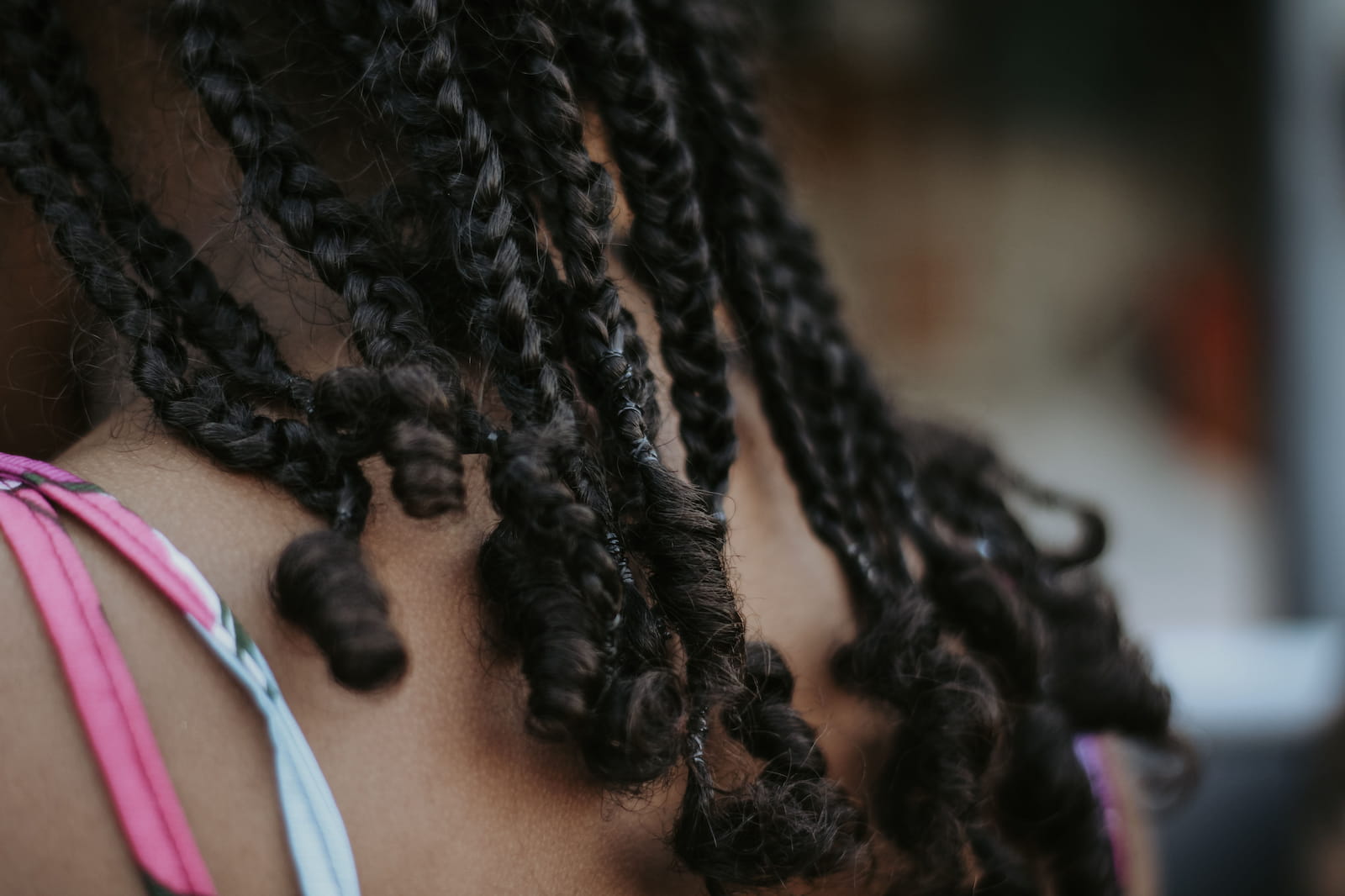
For many Black families, doing a child’s hair is about much more than keeping it neat. Braids, cornrows, locs, twists, ponytails, and other styles can be expressions of culture, creativity, and identity. They also make caring for textured hair easier. But when a hairstyle consistently pulls on the scalp, it can also contribute to traction alopecia.
Dermatologist Victoria Barbosa, MD, describes the causes of traction alopecia. “Traction alopecia is induced from hairstyling,” she says. “We see it most frequently in people who wear braids, twists, sew-ins, crochets that are too tight, or in people who wear wigs that are glued on.”
Traction alopecia happens when too much or prolonged tension is placed on the scalp, which in turn damages the hair follicles. It can affect anyone, but it is relevant for Black children because some of our popular hairstyles commonly can place a lot of tension on the scalp. And while hair loss may seem like an adult concern, signs of traction alopecia can begin during childhood.
That is one reason researchers are increasingly interested in preventing it instead of waiting to treat hair loss after it occurs.
Researchers are also studying whether culturally tailored education can help families recognize risky styling practices and prevent traction-related hair loss before permanent damage occurs.
Traction alopecia usually develops in areas where hair is repeatedly pulled tight. According to the Society for Pediatric Dermatology (SPD), hairstyles associated with higher risk include tight braids, cornrows, locs, buns and ponytails, as well as extensions, weaves and other styles that place tension on the hair. Even worse, they are kept in for extended periods. Many of these are seen as protective styles, but with time, they can harm the scalp.
The first signs are often subtle. A child may complain about an itchy hairline, or their scalp may look red or irritated. Some children experience no irritation at all. However, over time, the hair may start to look thinner or broken.
If the traction continues long enough, the follicles can become permanently damaged, meaning the hair may not grow back as it did before.
According to Dr. Barbosa, “In the short term, traction alopecia is reversible. However, over time, it can become irreversible. So it is really important if you start to notice your hairline creeping back. It means it’s time to take a break from braids or twists or whatever style caused the problem in the first place.”
Pain is an important warning sign. If a child says a hairstyle hurts, stings, or feels too tight, parents need to listen, as that’s not a normal part of the styling process. The SPD also lists crusting, tenting of the scalp, and pimples as symptoms that can signal excessive tension.
RELATED: A Dermatologist Explains: How to Reverse Traction Alopecia
The conversation gets complicated when considering cultural styles.
Black children don’t need to stay away from braids, locs, and extensions — instead, installation and maintenance matter.
The SPD advises using looser braided styles with their natural hair and avoiding adding glue to the scalp. Wigs can be worn with satin caps, and looser ponytails and buns may also be lower risk. Also, avoiding tight styles on relaxed hair can make a difference.
Chemically processed or dyed hair may also be more prone to breakage. The guidance is to avoid chemical or heat treatments that dry out a child’s hair and to use gentle detangling practices, such as starting at the ends of the hair with a wide-toothed comb and working upward toward the scalp.
Preventing traction alopecia doesn’t have to mean abandoning styles. Instead, parents can be mindful of gentler care and reducing traction. Also avoiding back-to-back styles and giving the scalp a break can help.
One emerging area of research is particularly relevant because it recognizes that hair care habits often begin at home and can be passed from one generation to the next.
A study in the Journal of Investigative Dermatology is examining how much Black parents, caregivers, and children’s hairstylists know about traction alopecia and central centrifugal cicatricial alopecia, or CCCA, another form of hair loss that can affect people of African descent. The researchers are testing a culturally tailored educational module designed to improve knowledge about hair health and potentially change styling behaviors among caregivers of children younger than 18.
The current study is therefore better described as an ongoing intervention study than as a completed clinical trial. Still, its findings could help inform future research into culturally tailored approaches to preventing traction alopecia.
Unlike a clinical trial testing a drug or medical device, this study is testing whether culturally tailored educational programs can change what families know and how they approach children’s hair care.
Preliminary data from 150 adults showed improvements in participants’ knowledge of traction alopecia, CCCA and high-risk styling behaviors after completing the educational module. Participants also reported reductions in tight styles, heat use, extensions and relaxers, as well as greater confidence talking about hair concerns with health care providers. The researchers ultimately plan to include 300 participants.
That approach is significant because simply telling families to “avoid tight hairstyles” may not be enough. Effective prevention has to account for the realities of Black hair care, including the styles families actually use, the people who style children’s hair, and the cultural context surrounding those choices.
The research also points toward a broader question in pediatric hair health: Can culturally tailored education prevent hair loss before permanent damage occurs?
That’s different from developing a new medication or procedure to treat an established condition. Instead, researchers are testing whether education itself can change knowledge and behavior in ways that may reduce risk.
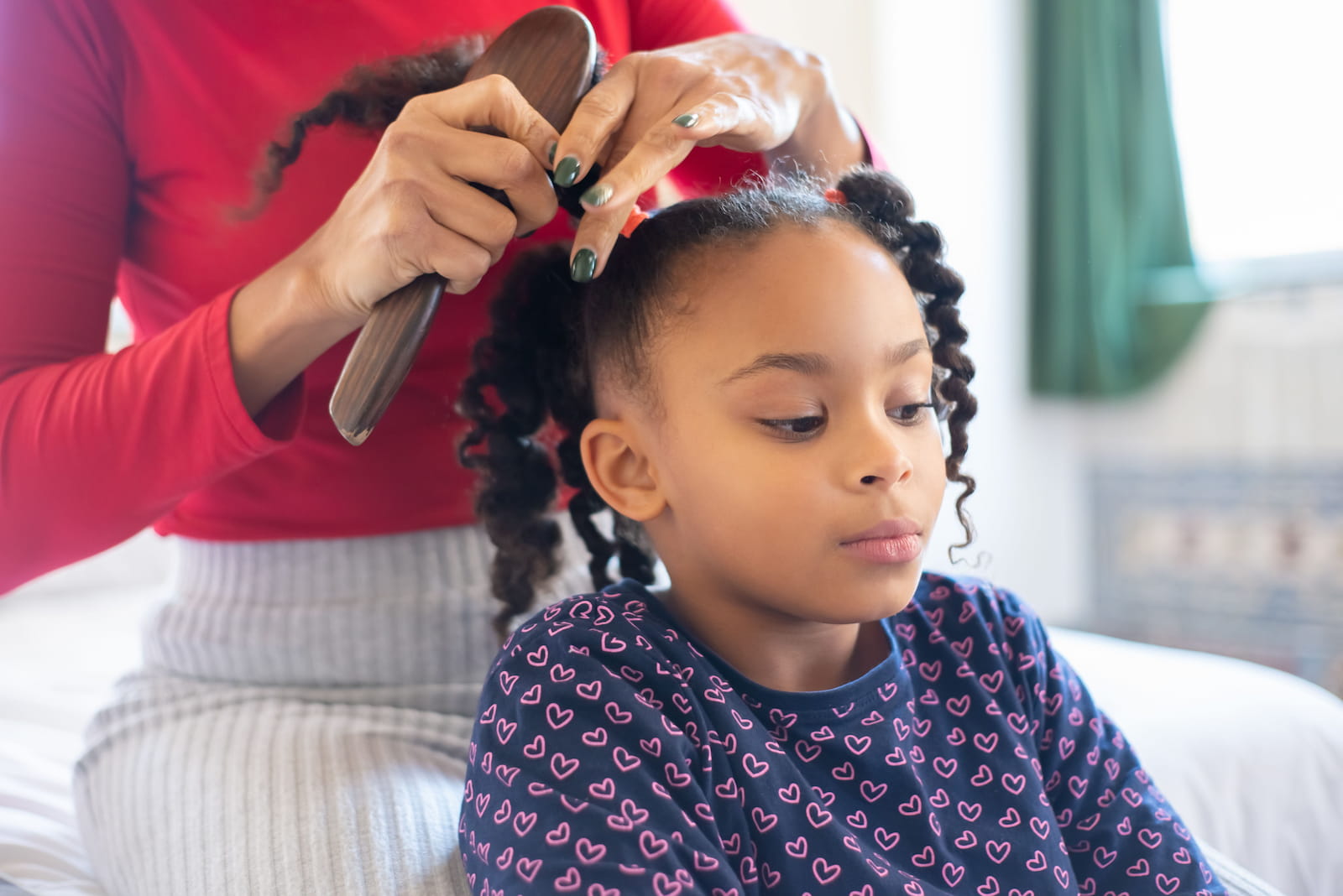
Traction alopecia research must account for the hairstyles, hair care practices, caregivers, and cultural considerations specific to the communities researchers hope to reach. Representation and culturally responsive research are critical to developing interventions that work for Black communities, which is why Black participation in clinical trials is so important.
RELATED: 5 Ways Black Women Can Prevent Summer Hair Loss
Parents don’t need to become dermatologists to protect their children’s hair. One of the simplest things they can do is pay attention to how a child’s scalp responds to a hairstyle.
If a child complains of pain or stinging during or after styling, the style may be too tight. Parents can also look for redness, bumps, crusting, tenting of the scalp, or thinning around the hairline.
Alternating hairstyles and choosing looser styles can help reduce repeated stress on the same areas of the scalp. And if a child is already experiencing hair loss, persistent irritation, or other concerning changes, a pediatrician or dermatologist can evaluate the scalp. Traction alopecia is often diagnosed by examining the hair and scalp and asking about hair care practices, and early cases may be treatable.
Ultimately, protecting Black children’s hair doesn’t require separating hair health from culture. It requires recognizing that both matter.
For families, that can mean keeping the styles they love while making small changes: less tension, more breaks between styles and greater attention to scalp symptoms. And for researchers, the next step may be figuring out how culturally informed education can help families make those changes before a child’s hair loss becomes permanent.
Interested in participating in medical research? Clinical trials help researchers learn whether new approaches to prevention, diagnosis, and treatment work for different communities.
If you’re interested in participating, explore BlackDoctor’s Clinical Trials Resource Center to learn more about what participation involves and what questions to ask before enrolling.

By subscribing, you consent to receive emails from BlackDoctor.com. You may unsubscribe at any time. Privacy Policy & Terms of Service.