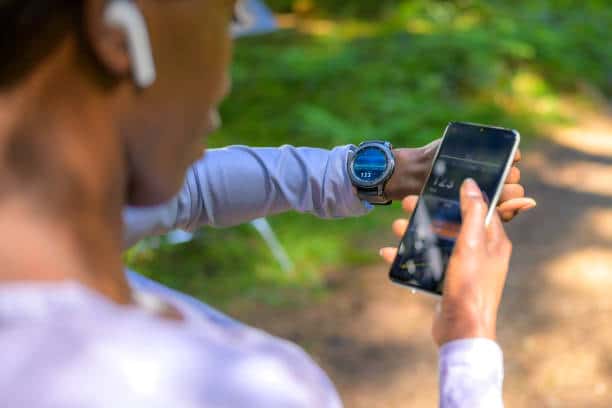
Fitness trackers can tell you how well you’re sleeping, how fast you’re walking and, of course, how many steps you’ve taken.
But during the pandemic, researchers have also investigated the ability of smartwatches to help detect COVID-19 or provide data on recovery.
The latest study uses several measures of heart rate data to help track the progression of symptoms in someone who has the coronavirus and to show how sick that person becomes while ill.
RELATED: Smartwatch Heart Data May Be Less Accurate for Black Users
In the study, fitness trackers detected that COVID-19 dampened biological timekeeping signals, says co-author Daniel Forger, a mathematics professor at the University of Michigan, in Ann Arbor. The researchers also found signs of changes in how a person’s heart rate responds to activity, altered resting heart rate and stress signals.
“Most people using this data think about heart rate as one number, but heart rate is this vital sign that reflects so many different physiological processes,” Forger shares. “That’s what our goal is as mathematicians, can we take this one string of numbers, all these heartbeats, with all the noise and everything and say something about different physiological signals?”
While past research has included working to understand disease through wearable heart rate data, for this effort the researchers focused on breaking down the heart rate signal into parts.
The team used data from the 2019 and 2020 cohorts of the Intern Health Study, which follows physicians during their first year of residency, and the Roadmap College Student Data Set, which looked at student health and well-being during the 2020-2021 academic year. Students in that study wore Fitbits and self-reported COVID-19 diagnosis and symptoms.
This new study included 43 medical interns and 72 undergraduate and graduate students who had a positive COVID-19 test. They had been wearing their fitness trackers 50 days before symptoms and 14 days after.
The researchers found that when COVID symptoms began, the study participants had a heart rate increase per step. This heart rate per step was significantly higher for individuals who had a cough.
A person’s daily resting heart rate increased when symptoms started or before, possibly because of fever or increased anxiety, the researchers suggest.
As COVID-19 symptoms started, individuals had increased “circadian phase uncertainty,” which is the body’s inability to time daily events. That may correspond to early signs of infection, according to the study authors.
Besides affecting heart rate, the body’s circadian clock regulates wake-sleep patterns, temperature and more.
“There’s actually interesting animal work showing that circadian rhythms become blunted around the time of infection,” Forger adds. “So it makes physiological sense. In your body, you have these big daily variations, but if you’re sick, your body may not want you to have such big variations. It may want to just shut that timekeeping off.”
The work establishes algorithms that can be used to understand how an illness impacts heart rate physiology, according to the study.
The algorithms are good enough now to really be able to give a larger picture of health, Forger says, which may help medical professionals triage patients and make more informed decisions.
“I think now that we just have a better understanding of these parameter changes over time, it just really sets the stage for future real-time detection of disease,” says lead author Caleb Mayer, a doctoral student in mathematics at the University of Michigan. “We’re not there yet, but I think breaking down the heart rate signal into all these different systems is really a necessary step toward that goal.”
RELATED: 5 Apps That Can Keep You Healthy as You Age
These wearables are now so common, and the number of people using them is only going to grow in the coming years, says Dr. Matthew Martinez, director of Atlantic Health System Sports Cardiology at Morristown Medical Center in New Jersey and past chair of the American College of Cardiology Sports and Exercise Cardiology Council.
Martinez, who was not involved in this study, says he often sees patients who provide him with a multitude of data from their trackers.
“I think first it’s really important for people to continue to take ownership for their own health care,” he adds.
Martinez says there are some caveats to relying on this information. For one thing, the medical community will need to determine what data might be valuable. He says he could see value in being able to monitor someone’s health information and also in gathering data for those who may be unable to easily go to the doctor in person.
“I also like the ability to be able to track folks in their usual environment, so I can get a better sense of that. And it also allows for a more affordable, real-life view of what’s happening for patients,” Martinez shares.
Limitations of the study were that it doesn’t consider influenza-like illnesses and didn’t account for other factors such as age, weight, gender or that the data were taken during a time when flu or other disease transmission was also high.
If you are interested in whether or not wearables can help improve your health, talk with your doctor about the options that are available and what may make sense for you. If wearables can help, you doctor may be able to advise you on what information may be useful to collect.


By subscribing, you consent to receive emails from BlackDoctor.com. You may unsubscribe at any time. Privacy Policy & Terms of Service.