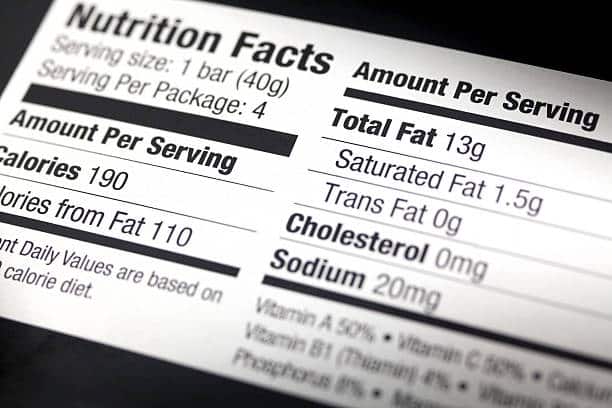
For many people, nutrition labels are just part of food packaging. But if you have diabetes, those labels can be an important tool for managing your disease. You just have to know how to read them. Here are three things you should be looking out for the next time you read a food label.
One of the first things to look for is the “serving size” and, perhaps more important, “servings per container.” This information — usually found near the top, right underneath the words “Nutrition Facts” — will help you make sense of everything else on the label.
For example, a can of heat-and-eat soup may say that it contains two servings. That’s a good sign that you might not want to eat the whole thing by yourself at one meal.
If you do, you’ll be consuming double the amounts shown on the label. For example, if the label says that it contains 870 mg of sodium per serving, you’ll get 1,740 mg if you eat it all.
RELATED: This Delicious Plant-Based Diet May Be Key to Managing Diabetes
Labels also list the total amount of sugar, but people with diabetes should pay more attention to total carbohydrates. Some foods — including cereals, pastas, and grains — can be low in sugar but fairly high in carbohydrates, and too many carbohydrates can quickly raise your blood sugar.
A serving of frozen macaroni and cheese might have only 2 grams of sugar but 33 grams of total carbohydrates.
Don’t forget to look at the serving size. A single 12-ounce package of that macaroni and cheese actually contains two servings. Eat the whole thing, and you’ll be getting 66 grams of total carbohydrates, a little more than you would usually want to eat in a meal.
Some labels on high-fiber foods also list “net carbohydrates.” This isn’t an official term, and different companies calculate it in different ways. It usually means the grams of total carbohydrates minus the grams of fiber. The idea is that because fiber is not digested, it doesn’t raise blood glucose, so the carbohydrates don’t really count.
While it’s always a good idea to eat plenty of fiber, you shouldn’t put too much stock in net carbs. Instead, it’s better to use this simple rule of thumb: If a serving has at least 5 grams of fiber, you can subtract HALF of those fiber grams from the total carbohydrates.
If a serving of cereal, for example, has 10 grams of fiber and 23 grams of total carbohydrates, figure that it’s only really adding about 18 grams of carbs to your daily total. Depending on your activity level, most people with diabetes need between 45 and 60 grams of carbohydrates per meal.
Calories are worth watching, too, especially if you’re working to keep your weight under control. Some foods that seem healthy can be surprisingly loaded with calories. A 10-ounce chicken pot pie may have 660 calories, all of those peas and carrots notwithstanding, and a hefty dose of saturated fats.
If you’re trying to lose or manage your weight, the less saturated fats you eat, the better. The food label tells you about those bad fats, and what else may be hidden in a tasty snack.
If you’re watching calories, know that fat grams contain 9 calories each, whereas carbohydrates contain only 4 calories per gram.
RELATED: The 10 Best Foods For Diabetes
The listing order is always important, too. The most abundant ingredients in any product are listed first. You’ll be better off choosing foods that prominently list healthy ingredients like whole grains and monounsaturated fats, such as olive oil.
At the same time, you’ll want to avoid products containing unhealthy ingredients such as artery-clogging hydrogenated oils or partially hydrogenated oils also known as trans fats.
Food labels don’t offer much plot or excitement. But when it comes to living well with diabetes, they’re a must-read.


By subscribing, you consent to receive emails from BlackDoctor.com. You may unsubscribe at any time. Privacy Policy & Terms of Service.