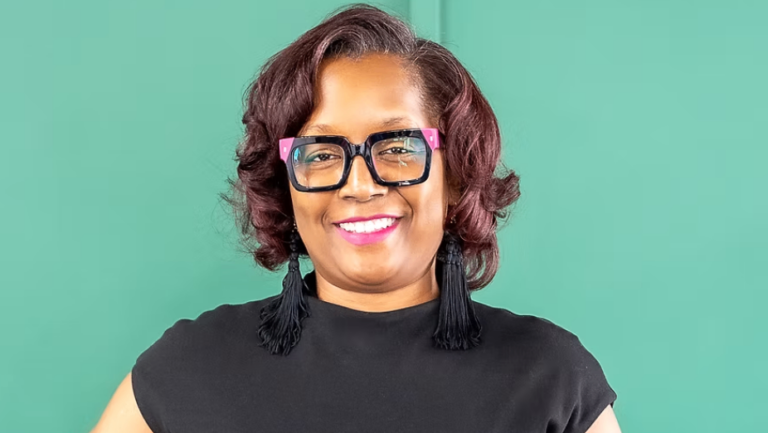
To be honest, I’m a nice person, but I’m not that nice of a person that I would voluntarily go out of my way to sign up for a bone marrow drive. Back in 2009, when I was about 28 years old, I was more than likely leaving work with my co-workers to go to a bar. We just so happened to come across a drive for a little girl named Jasmina from New York, and we were curious and stopped. They told us, “Oh, it’s just a swab,” so we just did it on our way to probably get a drink. They mailed me a card saying I was now in the bone marrow donor system, and I just never thought anything else about it.
I’ve always kept the exact same cell phone number to this day. Out of nowhere, 13 years later, DKMS—the organization that hosted the drive—called me on my cell. They said, “Hi, you attended a bone marrow drive 13 years ago. You came up as a match for someone who’s in need of a bone marrow donation.”
Looking back on it, it felt like a Lifetime movie because how often is someone going to get that type of call? I’m sure people hang up on them and think it’s a spam call. But something about it clicked in me, and I vaguely remembered it, and they had all my information. They told me there was a 22-year-old man with a form of leukemia, and a lot of times, if you don’t have a full-blooded sibling, family member, or friend who is a match, you have to go into the national donor database. That stuck with me because you would hope that if you need help, someone would be willing to help you. So I said, “Tell me what I have to do.”
That started in September 2022. First, they wanted me to go to a lab facility like Quest Labs to get some blood taken because the original swab only takes your DNA, not blood. They need to do more testing to see how compatible you are, because bone marrow is a living organ.
By October, they called to say we were a 90 percent match for blood and DNA. During that time, I started researching more about organ and bone marrow donation and found out that Black people and Latino people are not represented in these systems at all. I understand there’s a fear and distrust in our community when it comes to medical treatment—people worry the government has your info or that being a donor means they’ll let you die in an accident to take your organs, which isn’t how it works.
As I started doing more research, I thought: If me doing this will give him a chance at life, why would I not help? And if they were able to get me after 13 years on the same phone number, I had to believe I was supposed to help this person.
The screening process is a lot of testing—a verbal questionnaire with about 50 questions where they dive into your whole life and background to make sure you qualify and don’t have drug, alcohol, or other health issues. They ask very personal questions, just like your primary care doctor or gynecologist would, and you have to be open and answer honestly.
Originally, I went to a hospital in Manhattan for extensive blood, DNA, and cholesterol testing. They told me he just needed stem cells—I would get hooked up to a machine for about four hours to sort out my blood and stem cells, and I’d come out feeling like I had the flu. To me, feeling like I had the flu was no comparison to helping save this man’s life, so I was fully with it for December 2022.
But right before that in November, they called and said, “Listen, he’s very sick and he’s unable to even have the stem cell transplant. We’re going to take another course of action.” I felt really bad because I had dedicated three months of going to doctors and thought he might have passed away, but I figured I had done my part.
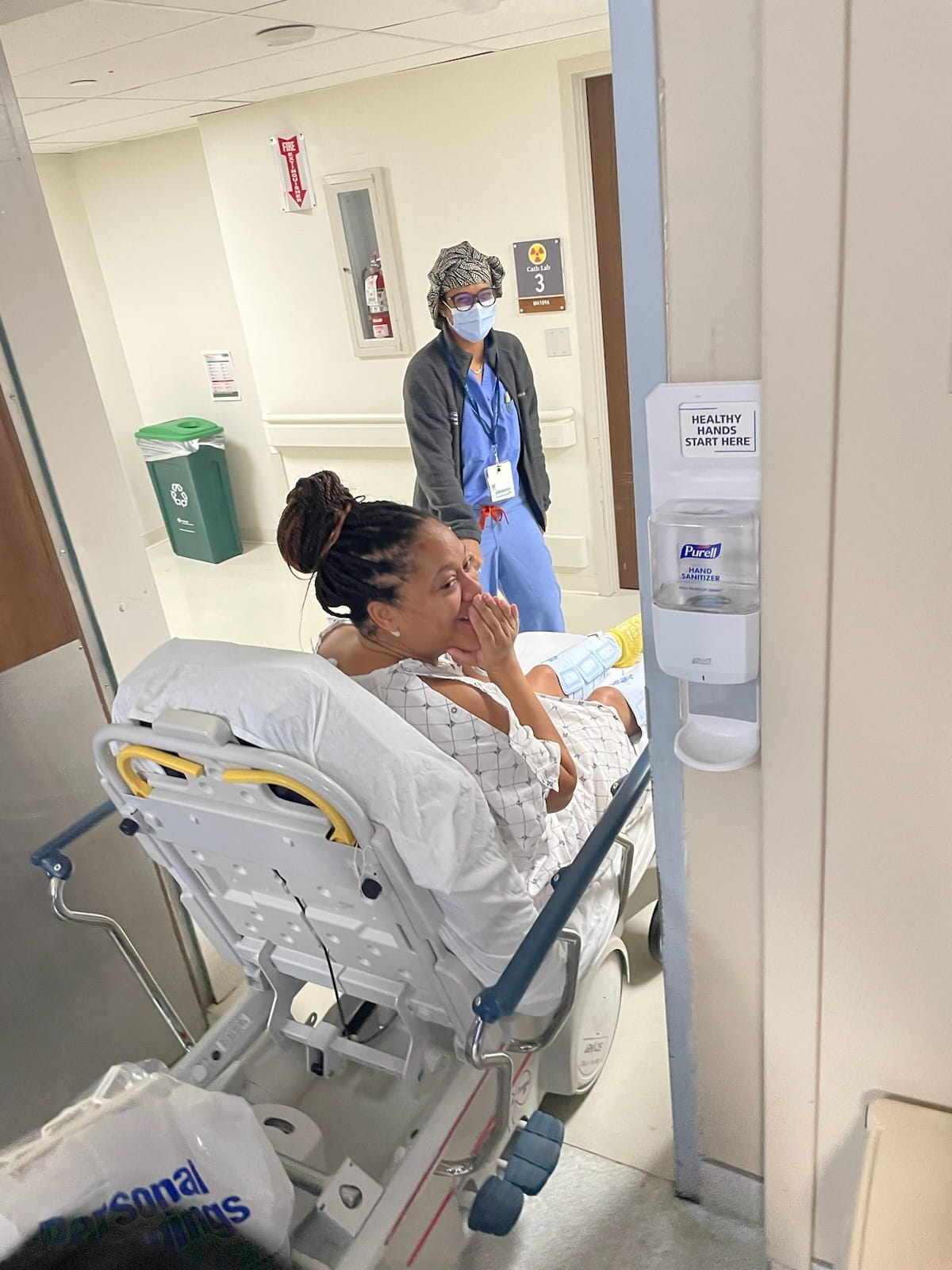
Then 2023 came, right before summer, and I got another call from DKMS: “Remember us? Your patient is doing a little bit better. He is still in need of your help, however, he needs more of your help.” Now they needed the procedure where bone marrow is extracted directly, because he needed my blood, my bone marrow, and my stem cells, which couldn’t be done just through the machine. They gave me a choice of two hospitals: Hackensack Meridian in New Jersey or Georgetown University Hospital in DC. Since I was in New York and had a five-year-old daughter at the time, I had to arrange childcare and travel to DC twice.
The process changed and became much more involved. I had to get cleared by a cardiologist because I was going under anesthesia and having something dug into my back. My blood pressure was too high, so she wouldn’t clear me unless I took pills to lower it—she told me, “I know you want to save this man, but if you go under the knife and something happens and your blood pressure spikes, I have to worry about you and not him.”
I still could have said no, but I was so committed. I kept thinking about him turning 23, facing his own mortality, and how often young Black men get put in this situation where they have to rely on the database. In my head, I humanized him and made him like my “play cousin,” wondering if he’d ever been able to go out with his friends or drink, and thinking: If this was my child, I would want someone to go above and beyond the way I’m going above and beyond.
In November 2023, I went to DC with a friend the night before. Even right before the operating room, when they’re running final tests for STDs and HIV, they remind you that you have up until 24 hours before surgery to say no. But I was all in.
They prepped me, explaining that the patient was being drained of his remaining immunity and a courier was waiting outside the operating room to rush my marrow to him within 24 hours. They took about five cups of blood and marrow out of the 25 or 30 cups a body holds. They knocked me out completely, put a breathing tube in, flipped me onto my stomach, and dug two holes into my lower spine/lower back to extract the marrow.
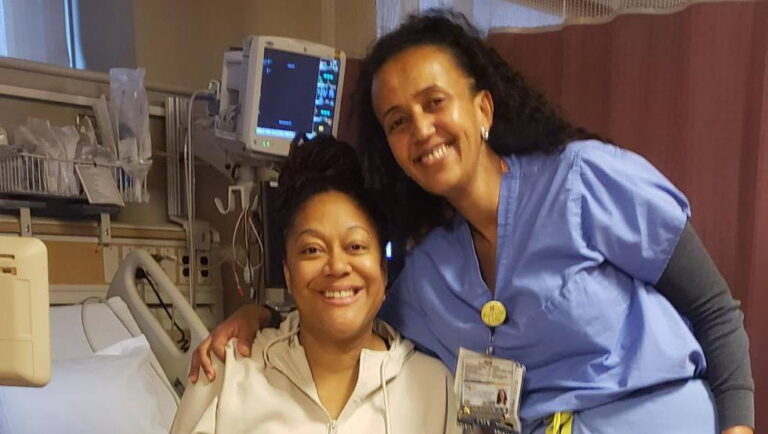
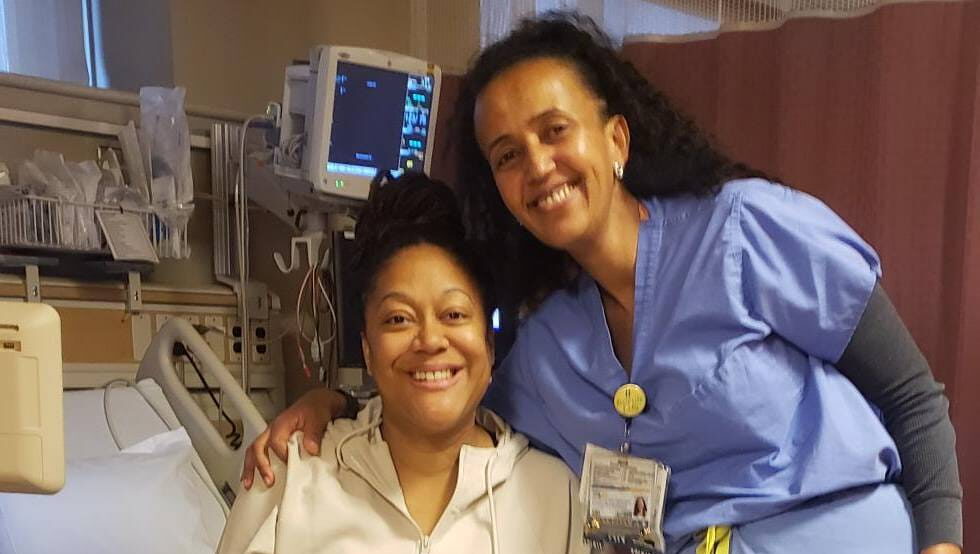
In the hospital recovery room, they gave me painkillers and I had to practice walking with a nurse since your lower back is the focal point for your body. At first, you feel crazy—you can’t really walk or go to the bathroom on your own. The nurses were great and signed a bag for me, calling me a hero.
I forced myself to walk back to the hotel that evening with my friend. Recovery involved changing bandages on two open wounds, taking medicine, not standing for more than 15 minutes, and avoiding bending or heavy lifting. While they said recovery takes two to four weeks, mine took at least eight weeks because life was still lifing. I had a young child to pick up from school, cook for, and take care of—I didn’t have the luxury of staying in bed. One day a mother at school asked if I was okay because I was so pale and shaking, but I didn’t have anyone else to pick my daughter up.
Within the first six months after the donation, I was allowed to write a letter to the patient through DKMS, though I couldn’t include identifying information due to HIPAA laws and because it has to be mutual. In the letter, I told him what motivated me, how I got into the registry 13 years ago, hoped he had support and family, and told him not to squander this lease on life—joking that if he turned out to be a criminal, I’d come back for my bone marrow! I wished him the best and hoped we could keep in touch. But I never heard back from him.
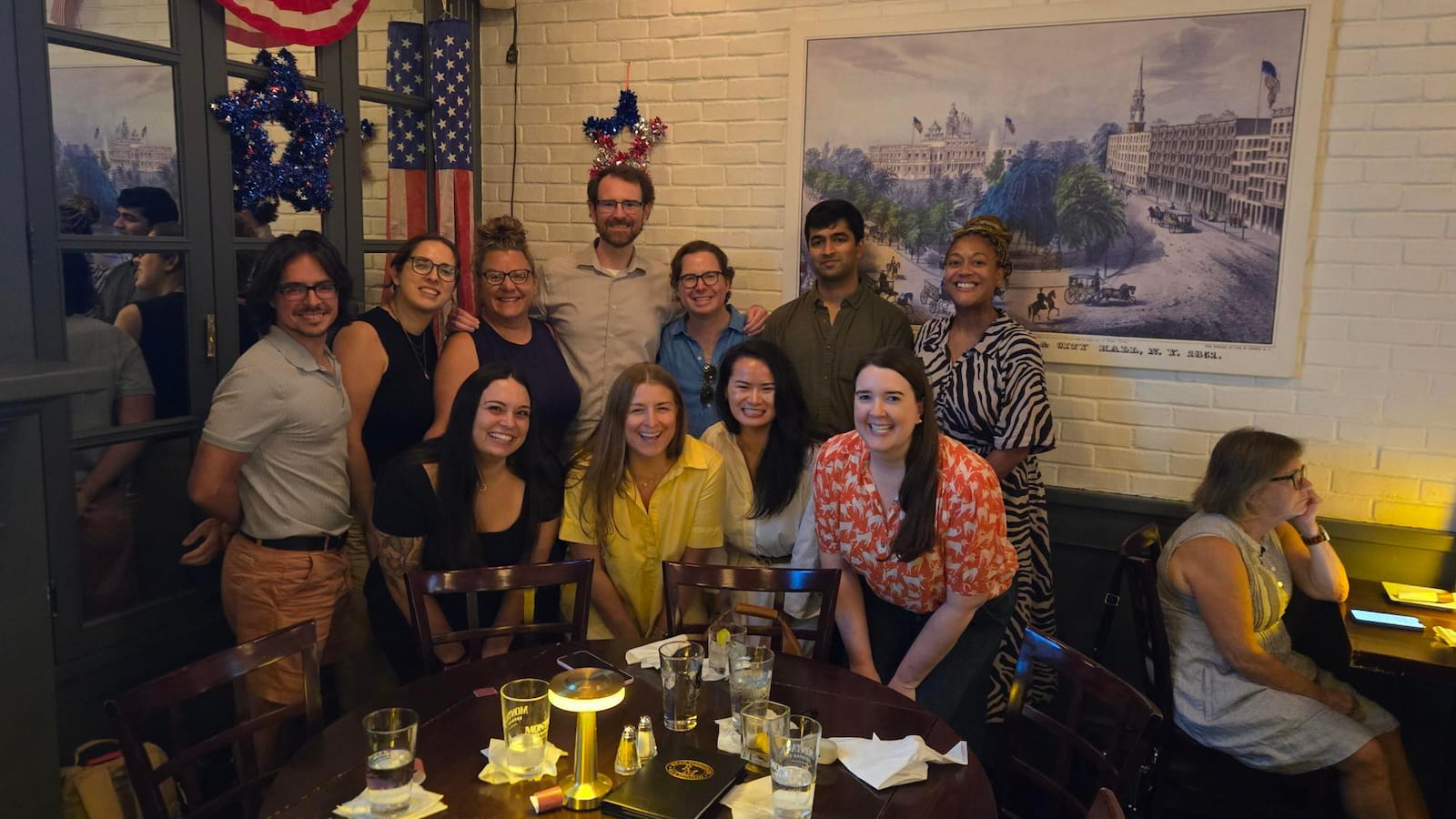
Earlier this summer, DKMS invited me to their first-ever meetup of donors. It was comforting to meet other people who had gotten that out-of-the-blue call, like an Asian woman who donated twice to an 11-year-old girl. I even got to meet the representative who had guided me through all my Ubers, appointments, and emails, and we hugged like long-lost friends.
However, last week while on vacation, I got an email response from DKMS about my patient inquiry: they were notified by the patient’s hospital that he had passed away.
That news hit me hard, especially because my youngest brother had passed away in November 2024 at age 37 after collapsing from cardiac arrest at an airport. When he was on life support with no brain activity, my family made the decision to sign him up to be an organ donor. They took his liver, skin for burn victims, a vein, a bone, and more—potentially saving about seven lives.
Getting the email about my bone marrow recipient passing away while on vacation brought me right back to our family’s grief. But it put my donation into a powerful context. I did everything I could for that young man, just like we tried to save my brother and ultimately helped others through his organ donation. It made me so glad I did what I did.
If the bone marrow registry called me right now and said I was a match for someone else, I would do it absolutely, in a heartbeat.
Black and brown people are not represented enough in these databases. There is a lot of fear and distrust in our community, but we have to help each other. You might stumble onto a swab drive on your way to a bar like I did 13 years ago, and that simple cotton swab can help extend someone’s life. Donations save lives, whether it’s bone marrow or making an on-the-spot decision for organ donation when tragedy strikes. Do your research, ask all the questions—take the medical staff step-by-step through everything like I did—and don’t be afraid to show up for people in desperate need.
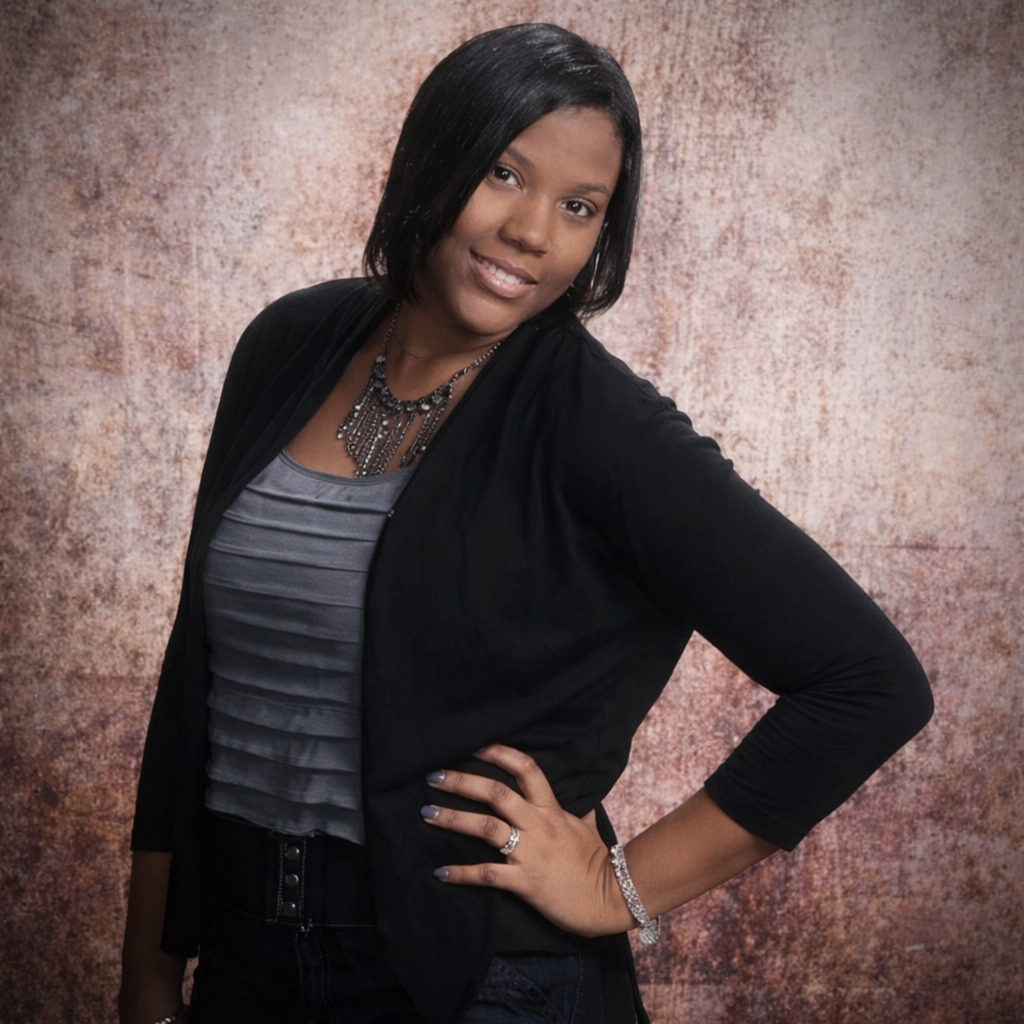
Blayne Jeffries as told to Jasmine Smith
By subscribing, you consent to receive emails from BlackDoctor.com. You may unsubscribe at any time. Privacy Policy & Terms of Service.