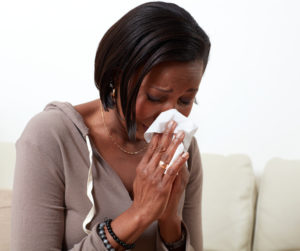
By all accounts, this has been an uncommonly hard-hitting flu season with reports calling it the worst flu season in nearly a decade. The Centers for Disease Control has now issued disturbing reports including a marathon-running mother of three who contracted the flu and died within two days and a previously healthy Connecticut boy who traveled with this hockey team to Buffalo, contacted the flu, and died a short time later.
These may seem like atypical events, but unfortunately, they are not. The influenza virus has been our common affliction for thousands of years. If the full historical record is considered, these types of outcomes are not uncommon and should be taken seriously.
Our experience with seasonal flu in the last few decades has followed a comforting norm. While the previously healthy can be infected and suffer some uncomfortable symptoms, a quick recovery is to be expected.
Most of the annual flu fatalities occur in the chronically ill and elderly. However, that pattern is merely chance at work. At many other times in human history, influenza has been a deadly scourge for the young and otherwise healthy part of the population.
Just such an instance occurred during the great Influenza Pandemic of 1918. This occurred during the First World War and ravaged worldwide populations. It is believed that 500 million people were infected. The estimate of total deaths ranges from twenty to over fifty million. The pace of this infection was so astounding that more American troops in World War I died of influenza than in battle.
Even now, after much research, the dynamics of that infection are unclear. It is known that there had been mild outbreaks of influenza in the spring of 1918. Yet, few deaths had occurred. However, within a short interval, a new strain of influenza virus suddenly emerged that was incredibly lethal, often leading to death within
hours. This pandemic was so unprecedented, and it exerted its worldwide effect with such fury, that a state of panic existed within many global communities. The pattern of fatalities was particularly alarming. The elderly and infirm were not its targets. Instead, it disproportionately afflicted young adults that had otherwise been entirely healthy.
More recently, the Ebola epidemic can be considered a clarion instance of how a future global emergency can suddenly arise. For the first time in human history, because of air travel, there can be nearly instantaneous spread over long distances. Both influenza and Ebola are zoonoses, just like the viruses that spread HIV, SARS (Severe Acute Respiratory Syndrome), MERS (Middle East Respiratory Syndrome), or West Nile Virus.
A zoonosis is an infection spread from one animal species to another, such as swine flu. The majority of human pathogens and almost all emerging infectious diseases are zoonotic in origin.
Our human activities are crucial to its incidence and spread. We interact with other people around the world. As a result, illnesses like the flu are now being granted a larger global range. However, to ensure we don’t have another pandemic like the 1918 flu, there are simple steps to take now:
1. Get Vaccinated. Even though vaccines have to be formulated based on the prior year’s influenza strain and a guess about the next, general cross-reactivity can provide significant protection. Even when that protection is incomplete, outcomes are decidedly improved. If flu still strikes, the incidences of hospitalization and morbidity are significantly less in the vaccinated population.
2. Utilize Social Media. Campaigns to encourage
specific patterns of personal hygiene like hand washing can diminish the person-to-person transmission of flu and social media platforms can be quick and easy way to get the word out.
3. Know When to Not Go. Voluntary restriction from the school or the workplace when sick is an imperative means to diminish infectious spread. If the flu becomes a real threat, parents must be prepared to welcome school closures to protect their children and their teachers. It is a matter of education and should be a requirement for school administrators, health professionals, chief executive officers, and religious leaders who determine when the faithful congregate.
4. Strengthen Our Health Agencies. It is necessary to make timely investments in local, state, national and international organizations that are tasked to respond to any substantial infectious event. To that end, the World Health Organization and our National Institutes of Health and Centers for Disease Control can serve. A dedicated nucleus of recognized international experts should be formed as a ready response team in preparation for the next outbreak. They will surely be put to work, as there will always be another.
5. Don’t Neglect Research. Zoonotic diseases are ever occurring. Some are relatively harmless; yet, others may intermittently and unpredictably spread with such ferocity that unprepared and inadequate health systems will surely be overwhelmed. A prompt coordinated redirection of a significant proportion of our limited resources for climate remediation should instead be directed towards infectious disease research. This is the vital lesson of the terrible scourges of the past and our precarious response to the recent Ebola epidemic.
This flu season is a good time for all of us to rethink our place in the global village and embrace reciprocal stewardship through common need.
Dr. Bill Miller had been a physician in academic and private practice for over thirty years. He is the author of The Microcosm Within: Evolution and Extinction in the Hologenome. Dr. Miller is an internationally recognized evolutionary biologist and an expert on the emerging science of the microbiome. He is the author/co-author of numerous academic papers on the microbiome and evolution, serves as guest editor of a major academic biology journal and is co-editor of a forthcoming textbook on developmental and evolutionary biology.



By subscribing, you consent to receive emails from BlackDoctor.com. You may unsubscribe at any time. Privacy Policy & Terms of Service.