

Genetic and genomic technologies have come a long way since the initial studies of gene structure and expression. The study of genetics heavily relies on the idea that alleles, the versions of genes that make up a chromosome, are either recessive or dominant.
The presence of a dominant allele means that this version of the gene will be physically expressed in the human. Accordingly, when a recessive gene is present with a dominant gene, the recessive gene will be masked. However, the presence of two recessive alleles means that the gene will be expressed physically.
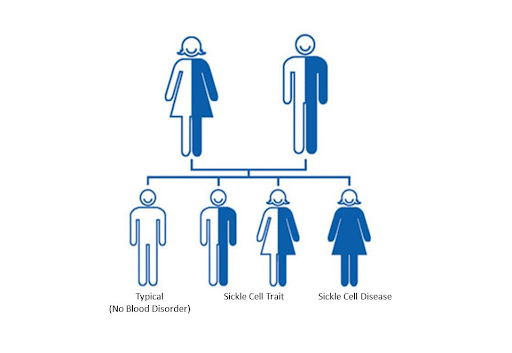
Image from cdc.gov
Recessive and dominant alleles are especially important to understand and analyze in terms of chronic diseases, like sickle cell. Sickle cell is a chronic condition that causes red blood cells to take on a ‘sickled’ shape, making it more difficult for the cells to carry oxygen throughout the body. Sickle cell is an inherited trait.
In fact, one in 13 Black infants are born with the sickle cell trait. However, one in 365 Black Americans live with sickle cell disease. How can that be? This is because the sickle cell trait is a recessive trait. This means that the only way that a person will show symptoms of sickle cell disease is if they have both recessive alleles.
If the infant inherits one dominant allele and one recessive allele, then that dominant allele will mask the recessive one.
Although the infant will not be diagnosed with sickle cell disease, they can still pass the trait onto their offspring. This is how two parents can both not have sickle cell disease, but have offspring that does.
WATCH: Parent’s Guide To Sickle Cell Disease (Video)
Parents who are concerned that their child may either inherit the sickle cell trait or be diagnosed with sickle cell disease in the future can turn to
modern technology to find answers. Prenatal genetic screening is an effective way to find out if your infant will have any developmental disabilities.
Expecting parents can talk to their OB/GYN about getting amniocentesis. This is a process where amniotic fluid is taken from the pregnant person and is tested for different genetic conditions.
Doctors can complete this without harming the infant and provide accurate results. This procedure is typically performed between 15 and 20 weeks of pregnancy.
If the genetic results indicate that the infant carries two recessive alleles and will be diagnosed with sickle cell disease, parents can use this information to plan for care and set expectations before birth.
However, infants born with sickle cell disease do not typically show symptoms until around five months old. During the first five months, the infant is protected by the fetal hemoglobin (a protein) which prevents the cells from turning into a sickle shape.
Knowing the genetic information of yourself or your children is a good indicator on what chronic conditions can possibly be passed on. Although we cannot change genetics, knowing this information is the first step to more knowledge and better care.
Genetic testing is covered by many insurance plans. Furthermore, for those who have a high-risk pregnancy for genetic conditions, insurance is more likely to cover tests. Talk to your OB/GYN or Primary Care Provider to get more information about genetic testing.


By subscribing, you consent to receive emails from BlackDoctor.com. You may unsubscribe at any time. Privacy Policy & Terms of Service.














