Diabetes continues to impact Black families at higher rates than the national average, and often raises difficult questions about health, caregiving, and how to preserve food traditions without losing culture or joy.
According to the Office of Minority Health (OMH):
In the U.S., Black people are twice as likely as their white counterparts to die of diabetes. They are three times as likely to end up hospitalized for diabetes-related complications. OMH notes that 13.4% of Black men and 12.7% of Black women are living with diabetes.
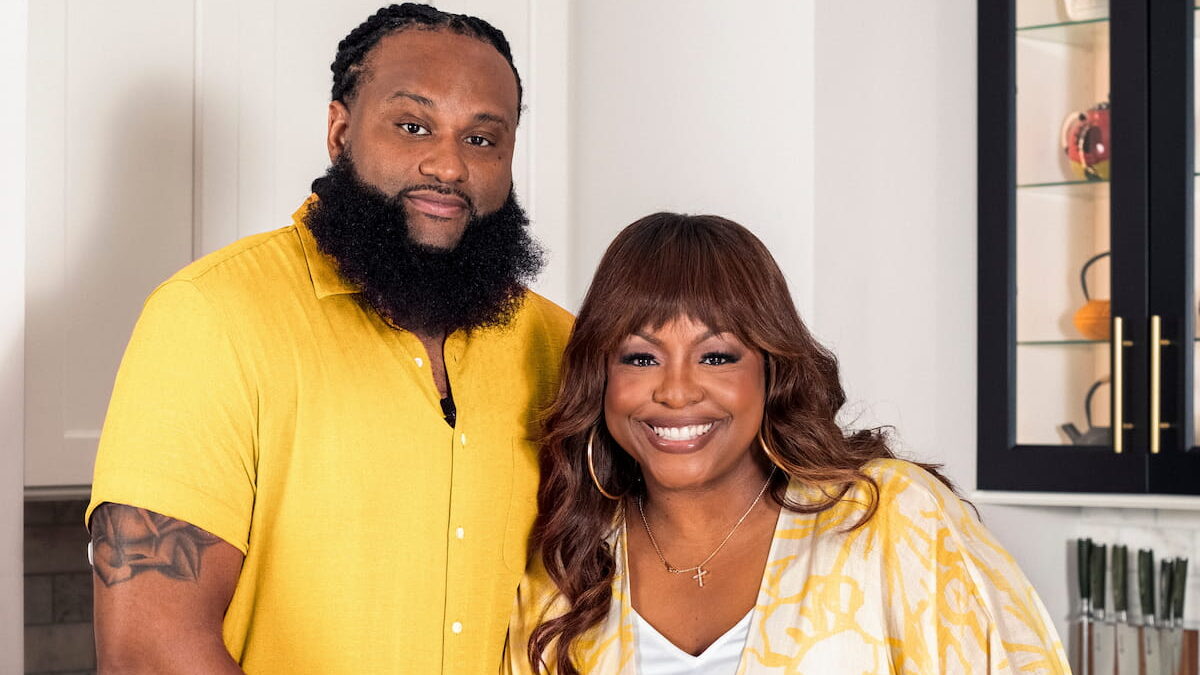
These numbers hit home for celebrity chef Kardea Brown. Her husband, Bryon Smith, recently received a Type 2 diabetes diagnosis at the age of 38. The disease was something he was somewhat familiar with.
“His father was diagnosed with Type 2 diabetes in his early 40s, so for him knowing that … It was so important for him to figure out and navigate that,” Brown tells BlackDoctor.
Understandably, the diagnosis was scary, but Brown says doing nothing about it was even scarier. “For him, it was like, okay, I’m scared, but at the same time, I want to live a very long time,” she adds. “We want our family to grow. I want to be a father, and I’m not going to let this just go unhandled or untreated, so I need to be empowered.”
RELATED: Chef Kardea Brown Shares Her Favorite Diabetes-Friendly Recipes
That empowerment came not only from having a community around him, but also from having his wife, family, and doctor. Smith brought that same mindset to his next doctor’s appointment, asking a simple question: “What can I do?”
In addition to medication and learning what was causing his glucose to spike, Smith also learned about the importance of CGMs (continuous glucose monitors). He began using Abbott’s Libre 3 Plus CGM sensor, which offers a new mealtime feature called Libre Assist. This tool provides in-the-moment guidance and real-time glucose insights, allowing Brown to take the guesswork out of whether the meals she prepares are spiking his glucose.
“It’s hard for me to kind of figure out … how is that affecting your body? You can’t prick his finger every hour, every time he eats something,” Brown shares. “It was so important to incorporate into his life because we have a busy schedule, and there’s so many ins and outs of our everyday life because it isn’t typical.”

Having this kind of technology has changed the game for Brown and Smith, allowing them to feel comfortable discussing how certain foods affect Smith.
“I think having that as a tool makes the conversation a little easier instead of just sitting across from someone like … ‘I’m Type 2 diabetic … what do I do?’ When you have a tool that helps you through this, it makes the conversation a little easier to have. It’s like, okay, we don’t have to guess. We don’t have to haphazardly figure out what’s going on,” Brown explains.
Not only does the app monitor Smith’s glucose, it also offers fun swaps for healthier versions of the classic meals Brown enjoys cooking.
“If he takes a picture of some shrimp and grits that I made—and I love making shrimp and grits for him—it says, ‘Hello … this is going to be a major impact because of the grits.’ … The cool thing about it is you can go in and alter what’s actually on the plate. So the technology sees grits, but it doesn’t know that I added cauliflower to the grits. And so it tells [him], ‘Oh, these are cauliflower grits; minor impact, enjoy your food.’ And so that’s a really cool thing about it,” Brown notes.
As a chef known for her flavorful foods, Brown naturally does a ton of research. This time, she turned her research on her husband.
“I’m treating my husband as a test subject, and I’m using him and my research development for my recipes … what affects him may not necessarily affect someone else in the same way, and so what I’m doing is just trying to figure out what works well for him because, of course, he’s my main priority,” she says. “It’s given me a challenge that I’ve never expected to have—which I’m glad I do now because not only am I helping my husband, but I’m also helping people that follow me who were in sort of the same position. Whether they have been recently diagnosed, or they know a loved one that has been diagnosed, it kind of allows other people to take this journey with us.”
Brown makes substitutions, such as swapping all-purpose flour for almond flour and using sweeteners like monk fruit and sorghum, which are lower on the glycemic index than standard table sugar. This allows Smith to still enjoy his favorite desserts, which include red velvet cake and sweet potato pie.
“You can’t even tell the difference. It’s so good; it actually is so light and fluffy. Like, it’s—it’s amazing. Regardless of if you have Type 2 diabetes or not—the recipe is delicious for everyone,” Brown says of her red velvet cake recipe.
For those newly diagnosed, Brown offers the following tips:
Looking back on Smith’s diagnosis, Brown shares that it has opened her eyes in a positive way.
“Health is wealth. Because if you don’t have good health, you don’t have anything else. I think the older that I’ve gotten, the more I realize the importance of being in the best health of your life,” she concludes. “Being in the public eye, being a chef … what good am I if my health is not in order? My body is my brand. And so, being a chef is—yes, I love food and I love cooking, but again, what good is any of that if I’m not in good health?”
“And so, with Bryon’s diagnosis, it kind of opened my eyes up to: what am I doing for myself, and how am I cooking … that [is] affecting both of us? Weight has always been a struggle in my life, loving all the foods that I love. And now we are approaching this together, side-by-side and hand-in-hand. So whatever adjustments he’s making—whether it’s with food or physical—I’m doing that with him. So it’s just opened my eyes and my spectrum up so much to just being in the best health possible, not only as a chef, but as a woman and as a person.”


By subscribing, you consent to receive emails from BlackDoctor.com. You may unsubscribe at any time. Privacy Policy & Terms of Service.