
Contrary to popular belief, studies have shown that blacks definitely do develop multiple sclerosis (MS), perhaps as frequently as or even more frequently than whites. However, based on new reports from patients, medical products derived from marijuana just might have a mild benefit in treating the symptoms of MS to where you see no side effects at all.
Drugs containing the major chemical compounds in cannabis are associated with a limited and mild reduction in muscle contractions, bladder dysfunction and pain, based on patient self-assessments from clinical trials included in a major new evidence review.
“The bottom line is there is certainly something happening with cannabinoids in regard to symptoms,” said Nicholas LaRocca, vice president of healthcare delivery and policy research at the National Multiple Sclerosis Society.
However, patients’ self-reports of benefits related to muscle contractions differed from results of objective scales used by doctors, LaRocca noted. The doctors observed no such benefit from marijuana medications.
“That’s something that’s obviously a
concern,” LaRocca said.
The clinical trials also showed that cannabis-derived drugs come with few side effects and no serious ones, noted Dr. Marissa Slaven, an assistant professor of palliative care at McMaster University in Hamilton, Ontario, Canada.
“It definitely adds to the literature in suggesting this is a safe treatment,” said Slaven, who wrote an editorial accompanying the new evidence review. “Whether or not it’s effective, I think we need more research.”
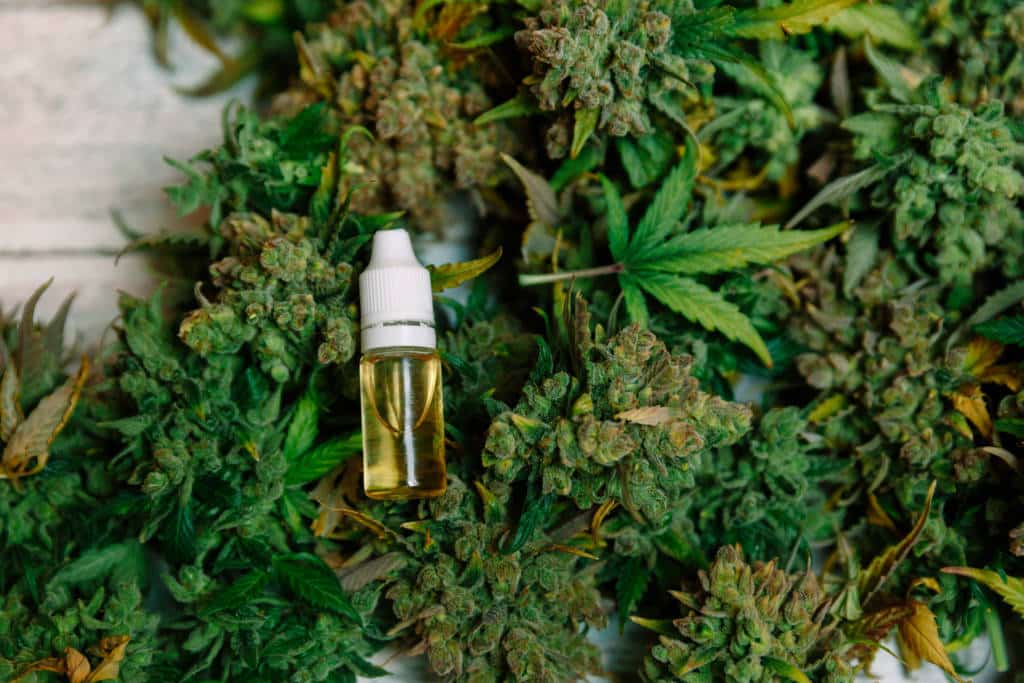
The evidence review, conducted by Mari Carmen Torres-Moreno, of the University of Barcelona in Spain and colleagues, included clinical trials related to four cannabis-derived preparations: orally administered cannabis extract, nasally administered cannabis extract, and the drugs dronabinol and nabilone.
Dronabinol and nabilone are both synthetic versions of THC, the chemical in marijuana that causes intoxication. Both are used to treat nausea and vomiting caused by chemotherapy.
The new evidence review combined 17 clinical trials involving 3,161 patients. Researchers concluded from the review that cannabis-derived drugs can be considered safe and have limited
effectiveness in treating MS symptoms.
Side effects associated with the drugs included dizziness, dry mouth, fatigue, intoxication, impaired balance, memory problems, and sleepiness. But these did not lead to a statistically significant number of people dropping out of the trials.
“There was a very slightly positive effect that was seen as a statistical positive, but whether that is something that would bear out clinically is difficult to say,” Slaven said.
The upshot of the review is that more research is needed to nail down medical marijuana’s ability to help people with multiple sclerosis, LaRocca and Slaven agreed. MS is a progressive and degenerative disease in which the immune system attacks nerves, producing a variety of neurological symptoms.
“In spite of very strong interest in cannabinoid therapy, we really have relatively little in terms of good research to guide us in terms of what does and what doesn’t work, what works for which types of individuals, and so forth,” LaRocca said.
Because of the lack of evidence, practitioners tend to recommend other established therapies for MS over marijuana-derived drugs, he added.
“There’s really relatively little data that’s strong. I think that discourages practitioners from feeling comfortable about recommending this because there just isn’t as much data out there,” LaRocca explained.
Research on medical marijuana has been hampered in the
United States due to restrictions based on federal law, LaRocca said.
There had been hope that marijuana growers and processors might fund medical research to better establish the effectiveness of their products, but the wave of legalizing recreational use might have put a damper on that, Slaven said.
“I fear with the legalization of recreational marijuana the companies may make a lot of money that way and will have no incentive to invest in medical research,” she said.
Slaven added that none of these trials involved smoked marijuana. They instead focused on cannabis extracts and man-made versions of THC. The cannabis extracts also included cannabidiol, a chemical compound in marijuana that is not intoxicating but could have some medical benefit.
“We know there are many, many different cannabis products available, but we don’t know which components are the most important and the most effective at this time,” Slaven said.
To find out more on MS, visit our Health Conditions page on BlackDoctor.org.
SOURCES: Nicholas LaRocca, Ph.D., vice president, healthcare delivery and policy research, National Multiple Sclerosis Society; Marissa Slavin, M.D., assistant professor of palliative care, McMaster University, Hamilton, Ontario, Canada; Oct. 12, 2018, JAMA Network Open, online



By subscribing, you consent to receive emails from BlackDoctor.com. You may unsubscribe at any time. Privacy Policy & Terms of Service.













