Menu

Perfume Chemicals That Can Hurt You

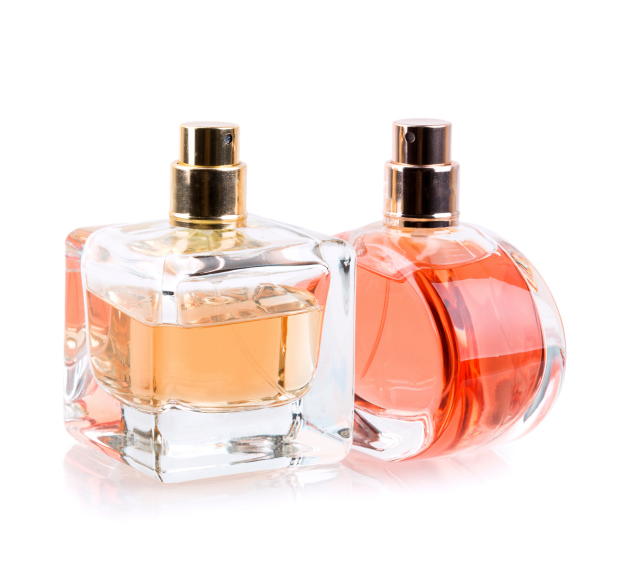
perfume bottles


Is your perfume or cologne safe?

In a new study from the University of Rochester, Lauren Parlett, a doctoral candidate in the department of public health sciences, pinpointed perfumes as the largest source of exposure women have to chemicals called phthalates. There are dozens of phthalates used in personal care products, only a few of which have been studied, and the one particular variety used in perfumes is a big question mark when it comes to your health.

“We really need to understand how phthalates are affecting women’s health, and we’re just in infancy of doing that,” Parlett says.

Featured on BlackDoctor

Parlett used surveys women had filled out about their personal-care-product use and compared those to results of a urine analysis, which measured their levels of various phthalates.

The more personal care products a woman used, the higher her body’s levels of phthalates, Parlett found. Phthalates were found in nearly every woman, and almost 70 percent of their study subjects had at least 10 different phthalate metabolites in their system. The most commonly detected were metabolites of diethyl phthalate (DEP), a phthalate commonly used in lotions, shampoos, perfumes, and other scented products to prevent fragrances from dissipating.

So it stands to reason that perfume was the biggest source of phthalates in women. Women who used perfume had roughly three times higher levels of DEP in their bodies as women who didn’t; women who used deodorant had about twice the levels of DEP as women who didn’t; and women who used hairspray and body lotions had about 1.5 times the levels of DEP of women who didn’t use those products.

“We don’t have a really good idea about what these numbers mean,” says Parlett, because so little research has been done on the safety of DEP. And what little bit of research that has focused on it has been on men or on pregnant women, usually to see how the chemicals affect developing fetuses. “There are just not a lot of studies in non-pregnant women, who may have a higher prevalence of personal-care-product use,” she says.

Prior studies have shown that other types of phthalates, such as those used in plastics, cause reproductive damage in boys and lower IQ levels in children. Currently, researchers are investigating how DEP might be playing a role in endometriosis and polycystic ovary syndrome.

What’s the best way to protect yourself?

Avoid products that use synthetic fragrances, and that goes not just for personal care products, but for cleaners and scented candles, as well. Parlett says that, though personal care products provide a direct line for your body to absorb phthalates through the skin, the chemicals are just as likely to be inhaled via vapors or droplets you’re spraying.


  • Use more natural products. Plant essential oils are derived only from plants, not chemicals. Mix those with a neutral-smelling oil, such as grapeseed oil, to create your own perfume that serves double-duty as a moisturizer.
  • Use baking soda. Another great product you can make yourself, deodorant doesn’t have to come with an ingredients list a mile long. You can make your own deodorant powder by mixing baking soda (which absorbs odor), cornstarch (which absorbs moisture), and a few drops of essential oil, if you want something scented. Play around with the proportions to see what works best for you; baking soda can be drying, so start with a mixture of 1 part baking soda to 6 parts cornstarch, and adjust from there. Not a fan of powders?
  • Use clean-air candles. Standard candles and other air-freshening products are filled not just with phthalates but also a host of other potentially health-damaging chemicals. The healthiest candles are made with beeswax and scented with essential oils.


SHARE
Related Stories
Answer the question below

Gout Survey

People with gout often have sudden, painful flares of joint swelling and redness. How many gout flares have you experienced in the last 12 months?
Have you ever received intravenous medicine for your gout?

Get our Weekly Newsletter

Stay informed on the latest breakthroughs in family health and wellness. Sign up today!

By subscribing, you consent to receive emails from BlackDoctor.com. You may unsubscribe at any time. Privacy Policy & Terms of Service.

More from BlackDoctor

Where Culture Meets Care

BlackDoctor is the world’s largest and most comprehensive online health resource specifically for the Black community. BlackDoctor understands that the uniqueness of Black culture - our heritage and our traditions - plays a role in our health. BlackDoctor gives you access to innovative new approaches to the health information you need in everyday language so you can break through the disparities, gain control and live your life to its fullest.
×

Download PDF

Enter your name and email to receive the download link.

BlackDoctor AI Search
✦ AI Search Disclaimer
This AI-powered search tool helps you find relevant health articles from the BlackDoctor.org archive. Please keep the following in mind:
✦ For Informational Purposes Only
The information provided through this AI search is for general educational and informational purposes only. It is not intended as a substitute for professional medical advice, diagnosis, or treatment.
✦ Always Consult a Healthcare Provider
Never disregard professional medical advice or delay seeking it because of something you have read through this search tool. If you have a medical emergency, call your doctor or 911 immediately.
✦ AI Limitations
This search tool uses artificial intelligence to help match your queries with articles in our archive. While we strive for accuracy, AI-generated results may occasionally be incomplete, outdated, or not fully relevant to your specific situation.
✦ No Doctor-Patient Relationship
Using this search tool does not create a doctor-patient relationship between you and BlackDoctor.org or any healthcare provider.
Explore over 35,000 articles and videos across black health, wellness, lifestyle and culture
Full AI Search Experience >