When most people think about skin cancer, they picture a dark mole that changes shape or color after years of sun exposure. But that image does not reflect the full reality—especially for Black people and others with darker skin tones. Skin cancer on Black skin often looks different.
It appears in different places. And because many people do not know what to look for, diagnosis is frequently delayed. That delay matters.
Although Black people are less likely to develop melanoma than white people, they are significantly more likely to be diagnosed at later stages, when treatment becomes more difficult, and survival rates decrease. One of the biggest reasons is awareness. Many people still believe that darker skin naturally protects against skin cancer completely. While melanin does provide some protection from ultraviolet (UV) damage, it does not eliminate the risk of cancer
And because skin cancer is less expected in Black patients, suspicious spots are more likely to be overlooked by patients and sometimes even by providers. That is why understanding how skin cancer appears on darker skin is so important.
RELATED: One Key Question Can Help Spot Skin Cancer
One of the biggest misconceptions about skin cancer is that it only develops in areas heavily exposed to the sun. For Black patients, melanoma frequently appears in places people rarely think to check. According to The Skin Cancer Foundation, melanoma in people with darker skin often develops on:
This form of melanoma, called acral lentiginous melanoma (ALM), is one of the most common types in people of color. That surprises many people because these areas are not places typically associated with sun exposure. In fact, research from UT Southwestern Medical Center found that melanoma in Black patients most commonly begins on the foot, particularly the sole of the foot. That means someone could have skin cancer in an area they almost never examine.
Another major reason skin cancer gets missed on Black skin is that it does not always resemble the “classic” warning signs people are taught. Instead of a round mole, melanoma may appear as:
Cure Melanoma says, acral melanoma may appear as black, gray, tan, or brown patches on the palms or soles, or as vertical dark streaks under fingernails or toenails. Some lesions may bleed, crack, itch, or become painful. Others may look harmless for months. And on darker skin tones, these changes can be harder to recognize because many educational materials still primarily show skin cancer on lighter skin. That lack of representation creates a dangerous gap in awareness.
One of the most overlooked signs of melanoma on Black skin involves the nails. Subungual melanoma—a form of melanoma under the nail—can appear as:
Because many people assume nail discoloration comes from injury, fungus, or bruising, these changes are often ignored. But dermatologists warn that persistent dark streaks—especially if they widen or change—should be evaluated promptly. It is important to note that not every dark streak is cancerous. Some nail pigmentation conditions are benign and more common in darker skin tones. Still, any new or changing nail discoloration deserves attention—especially if it appears suddenly or affects only one nail.
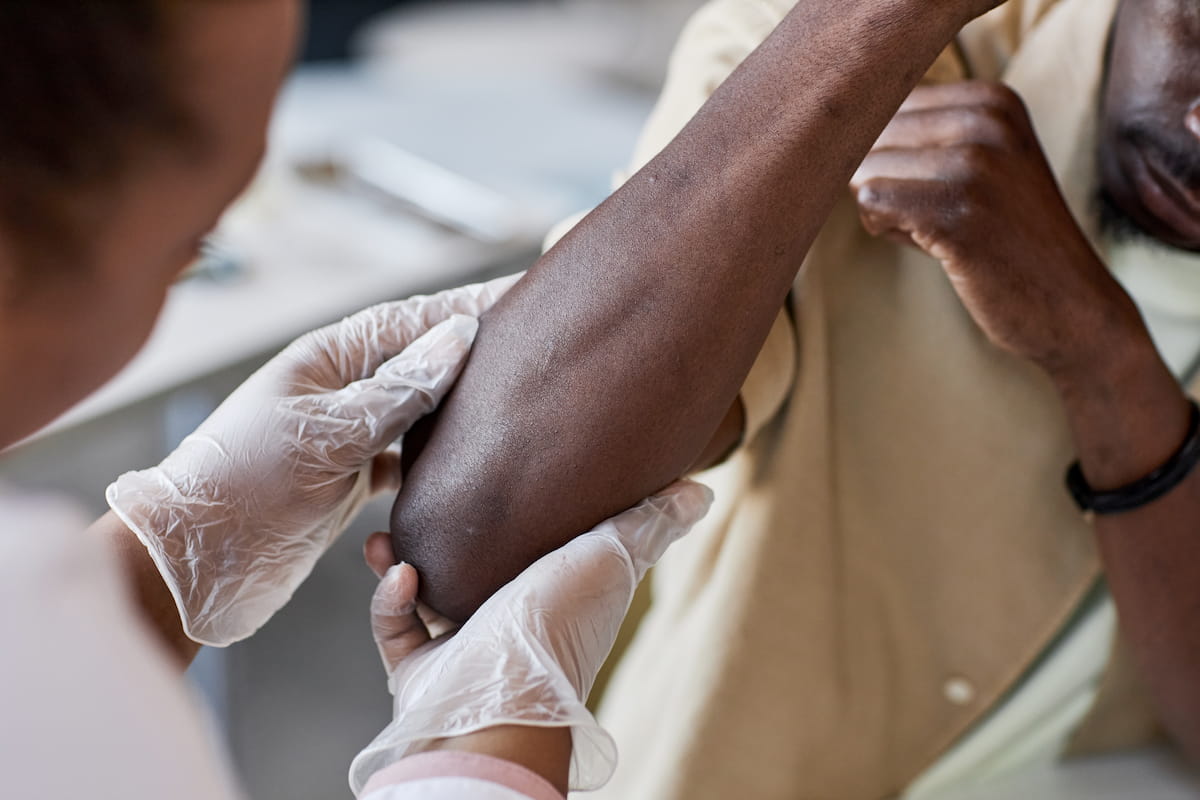
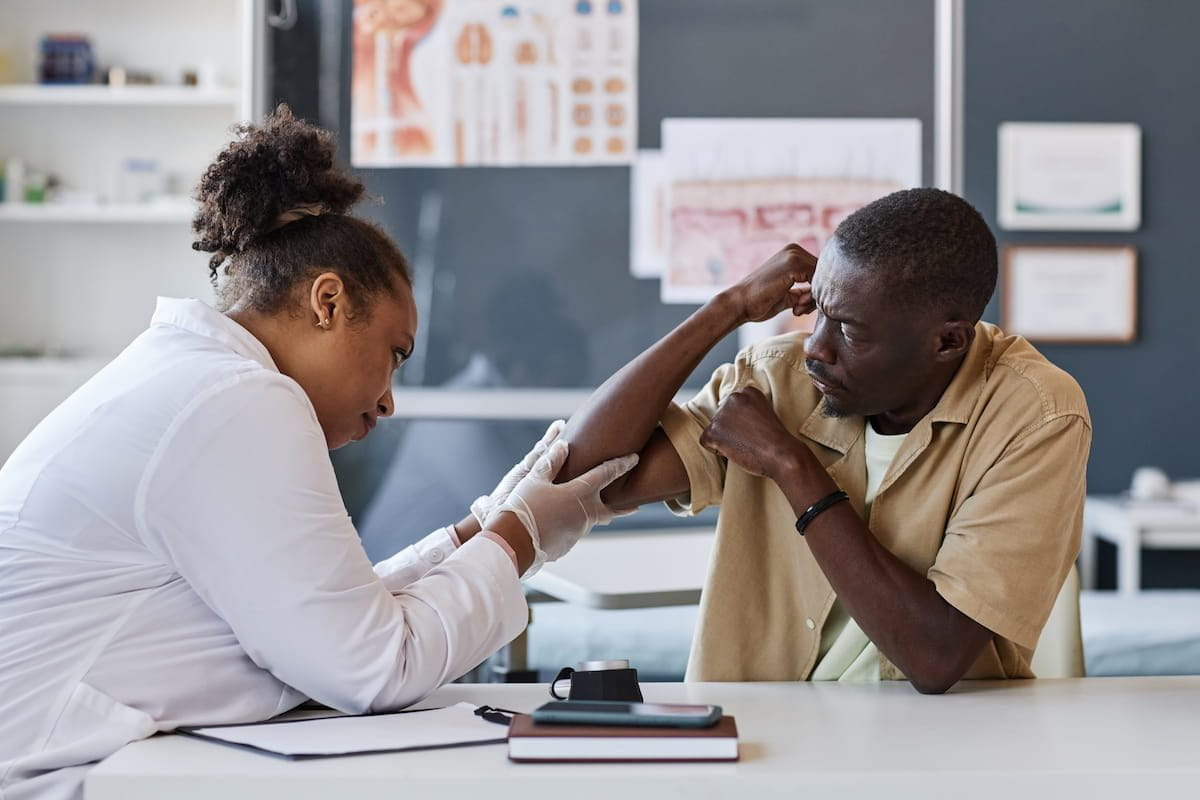
Delayed diagnosis is one of the most serious problems surrounding skin cancer in Black communities. And it happens for several reasons. First, there is a persistent myth that Black people do not get skin cancer. That misconception exists both publicly and medically. As a result:
Dermatologists interviewed by Schweiger Dermatology Group say that diagnosis is often delayed because skin cancer is not immediately considered as a possibility in patients of color. That delay has real consequences. Studies consistently show poorer survival outcomes for Black patients diagnosed with melanoma because the disease is often discovered at a more advanced stage.
Another issue is visibility. Most medical textbooks, educational campaigns, and online images have historically focused on lighter skin tones. That means many people, including healthcare providers, have had limited exposure to what skin cancer looks like on darker skin. According to dermatology research on disparities, skin conditions and skin cancers are frequently underrepresented in medical training materials for darker skin tones.
This matters because visual recognition is a huge part of dermatology. If providers are not trained to identify suspicious lesions on darker skin, diagnosis becomes more difficult. And if patients never see examples that resemble their own skin tone, they may not realize something is wrong.
On darker skin tones, suspicious lesions may appear:
Some may look like:
According to the AIM at Melanoma Foundation, melanoma in people with darker skin may resemble benign growths or dark patches rather than obvious irregular moles. That is why paying attention to changes over time is so important.
When to Get Checked
One of the biggest mistakes people make is waiting for pain. But skin cancer is not always painful early on. You should consider seeing a dermatologist if you notice:
The “ABCDE” rule for melanoma can still help:
But for acral melanoma, experts also recommend paying attention to lesions that:
For Black patients, skin checks should include areas people often ignore. That means regularly looking at:
Using mirrors or asking someone for help can make it easier to examine difficult areas. And annual dermatology visits matter—even if you think you are low-risk. Because low risk does not mean no risk. Skin cancer does not always look like a mole. And on Black skin, it often appears in places people are not taught to check:
It may look like:
And because these signs are frequently overlooked, diagnosis often happens later—when the cancer is more advanced. That is why awareness matters. Knowing what to look for can lead to earlier detection. Earlier detection can lead to earlier treatment. And earlier treatment can save lives.


By subscribing, you consent to receive emails from BlackDoctor.com. You may unsubscribe at any time. Privacy Policy & Terms of Service.