For Botumile, who goes by “Abe,” his diabetes diagnosis came as a shock—even though diabetes was already familiar to him.
Abe first realized something was wrong in 2003 after experiencing symptoms including blurry vision, extreme thirst and unexplained weight loss. His father and several other family members had diabetes, and some died from diabetes-related complications. Still, Abe never imagined he would develop the condition himself.
“I’d never thought it was going to be me, because the difference between me and them was I was always an active individual. I was involved in a lot of things physically and actively,” Abe tells BlackDoctor.
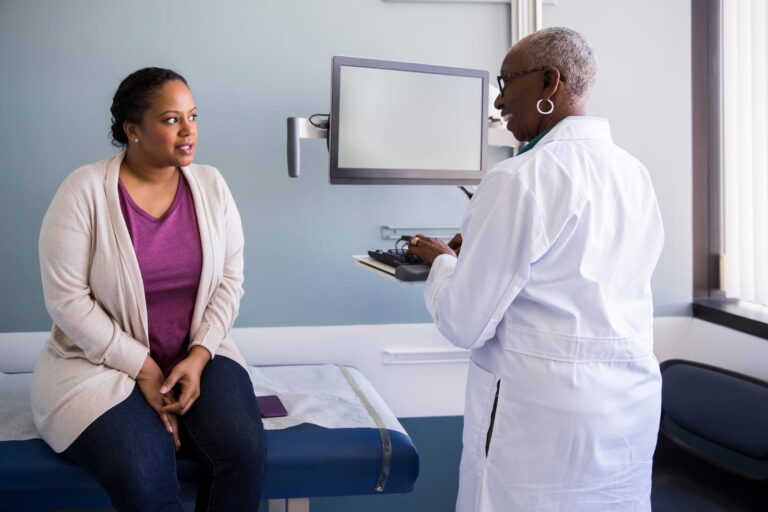
Dr. Jen Caudle, a family physician who has treated people with Type 2 diabetes for nearly two decades, says Abe’s initial reaction is not unusual.
“When people get a diagnosis of diabetes, it can be incredibly overwhelming,” the physician tells BlackDoctor. “I’ve been a family doctor now for about 18 years and I’ve seen all sorts of responses from shock to not shocked. Some people say, ‘Yeah, I figured.’ Some people say, ‘Oh my gosh.’ Sometimes people burst out in tears. It affects everybody very differently.”
She says patients should not feel ashamed or alone if a diagnosis brings up strong emotions.
“Whatever you’re feeling, listen, you’re right. You’re justified, and it’s not uncommon to have lots of emotions with that diagnosis,” she says.
RELATED: “We’re Navigating This Side-by-Side”: Chef Kardea Brown on Supporting Her Husband Through Diabetes
Abe remembers the day his symptoms began vividly.
“I woke up in the morning that day…and a lot of things were blurry. When I was driving, I was not seeing the road signs clearly. And most of that day, I was just thirsty and drinking a lot of water. And then that late afternoon, I said to my wife, ‘Something is not right,’” he recalls.
His instinct was right. After seeking answers, Abe was diagnosed with Type 2 diabetes—a diagnosis that he says initially broke his spirit.
“My spirit went a little bit low after that, because I was like, ‘I can’t believe I have diabetes,’” he says.
But Abe didn’t stay in that mindset for long. He knew that in order to live with—and manage—the condition, he would need to shift his mindset.
Dr. Caudle says that mindset can be important, but so can understanding that you do not have to navigate the diagnosis by yourself.
“There are 30 million Americans living with Type 2 diabetes, which is a lot, and sometimes you can feel like, ‘Okay, now what do I do? What was I supposed to do? What does this mean?’” she says. “But we’re here to walk you through each step.”
Abe began taking metformin and checking his blood sugar with finger sticks. But his blood sugar continued to rise, and he began losing weight.
“It looked like I was managing it, but it seemed to be taking advantage of me because it did not go down. It started getting worse. The sugar started getting higher, and I was freaking out,” Abe shares.
He was eventually referred to an endocrinologist, whom he began seeing about once a month. As his doctors worked to get his blood sugar under control, insulin became part of his treatment plan.
An insulin pump was also recommended, but Abe worried about how it would fit into his active lifestyle as a runner and cyclist.
Even after his blood sugar was brought under control, he felt that diabetes was taking something away from him.
“Even though I was under control, I was losing myself, because then it took away some of my power,” he says. “Because when I was biking, the sugar would drop too low, and I relied on my body to tell me. That’s the only time I knew my sugar was low, because I had nothing that could detect my sugar level. And if I took too much, then I didn’t know if I had taken too much sweet stuff to balance it out.”
The uncertainty eventually caused Abe to lose some of his desire to exercise.
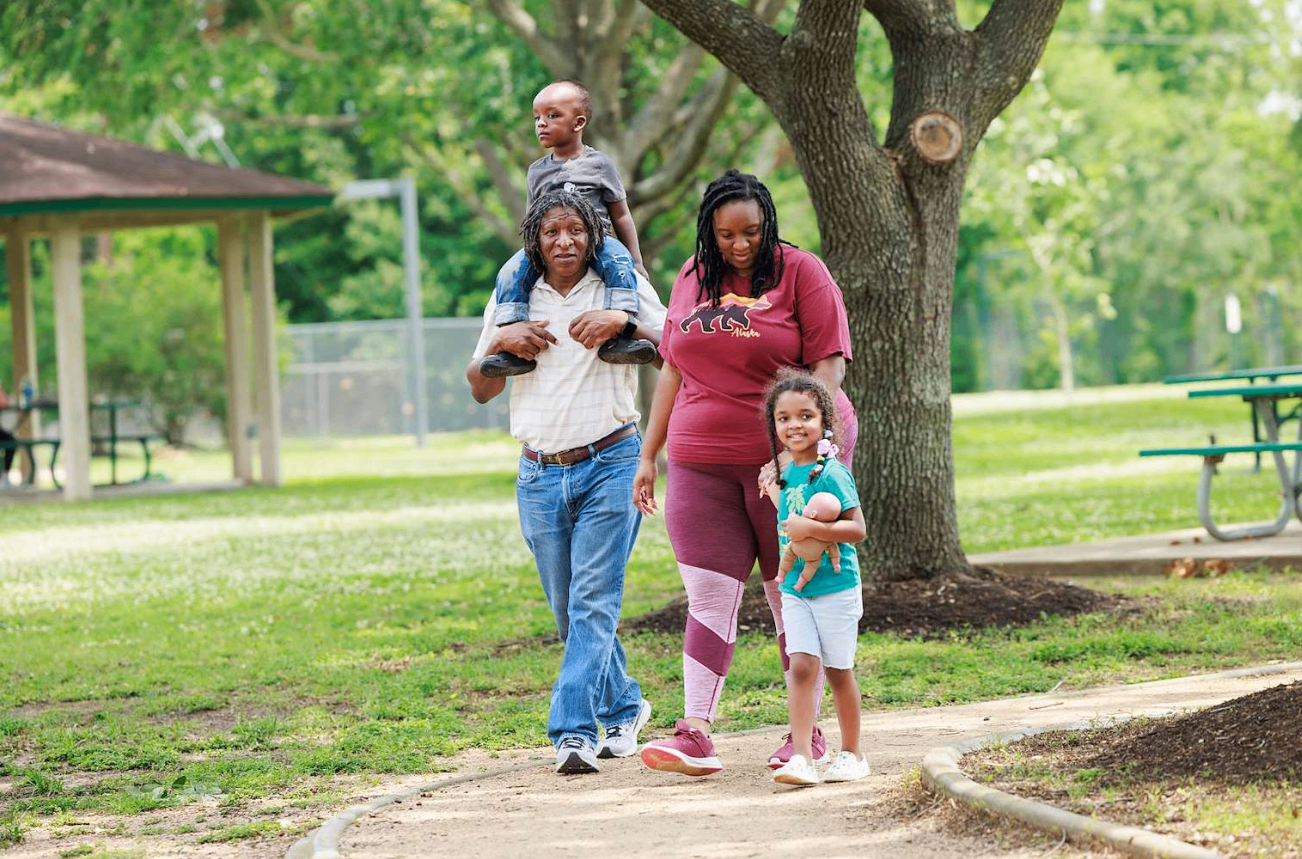
Eventually, Abe began using a continuous glucose monitor (CGM), which he describes as a turning point in his diabetes journey.
A CGM is a device that continuously tracks glucose levels and can provide information about how blood sugar changes throughout the day. Dr. Caudle says the technology has changed the way many patients can understand and manage their diabetes.
“It’s a technology that provides personalized glucose insights which help people living with Type 2 diabetes really understand their patterns, helps them make informed decisions, and make effective choices,” she says.
Unlike a traditional finger-stick reading, a CGM can provide ongoing information about glucose levels.
“It provides minute-by-minute glucose tracking, and also this tracking can be via smartphone,” she explains. “It provides insight into how, like, when you eat a meal, when you go out and play tennis or walk a mile, [or] the insulin you take—how all of these things and more impact your glucose, because you can see in real time.”
For Abe, that information helped him better understand his blood glucose levels and how different foods and physical activity affected them.
As a math teacher, Abe especially appreciates the information he gets from the graphs on his glucose monitor. Rather than simply seeing a single blood sugar reading, he can see how his levels change over time.
For example, Abe knows that watermelon can cause his blood sugar to spike, but he also sees how quickly his levels come back down. He began using that information, along with guidance from his health care team and dietitians, to make adjustments to his diet and better understand how his body responds to different foods.
The information has also helped him feel more comfortable while cycling long distances.
Before a long ride, Abe checks his glucose level and plans accordingly. He carries snacks and drinks with him in case his blood sugar begins to drop, and his cycling partners know what to watch for when his monitor alerts him.
For Abe, the CGM has given him something he felt he was missing before: a greater sense of control.
Dr. Caudle describes CGMs as one tool in a larger diabetes “tool kit.”
“When it comes to Type 2 diabetes, we want our patients to have a tool kit, which is all sorts of resources to help you make better choices, help you live a healthier life, and this is just an awesome tool in the tool kit,” she says.
She also emphasizes that a CGM may not be right for every person with diabetes, making a conversation with a health care provider important.
“Every patient is different. We are all unique individuals, so what every person with Type 2 diabetes needs is going to be different from the next,” she says. “That’s where your doctor should partner with you to come up with, okay, what do you need?”

One of Dr. Caudle’s biggest messages to people living with Type 2 diabetes is that they should not wait for their doctor to bring up every possible treatment or management tool.
She points to research showing that some people with Type 2 diabetes feel they need their doctor to suggest new tools before they can consider them.
“Your doctor doesn’t have to recommend or say something for it to be an option, potentially, for you,” she says. “If your doctor doesn’t bring it up, it doesn’t mean that it’s not an option for you. It doesn’t mean that you shouldn’t be discussing it.”
Instead, she encourages patients to start the conversation themselves.
“If you have questions about CGMs or other tools, I want you to feel empowered to say, ‘Hey, Doc, look, I saw this thing. I read this article. I saw this. What do you think about this?’ Absolutely bring it up to us,” she says.
The math teacher’s experience with diabetes has also created opportunities to educate the people around him, particularly his students.
“My students have learned that whenever they see me, they’ll be like, ‘Mr., have you checked your sugar today?’ ‘Mr., my dad is using this.’ ‘Mr., my mom is diabetic, too.’ ‘Why do we—how do we have to do this?’” he says.
His students sometimes share stories about relatives who have diabetes, which opens the door for Abe to ask questions about their habits.
“Some of them will tell me, ‘My uncle uses that, too, but he does this and this.’ And I’ll be like, ‘Is he doing this and this?’ And they’ll say no. And I say, ‘Well, is he adding his exercise in? Is he walking? Is he checking what he does?’”
“A lot of them, I have learned from it, and we are working as a team—me and my students,” he adds.
Abe has also found himself challenging some of the stereotypes his students have about diabetes.
“Some of them look at me and say, ‘But, mister, you don’t look like somebody who’s diabetic.’ And I’m like, ‘You don’t have to look like it.’”
He says some people grow up believing that diabetes only affects a certain type of person. His experience has allowed him to show his students that someone can have diabetes, actively manage it and continue living a full life.
“They realize that not only can you have it, but you can live with it, monitor it and live a normal life,” he says.
That message has become an important part of Abe’s own journey: A diabetes diagnosis does not have to mean giving up the things you love.

Abe’s experience has also influenced how his family approaches diabetes.
His wife was diagnosed with prediabetes, and when her doctor recommended metformin, Abe encouraged her to ask about continuous glucose monitoring as part of her diabetes management.
Today, she uses a glucose monitor to see how her blood sugar responds to different foods and habits. The two now have conversations about their blood sugar and what they are learning from their readings.
For Abe, that shared experience has reinforced the importance of monitoring, communicating with a health care team and making gradual lifestyle changes.
Dr. Caudle agrees that diabetes management should be collaborative rather than one-size-fits-all.
“I think it takes a village for conditions like Type 2 diabetes in a very positive way,” she says. “Something that I think is important for many of my patients is a team sort of a team approach.”
That team might include a primary care physician, endocrinologist, nutritionist, diabetes educator and others, depending on the patient’s needs.
“Exercise and maintaining an active lifestyle is going to be very, very important,” she adds. “And then, you know, I think a general knowledge about diabetes—I really can’t underestimate the importance of feeling like, you know, what Type 2 diabetes is.”
She says diabetes education can also be valuable. Some patients may benefit from additional sessions with their doctor or a diabetes educator to better understand their condition and treatment options.
Abe says people who are newly diagnosed should remember that they don’t have to figure everything out alone. His advice includes:
Dr. Caudle also encourages patients to come prepared to their appointments.
“I love making a list. I make a list for my own doctor’s appointments,” she says. “I always tell people, make a list and keep a running list in your phone.”
She recommends writing down questions as they come up rather than trying to remember everything when the appointment arrives.
“If you feel like you really don’t understand what some tools are to help you manage your sugars, I want you to say that,” she says. “If you’re wondering about CGMs, I want you to feel comfortable saying that too.”
And patients don’t necessarily have to attend appointments alone.
“Sometimes it can be helpful to bring someone else, whether it’s a spouse, partner or a friend,” she says. “Sometimes it’s a second set of ears [that] can be helpful, especially when a diagnosis is new.”
For Black patients in particular, Dr. Caudle says it is important to acknowledge the health care inequities and barriers that can affect diabetes care.
“We almost can’t talk about health care without talking about some of the inequities that exist in health care,” she says. “We also know statistically that there are disparities and barriers that exist in health care.”
Those barriers can include challenges accessing care, differences in how patients are treated and disparities in health outcomes.
While those inequities cannot be solved by one patient, she says patients can still advocate for themselves.
“It’s important to advocate for yourself,” she says. “It’s okay to just speak up when you have concerns about anything—about the medicine you’re being prescribed, the side effects that there may be, about additional tools that may exist, like CGMs.”
She adds, “It’s important to feel empowered and to know that you have agency, and to know that everyone deserves adequate health care and a community that’s supportive.”
Patients should also feel comfortable finding a provider with whom they can have those conversations.
“As a doctor, I want to encourage you and empower you and let you know that your physician, your health care provider, and that doctor’s appointment really should be your safe space,” she says. “We should be there to support you, to hear your concerns, to listen to how you’re feeling and to develop a plan with you that really works for you and your health.”
For Abe, the benefits of glucose monitoring come with a financial reality: Diabetes care can be expensive.
He says he has paid hundreds of dollars for a three-month supply of his glucose monitoring supplies and has worked with his insurance company and pharmacies to bring those costs down. He also recommends asking pharmacies about coupons or savings programs.
“Check with the insurance, with the pharmacies—sometimes they have coupons, and those coupons help a lot,” Abe says.
His experience reflects a larger problem. The American Diabetes Association (ADA) reports that cost remains a significant barrier to diabetes care, including access to CGMs and other diabetes technology.
According to an (ADA) survey taken of 2,595 people with diabetes:
If you are struggling with the cost of diabetes medication or supplies, you can ask your health care provider or pharmacist about manufacturer copay programs, patient assistance programs and other financial assistance. Coverage for CGMs can also vary depending on your type of insurance and eligibility.
For Abe, the key has been to speak up.
“Just keep talking with the insurance company and tell them it’s expensive,” he says. “Because I have talked with my insurance company, at some point I was paying $300, and now it has dropped at least to $250 for a supply of three months.”
His advice is simple: Ask for help and keep asking questions.
“If you don’t talk, you never know where the help is,” he says. “And there’s nothing wrong with sharing.”
Looking ahead, Abe is preparing for retirement and spending more time with friends and family.
He also sees that time as an opportunity to travel to South Africa to help others living with diabetes.
“There are a whole lot of people there who have diabetes problems,” he says. “And it’s hard to share with them how to live with this disease and live a normal life.”
His goal is to help people understand that diabetes does not have to prevent them from living the life they want.
“That’s my goal—to teach them how to constantly monitor themselves and just have a life that’s normal,” Abe says.
For Abe, managing diabetes isn’t about letting the condition dictate his life. It’s about learning his body, staying active, working with his health care team and using the tools available to him to take control.
And for Dr. Caudle, that sense of empowerment is exactly what she wants patients to take away from a diabetes diagnosis.
“The most important thing is to know that if you do feel overwhelmed, you’re not alone,” she says. “Make sure you can talk to us. We’ll help you through this.”

By subscribing, you consent to receive emails from BlackDoctor.com. You may unsubscribe at any time. Privacy Policy & Terms of Service.
Enter your name and email to receive the download link.