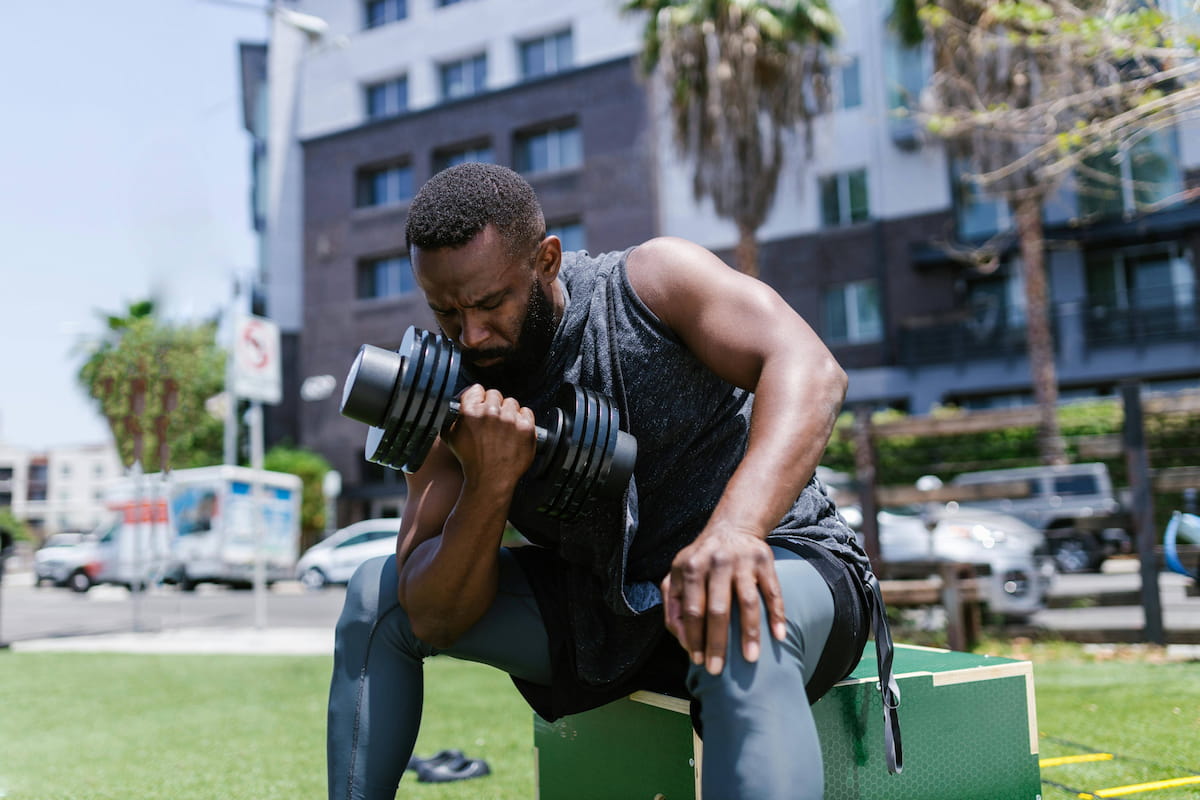
When you look at LeBron James or Venus Williams, what do you see?
Not only are they incredible athletes who have climbed to the pinnacles of their sports, but they’re also role models for their respective communities, and they’re also prime examples of something few people realize.
Just imagine. James, soaring to the hoop, backing down defenders, using that powerful physique and muscle to will his way, game after game, to dominate on the floor as he pleases. And then there’s Williams, a certified tennis superstar, who navigates the court with agility and strength, slamming the tennis ball with such force and prowess that many of her competitors are simply hopeless.
You don’t need to look hard. One thing the two have in common – and many top Black athletes – is muscle. But while muscle looks great and helps in a variety of ways, did you realize it’s actually a key predictor of longevity?
New research and the latest science are showing just that, and now, more than ever, it’s critical that you, as well, make the most of it. Want to get lean, fit, healthy, and strong?
Here are five reasons to keep your muscles, especially if you’re focused on losing weight.
RELATED: The 6 Best Muscle Foods For Men
Unfortunately, numerous studies show that Black Americans exhibit lower insulin sensitivity than their white counterparts. What does this mean? In a nutshell, it means that your body has a tougher time pulling glucose from the blood. As a result, your pancreas is forced to produce more insulin, which directly contributes to issues such as high blood sugar, fatigue, and even weight gain. And, over time, if left untreated, these problems can lead to more serious health conditions, possibly even heart failure.
But here’s where muscle comes into play.
Lean muscle tissue basically acts as a major “glucose sink.” In other words, it helps your body use glucose effectively, reducing the risk of numerous problematic health conditions.
Turns out, muscle is not just about looking athletic—it’s metabolic armor tailored to your physiology.
Hypertension or high blood pressure affects over half of Black adults in the U.S., an alarming figure to say the least. In fact, this is significantly higher than other racial groups, and so-called visceral fat – deep-seated abdominal fat surrounding your organs – and insulin resistance are major reasons why.
Thankfully, strong muscles improve circulation, helping your body to produce nitric oxide, which is critical to better blood vessel function. Overall, research links higher muscle mass to lower cardiovascular risks across the board. So, whether you’re a hardcore fitness enthusiast or just a regular Joe or Jane, keeping muscle long term means investing in a healthier heart.
And there are a few things more important than that!

Type 2 diabetes strikes Black adults at nearly twice the rate of white adults, about 12 percent of the population. And when muscle is progressively lost with age, also known as sarcopenia, the risk factors for diabetes magnify.
In fact, low muscle mass repeatedly correlates with higher HbA1c and diabetes prevalence, especially when combined with intramuscular fat buildup, which is more pronounced in certain communities of African descent.
Fortunately, maintaining muscle mass can enhance glucose uptake and metabolic flexibility, significantly reducing these risks.
RELATED: 10 Excellent Exercises to Fight Muscle Loss in Menopause
When experiencing sarcopenia as we age, it’s easy to see how this can become a problem. As we grow older, we become more frail, lose mobility, fall, and generally recover more slowly from everyday aches and pains. Even worse, sarcopenia shortens healthy lifespans through its ties to chronic disease.
The good news is that higher muscle quality correlates with better physical function. Not just that, but lower all-cause mortality too! If you’re an athlete or just someone trying to get healthier, preserving muscle can really help prevent accelerated aging.
GLP-1 agonists are increasingly popular, especially the semaglutides Ozempic and Wegovy. But while these medications may be revolutionizing weight loss, they don’t come without certain known risks.
For example, did you know that up to 25–40 percent of the weight lost on these medications can come from lean mass? In other words, a percentage of the weight you drop actually stems from your organs, skeletal muscle, connective tissue, and water throughout your body and is stored in your fat tissue. It’s not just weight lost from fat. As a result, this can raise sarcopenia risks, especially in Black communities where other chronic illnesses are more prevalent.
If you’ve ever heard the term “skinny fat” – correlated with lower body weight but poorer body composition – you already have a good idea. This is why resistance training and regular protein intake are so critical. By staying on top of these two items, you can experience the benefits of GLP-1s without many of the downsides.
It’s also important to remember that many of the traditional weight metrics are not necessarily ideal for Black Americans. Take, for instance, your bathroom scale or the oft-used BMI chart. Turns out, BMI was developed primarily for white populations and doesn’t distinguish between muscle and fat. Because Black men and women typically carry higher skeletal muscle mass and bone density at the same BMI, they may get misclassified as “overweight” or “obese” when their actual body fat is lower.
For a clearer picture, it’s always best to get advanced body composition tools like DEXA scans, InBody analyzers, or even bioimpedance scales. You can ask your doctor about these options, and check with your insurance to see what’s covered. But overall, they’re vital if you’re trying to lose weight and preserve muscle.
Ready to get started? Keeping muscle in the long term is not as hard as you may think…
Holding onto healthy muscle is actually pretty straightforward.
For starters, consider resistance training. Aim for two to three sessions per week, doing either full-body or push-pull-legs splits. Keep it progressive. For example, focus on increasing weights, bands, or bodyweight workouts.
Thankfully, you have many options. Exercises like squats, deadlifts, bench press, push-ups, rows, overhead presses, and core work are all great.
As for how much? Begin with three sets of eight to twelve reps per exercise, and always focus on good form. If you’re an athlete, go heavier; if you’re a beginner, start light. Even 20–30 minutes counts. And as always, you can combine walking with some cardio.
As for that much-needed protein intake?
Ideally, aim for 1.2-2.0 grams per kg of body weight daily. In other words, that’s roughly 80–140g for a 70kg or 155lb person. Just make sure you spread it across meals. A good rule of thumb is about 30–40g per sitting, which maximizes muscle protein synthesis.
If you’re working out, consume 20–40g within one to two hours after your workout. We’re talking foods like chicken, fish, eggs, Greek yogurt, whey, or even plant-based options like beans/lentils.
And finally, if you’re into technology and tracking, you can go above and beyond measuring your waist. In addition to measurements and photos, you can use smart scales or apps, or possibly get a baseline DEXA if it’s feasible. Don’t be too hasty; give your body time to adjust, and reassess every three to six months.
Remember, muscles respond best to steady effort – not overnight overloads.
Stay the course, take pride in your progress, and always keep your doctor informed. With some patience and some lifestyle tweaks, your journey will be more rewarding than you ever could have imagined!


By subscribing, you consent to receive emails from BlackDoctor.com. You may unsubscribe at any time. Privacy Policy & Terms of Service.