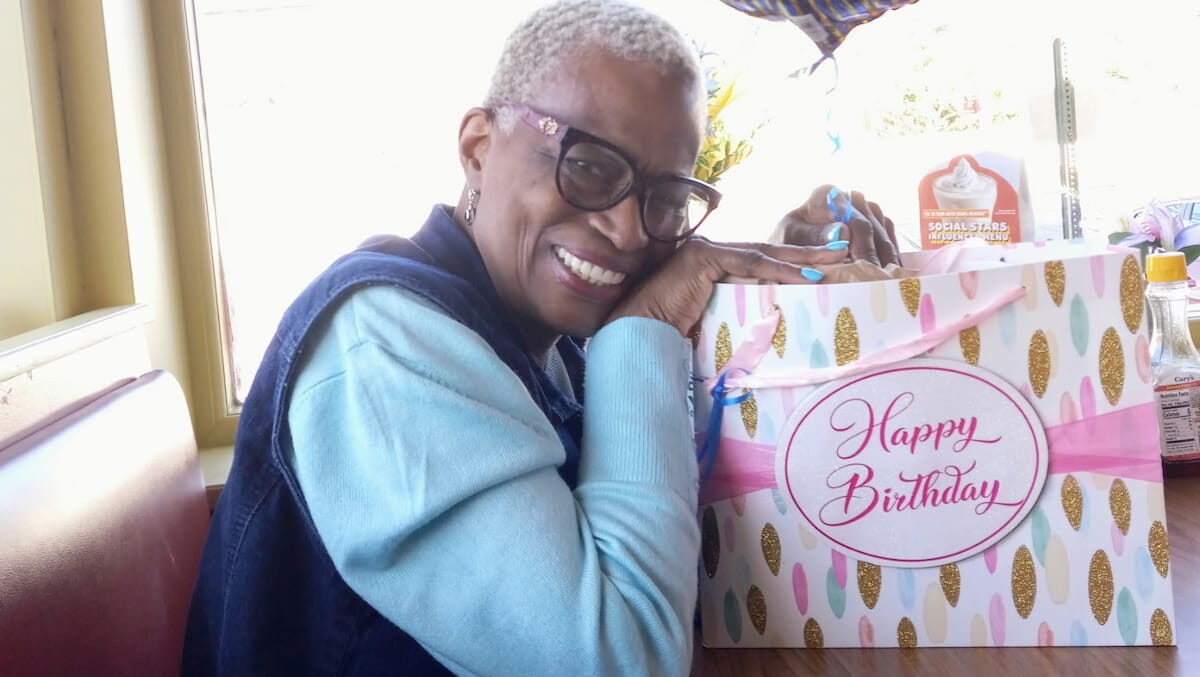
Hazel Harris was 33 when she was diagnosed with lupus while attending city college to pursue a psychology degree. The onset of the disease was marked by facial marks, joint pain, and overwhelming fatigue.
While living in the Bronx, Harris had tests that revealed she had a disease she had never heard of before.
After her diagnosis, medication helped control the disease, but it wasn’t easy. Harris still had painful flare-ups with severe joint pain, swelling in her hands and feet, and trouble walking.
These episodes often meant trips to the hospital until her body got used to the medication. Over time, the flare-ups happened less often, and she eventually reached remission, which means she still had lupus but no active symptoms.
After moving from the Bronx to Queens, Harris met a doctor who specialized in lupus care. This meeting gave her an unexpected chance to join a major lupus study focused on patients in remission.
Harris wanted to help others, so she agreed to take part.
RELATED: “It’s Been a Rough Ride”: How Lupus Took a Serious Toll on My Heart
The study, funded by the NIH for $15 million and led by Northwell Health’s Feinstein Institutes for Medical Research, brings together researchers from the U.S., U.K., Mexico, Ghana, and South Africa.
Their goal is to find the biological “fingerprints” of real lupus remission by studying people like Harris, those with active lupus, and healthy volunteers.
“It’s the first chance to … know whether environmental exposures—microbial exposures like malaria or various worms, or differences in diet—affect the way lupus presents,” says Dr. Betty Diamond, MD, lead investigator and Director of the Institute of Molecular Medicine.
Researchers are looking at immune cells, brain activity, and gut bacteria to learn why some people stay in remission and others do not.
“This study is to understand when some individuals with lupus go into a long-term, drug-free clinical remission —what does their immune system look like, and what does their brain look like?” Dr. Diamond explains.
She points out that current treatments still have a long way to go.
“Our therapies are not nearly as efficacious as we would like them to be, and they come with a lot of toxicities. We thought if we look at people who have had a bad disease … but are no longer in a bad disease state … maybe we can learn how the immune system rebalances itself.”
The research is also helping to show how lupus affects the brain, leading to problems with thinking and mood.
“We were able to really convince the community of rheumatologists—what patients with lupus already knew—that this wasn’t ‘in their head,’” Dr. Diamond adds. “These symptoms are part of the disease itself.”
What’s even more surprising is that people in long-term remission can still have signs that lupus affects their brain.
“When we tell somebody they’re fine, it’s because we’re not looking at their brain,” she says. “Those who still have brain disease may be the ones who relapse.”

The international team wants to learn how lupus changes in different groups of people and places, and if those differences can help predict what will happen.
“We will be looking at a single-cell resolution of blood cells from about 150 patients,” Dr. Diamond says. “That will inform where we go next. We’re starting to get a lot of data now.”
Ultimately, researchers hope to identify who might relapse and find ways to prevent it.
Harris has now been in remission for 25 years. She hopes that by joining the study, she can help raise awareness and educate people about lupus, especially Black women, who are more often affected and might miss signs like ongoing tiredness.
Her joint pain and facial scars have since gone away. Still, she points out that lupus is different for each person.
For Harris, remission didn’t happen all at once. She realized it gradually as her flare-ups became less frequent and less severe.
Today, Harris likes to walk, practice Tai Chi, dance, read, and spend time with her friends.
She also thinks about something she didn’t expect from her journey: she feels more empathy for others.
“It made me more patient and more understanding. Having a chronic disease has made me so much more empathetic. I don’t think I would be like that had I not gotten lupus,” she says.
Dr. Diamond echoes that sentiment.
“When people have bad lupus, it can be a devastating disease. I am in awe of the resilience of people who have this disease and their ability to keep going, even when times are bad.
Now 72, Harris offers encouragement to younger people navigating lupus.
“I would tell my younger self, ‘Hey, you’ll be okay. You’ll be okay.’ You’re going to have lonely days, painful days, and isolating days, but you’re going to get through it. You’ll be all right.”
She also says it’s important to find support groups and learn as much as you can about the disease.
“I talked to my family members and came to find out a couple of my older relatives had died from lupus. I had no idea,” she says, highlighting the importance of knowing your family history.
Harris’s story shows that it is possible to live well with lupus. With support, knowledge, and determination, people can manage the disease and even help with research that could make a difference for others.


By subscribing, you consent to receive emails from BlackDoctor.com. You may unsubscribe at any time. Privacy Policy & Terms of Service.